
Evolution of play in the Wonder Primes
“Play is the work of childhood”- Jean Piaget
As we head into the Spring months, we are seeing so much growth happening in the Wonder Primes classroom. Students are getting physically bigger, learning more self-help skills, and especially growing their play skills! This is always a special time of year for us teachers in the toddler classroom because we get to witness the beginning stages of interactive play amongst our students. We spend many months scaffolding play, offering parallel play opportunities, and helping students navigate conflict over toys, space, ideas, etc. All of a sudden there has been a shift in the classroom and now we are seeing the students play together, having shared experiences and ideas. This past week, we witnessed many students engaging in un-scaffolded pretend play, inviting friends to join them and having uninterrupted moments of play. As preschool teachers, we truly know the value of play for children and believe it is the work of children to play freely. Play is where learning happens, where they integrate their life experiences into their world, where they build community, where they learn important life skills. One way our students engaged in play the past week is through a game of “library.” There are often many conversations about libraries at in our classroom. Many of our students frequent the library during their out of school time and they often see each other at the library in town. We have heard many friendly conversations this year about libraries. “I saw you at the library,” is a common greeting in our classroom. It is fitting that the “library” made its way into the students' play this past week. Two of our students began this play by finding a tall chair to sit in and pretended to be the “librarian,” reading stories to each other.
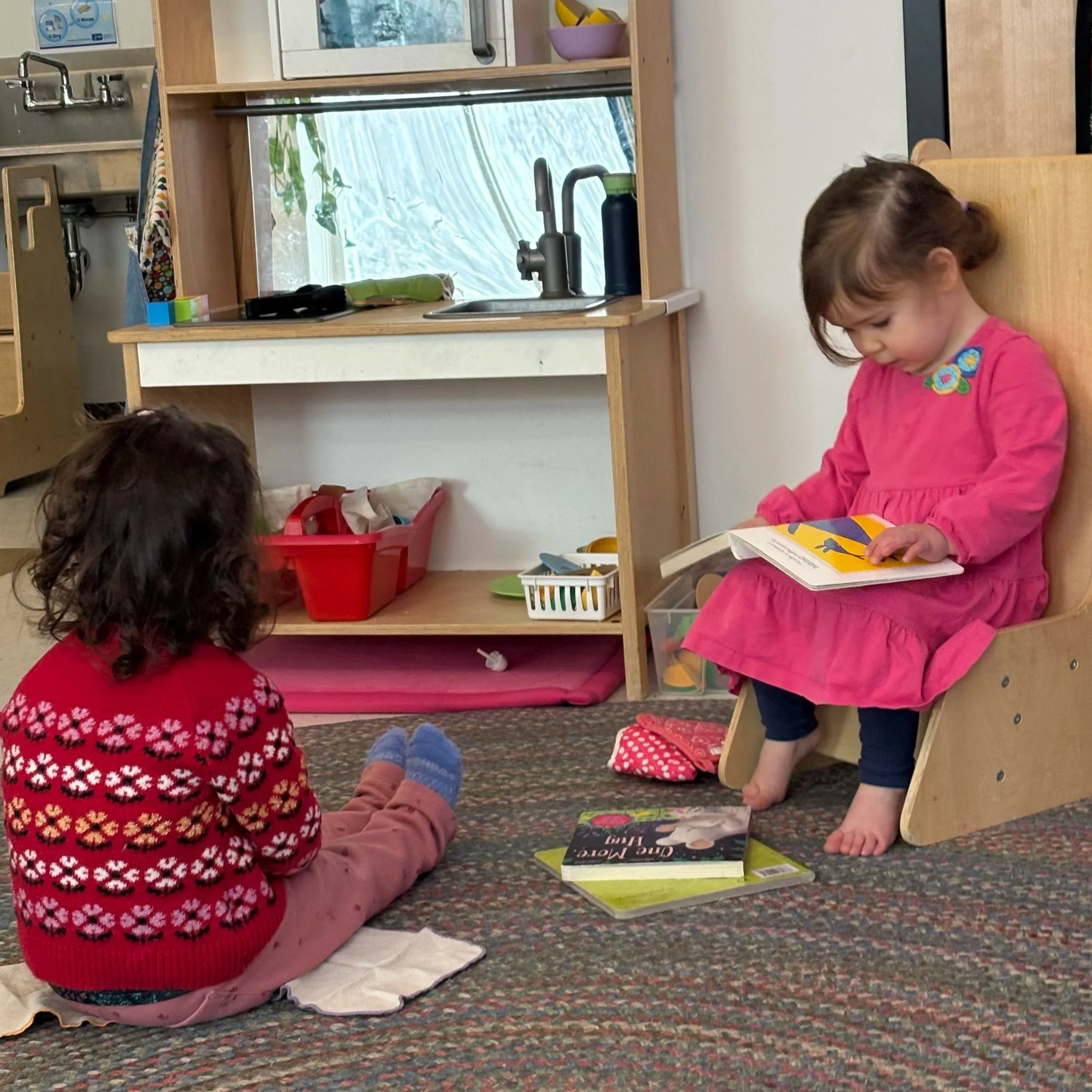
We witnessed students “reading,” checking out books, and taking turns listening to stories. One student initiated this play saying, “I’m at the library, I’m gonna read you a story. I’m the librarian!” Another student eagerly joined, sitting in front of the tall chair and listening to the book that the other student was “reading.” This play eventually evolved into a turn-taking game where other students took turns being the librarian and “reading" to each other. “You read now, I listen!” This play was very serious and focused and each child listened carefully as the librarian showed them pictures and told them about the book. Eventually the play shifted into more parallel play where almost every student in the classroom was sitting in a cozy chair or cushion and reading books independently to themselves. At the end of the play, we saw kids “returning” books to the library and showing care for their library books. This was one of the first moments where we saw our students truly engaged in a pretend play scheme without any conflict and very little teacher involvement. It was a beautiful mix of parallel play where the students sat near each other reading their books and associative play. Associative play is where children begin to interact, share toys, and follow similar activities with a shared and somewhat organized goal. Associative play happens mostly for 3 and 4 year olds, but begins in the toddler room for older 2 year olds as well. Associative play has to happen before true cooperative play happens in the older preschool classrooms. This associative play is often repetitive and switches back to parallel play frequently at this stage of their development. One example of this is the play that has been happening in our sensory table that is filled with kinetic sand. Making cakes or coffee together is a common theme and students have been engaging with this shared interest that is based on their life experiences (parents and teachers making coffee, eating birthday cake.” Play is a way to engage with their world, to integrate what they see and hear, and make meaning out of it.
Coffee play:
Students stand around the sensory table filling up small containers of sand. Some of the older students initiate the play.
R:“We’re making coffee!”
E: “I like coffee.”
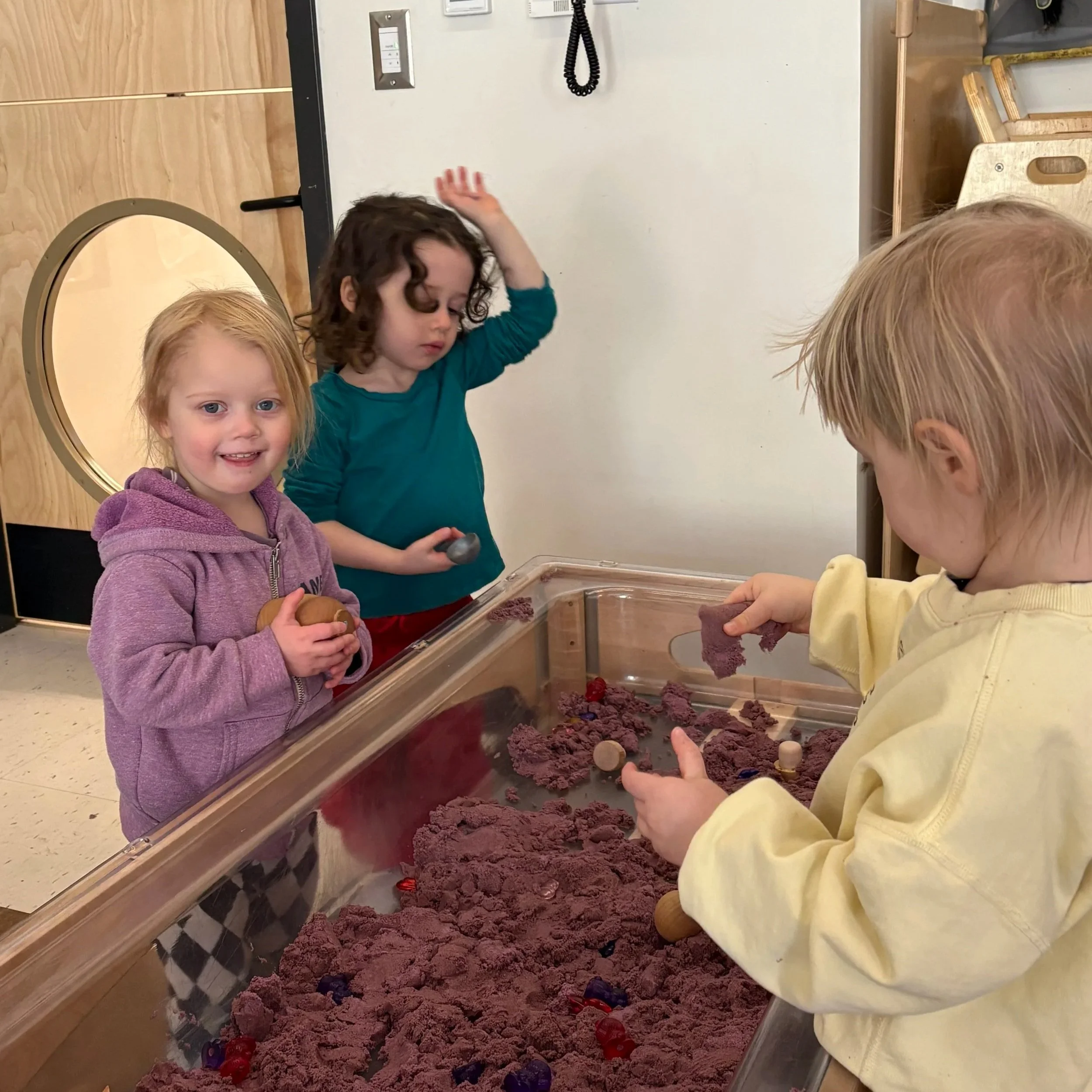
F: “I’m gonna make coffee and drink it before I go to work.”
F: “I’m gonna make coffee
R: “here’s your coffee”
W: takes the cup
E: “I’m gonna bring my coffee with me, ok?”
R: “yes”
L: “here you go.”
E: “can I make some coffee please?”
L: “fill it up, fill it up.”
R: coffee is over here
(E follows R back to the sensory table)
L: “fill it up, fill it up.”
R: “where’s the coffee?”
L: “fill it up, fill it up.”
R: “I want to make coffee all by myself”
L: “that’s ok”
There is so much learning happening in this simple and repetitive play. They are building the skills to eventually have more elaborate play schemes and ideas, learning how to share space, be in community, and so much more.
“Play is often talked about as if it were a relief from serious learning, but for children, play is serious learning.” -Fred Rogers