5th Grade Tiny House Project: Designing with Purpose
This winter, our 5th grade students stepped into the role of architects during an exciting interdisciplinary project: creating a 400-square-foot tiny house for a client. Through this hands-on experience, students learned how thoughtful design can solve real-world problems while practicing in an “architect studio”.
The project began with students “meeting” their clients. Each client had specific needs and design requests—such as their hobbies, storage needs, accessibility considerations, or favorite design styles. Students carefully thought about how their client would live in the space. This helped them think about how every square foot of a tiny house must be used wisely.
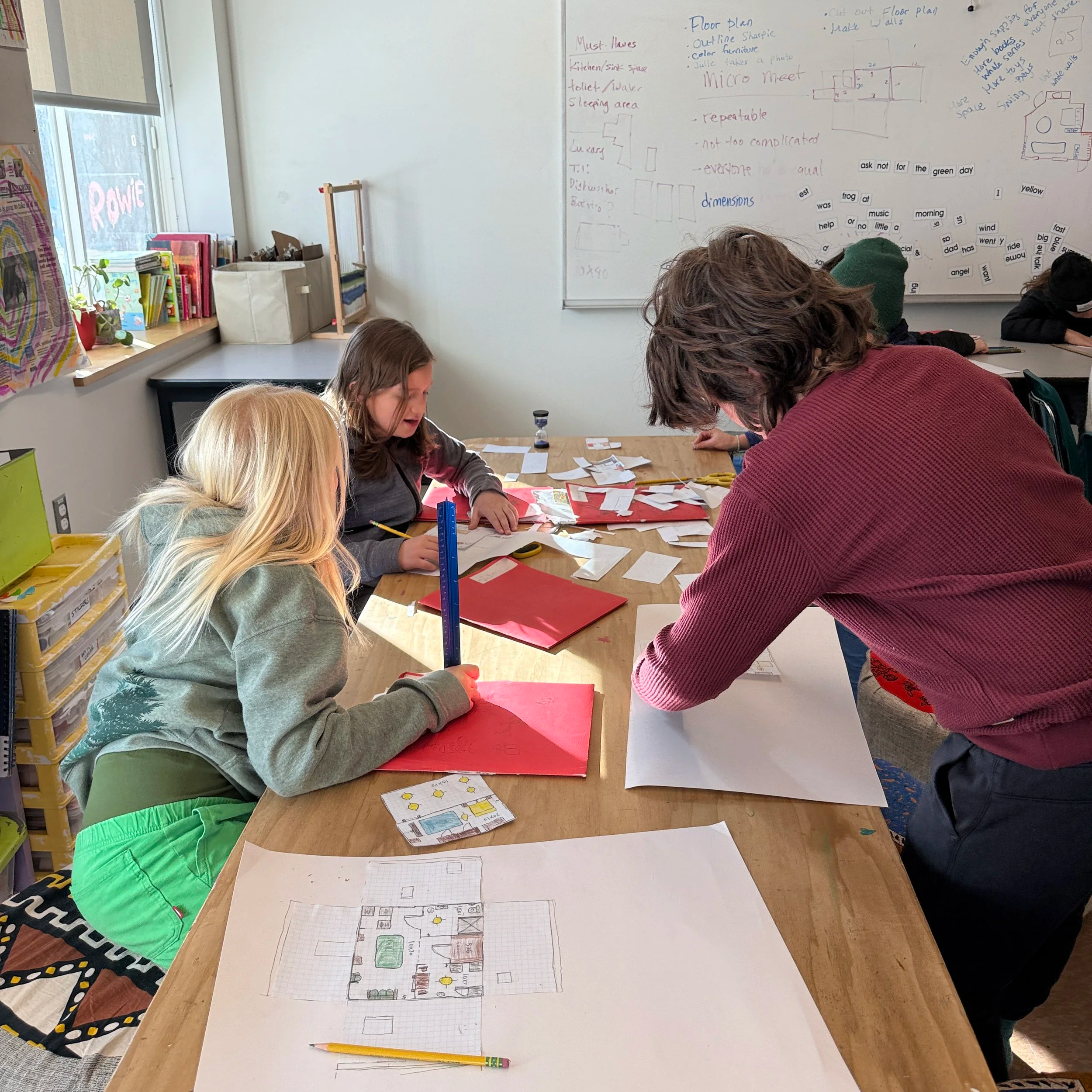
Next, students began the design process. They started with initial sketches, experimenting with different layouts and ideas for how to fit essential living spaces—like a kitchen, sleeping area, bathroom, and living space—into just 400 square feet. After creating their first drafts, students participated in peer critique sessions, where they shared their ideas and received constructive feedback from classmates and their teacher. These discussions helped students refine their designs and consider new possibilities.
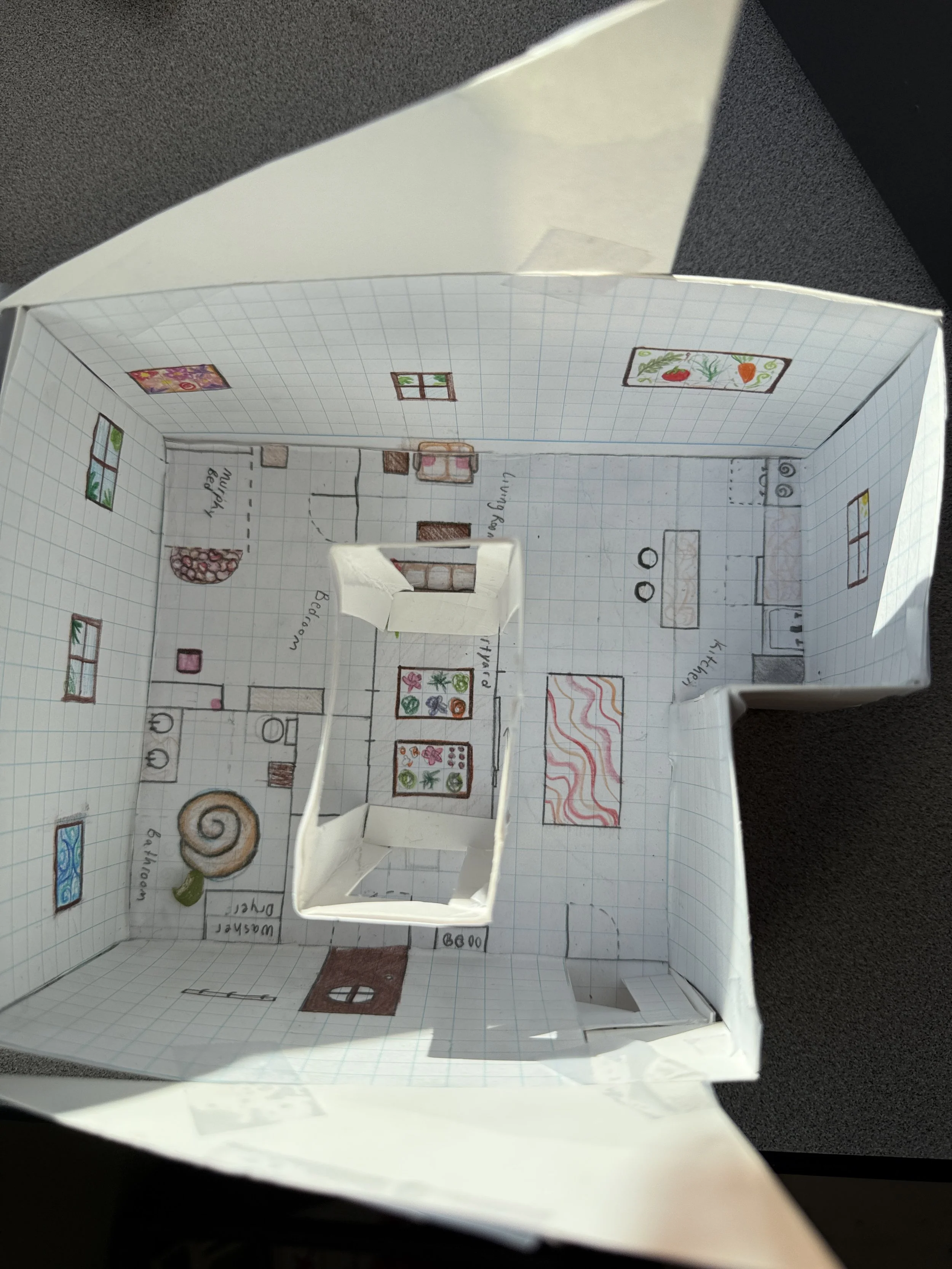
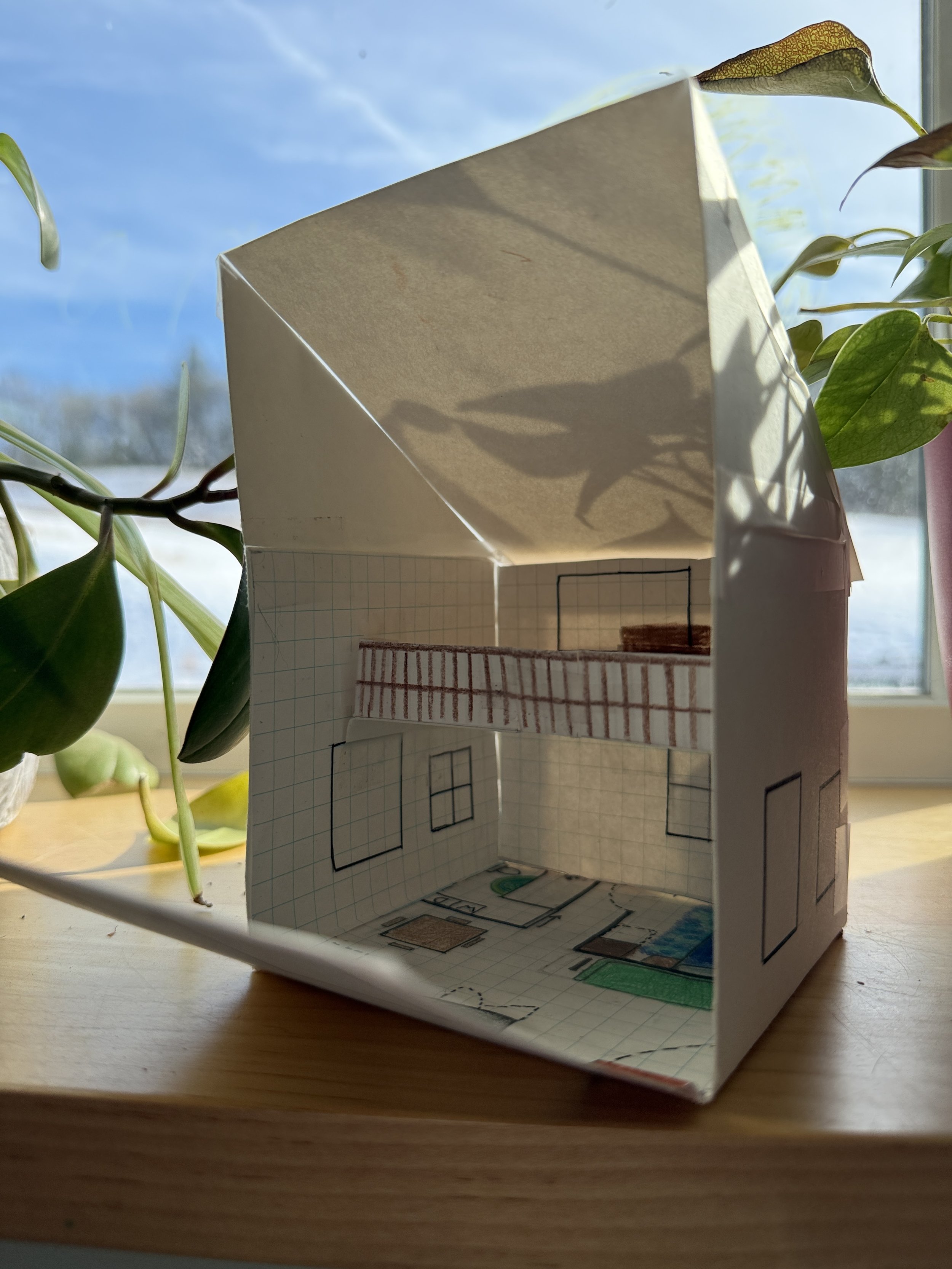
With revised plans in hand, students then created 2-D blueprints of their homes. These detailed drawings included room layouts, measurements, and important features requested by their clients, like space for a fish tank, or a loft, or a central courtyard. Students practiced using scale and careful measurement to ensure their designs were realistic and functional.
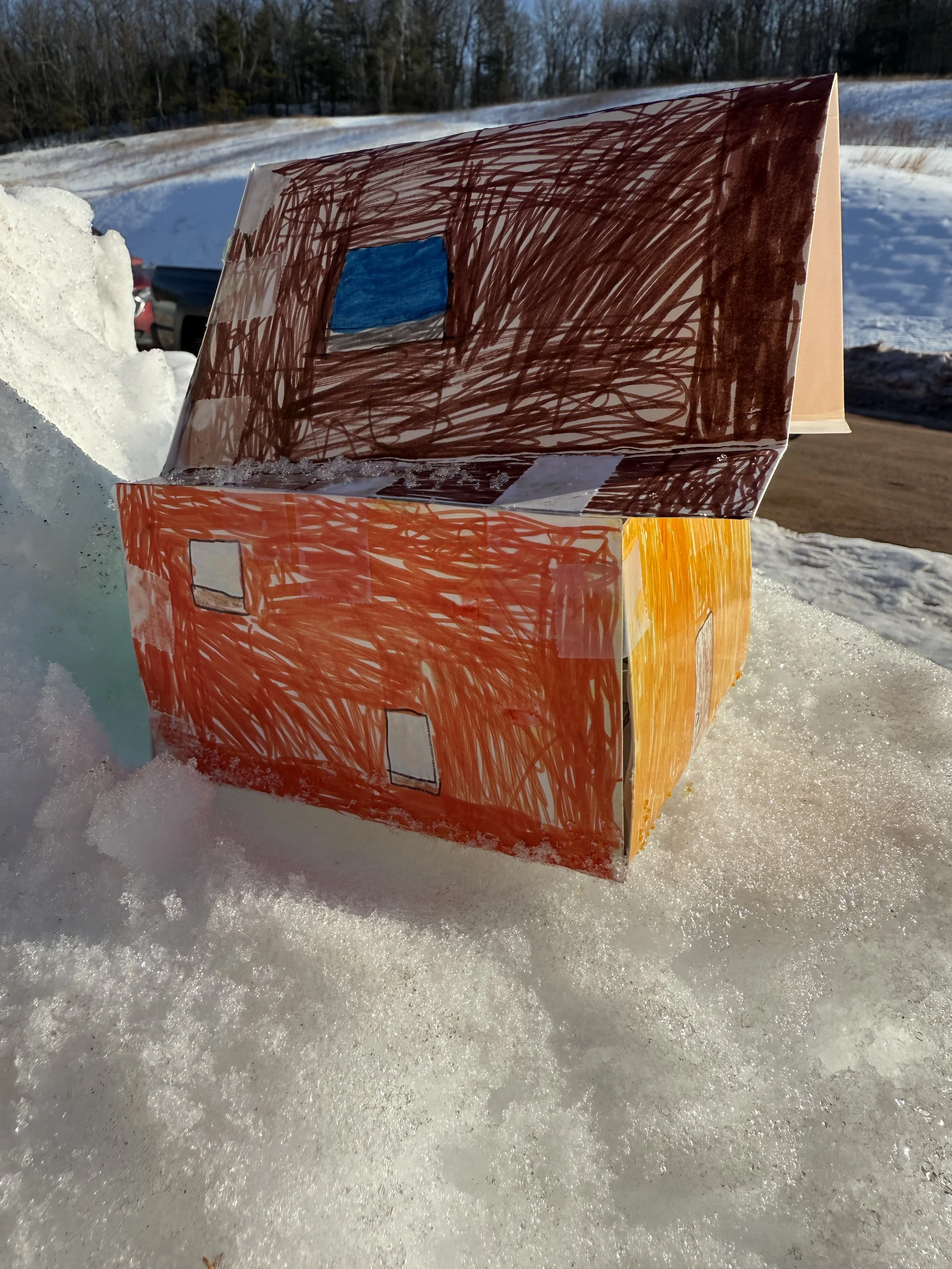
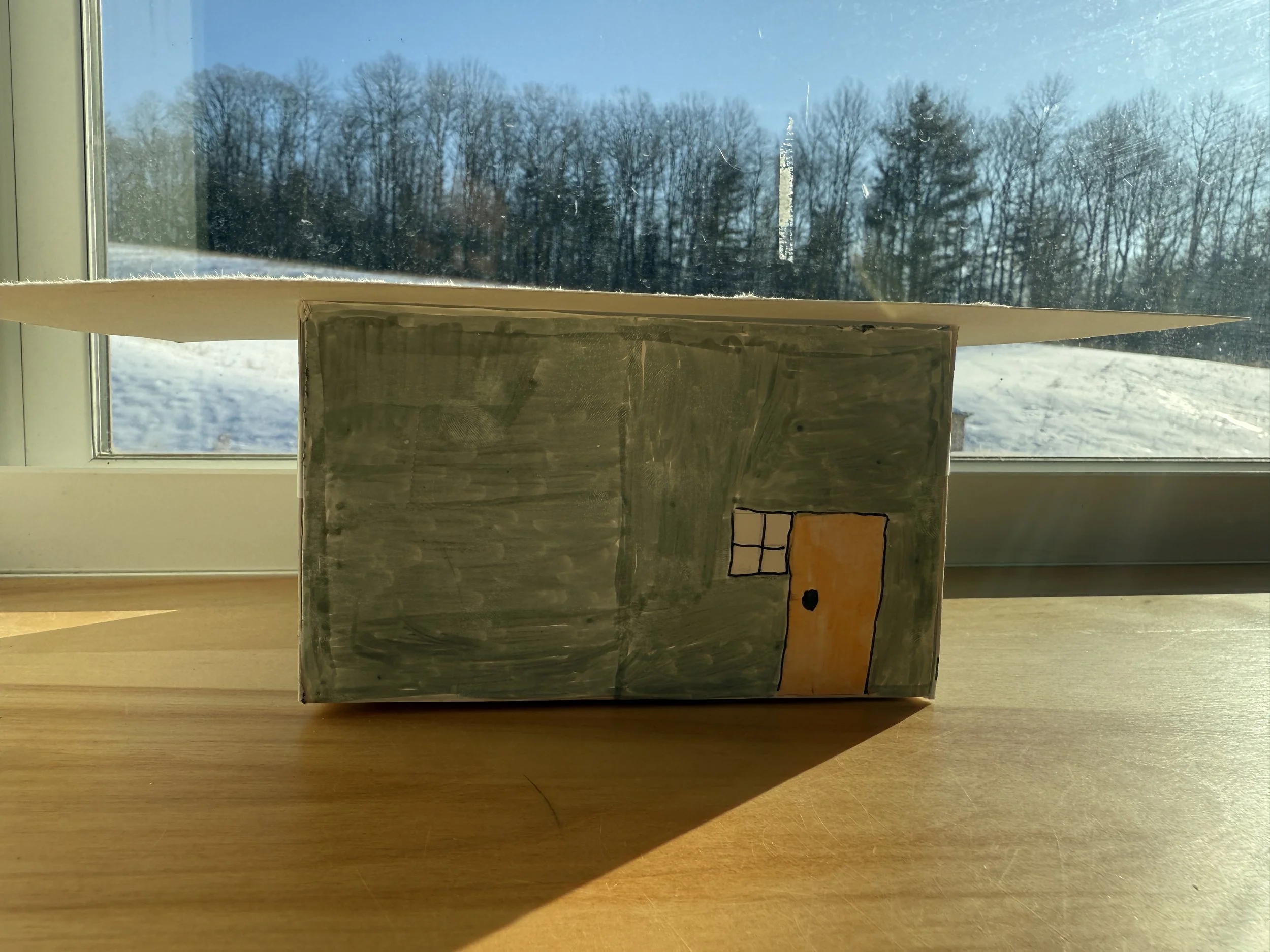
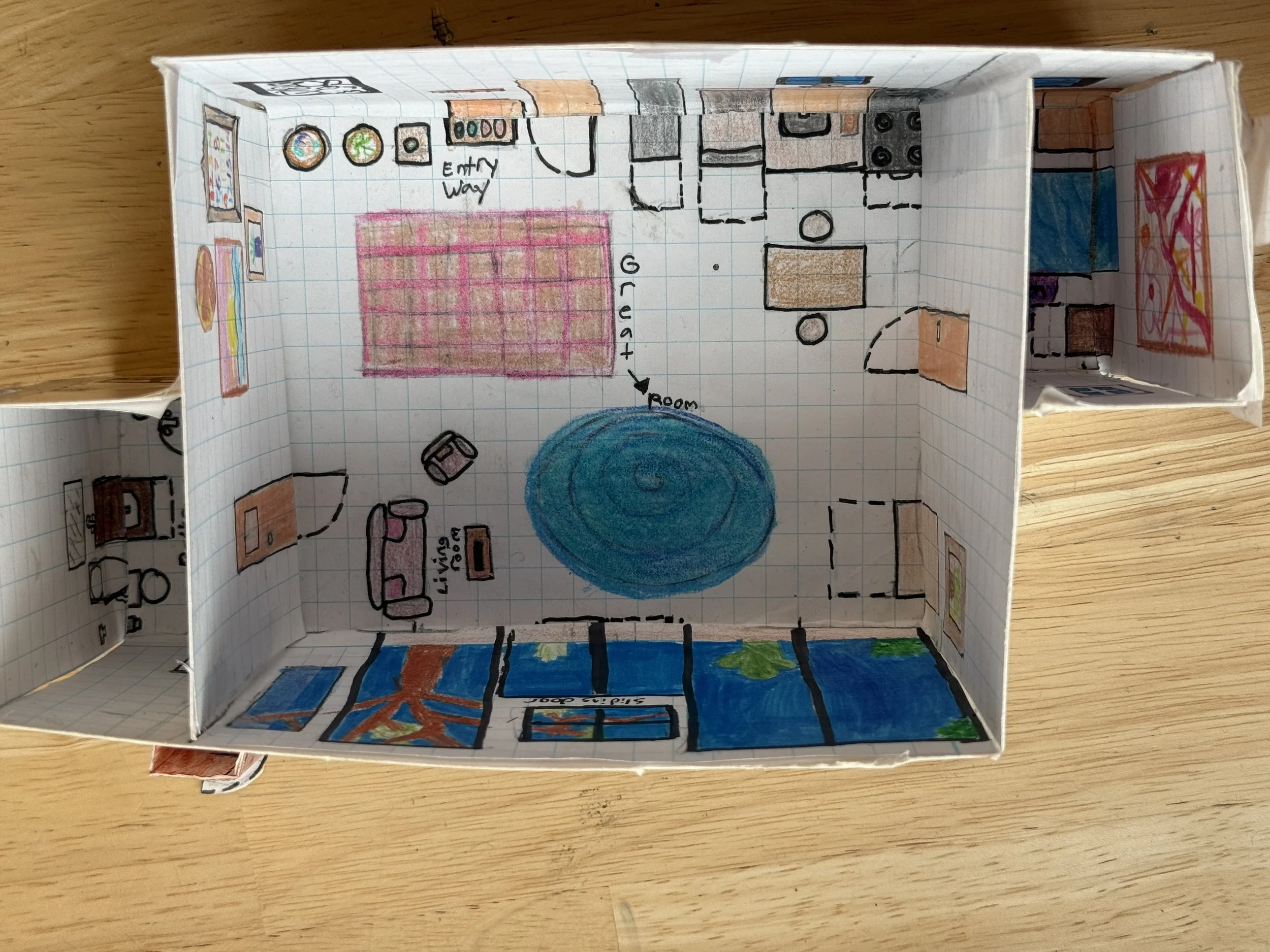
The final stage of the project brought the designs to life. Using cardstock, students constructed 3-D models of their tiny houses. These models showcased the layout, structure, and details of each student’s design.
To celebrate their hard work, the 5th graders presented their projects during All School, where they shared their design process, and displayed their models. It was a wonderful opportunity for students to practice public speaking while demonstrating the creativity and problem-solving that went into their work.
The Tiny House Project combined math, art, design, and communication skills, showing students that learning can be both practical and imaginative. Most importantly, it encouraged them to think like real-world architects—balancing creativity with the needs of the people.