“Mine!” in the Wonder Primes
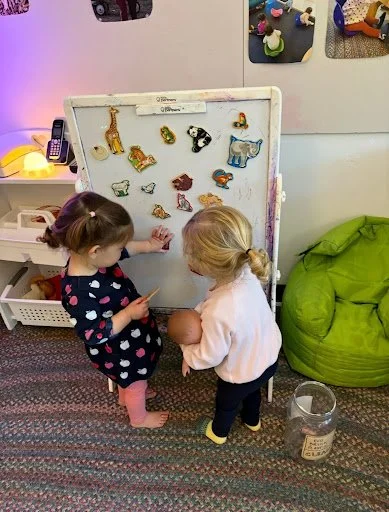
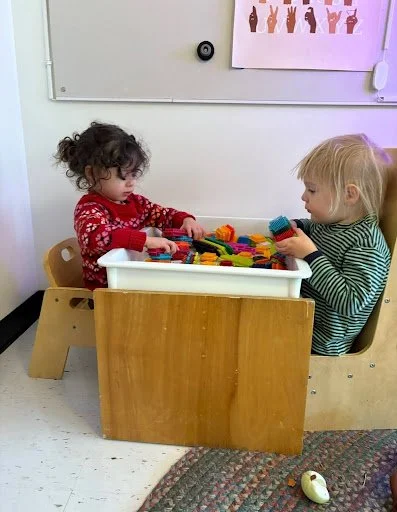
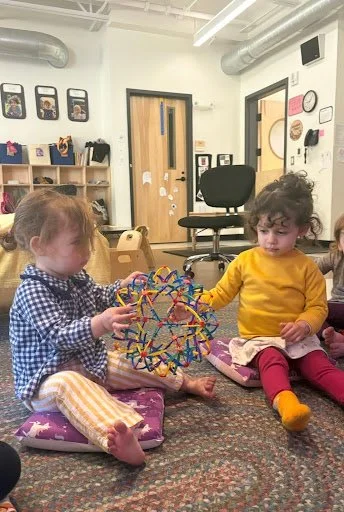
“Mine!” In the Wonder Primes classroom, we hear this word countless times each day. From toys and materials in the classroom to the swing on our climber, from a specific pillow from the couch to items brought in from home, a debate can always be heard among the Wonder Primes about just who an item belongs to. The prevalence of the idea of “mine” in combination with the understanding that all toddlers innately feel that all possessions are theirs has led the Wonder Primes teachers to think closely about what the concept of “mine” truly means to these young students. While the shouts of “mine!” throughout the day, the strong emotions associated with this concept, and the resulting conflict this can cause between two or more children, can at times feel overwhelming, when we step back and look more closely at these interactions, we see that this is very common toddler behavior as they begin to make sense of their identities as part of a larger group. To help remind ourselves of the developmental appropriateness of this stage, the Wonder Primes teachers often think about Dr. Burton L White’s “Toddler’s Creed,” which says:
“If I like it, it’s mine.
If I want it, it’s mine.
If I think it’s mine, it’s mine.
If I give it to you and change my mind later, it’s mine.
If I can take it away from you, it’s mine.
If I had it a little while ago, it’s mine.
If it’s mine, it will never belong to anybody else, no matter what.
If we are building something together, all the pieces are mine.
If it looks like mine, it’s mine.
If you really think it belongs to you, it is most definitely mine.”
Stepping back to observe the children’s interactions has also enabled the Wonder Primes teachers to ask more questions about what truly is going on during these moments. For example, what is the importance of asserting that something is “mine?” What significance does an object have for a particular child? Is the interaction truly based on the object or is there a social interaction occurring that is more important for that child? What do the Wonder Primes students understand the word “mine” to mean? How does a toddler's deepening understanding of the concept of “mine” add to and/or influence their understanding of sharing and communal ownership in a group? How can we support the children as they grapple with these complex ideas and expectations at school that are often different at home?
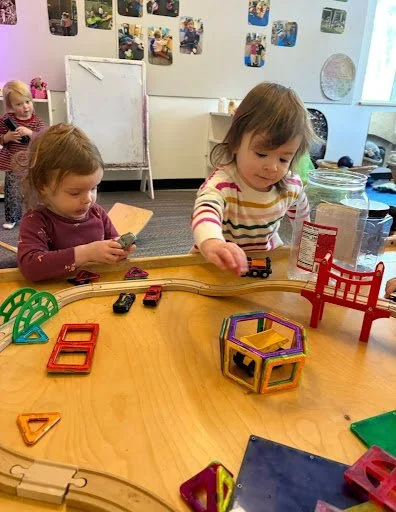
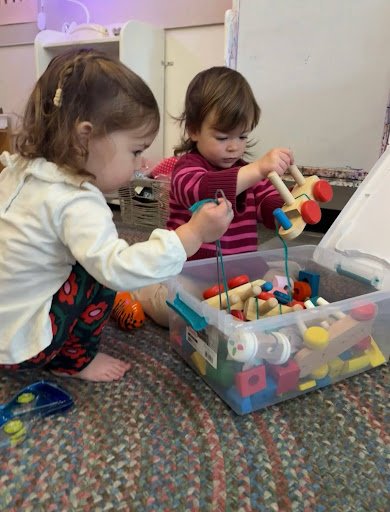
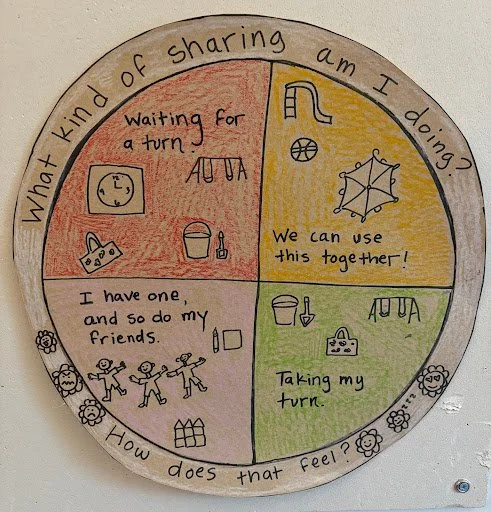
These questions are broad and deep, and there is no one single answer to them all. In fact, the answer may change from day-to-day, moment to moment, and child to child. What has become clear is that the work of the Wonder Primes teachers in these interactions centers on narrating and providing language for these young learners in order to help them understand what they may want and/or feel, as well as what their peers may want and/or feel. We may point out that a toy or object feels as if it belongs to a particular child because they were playing with it in a past moment, or that a child may feel that it is still their toy or their turn because they momentarily paused what they were doing to do something else and had a plan to come back to their original idea. We introduce concepts such as “school toys” to help the Wonder Primes begin to understand that the expectations at school are different than play expectations at home and when possible, we provide more than one object to help decrease conflict during periods of deep work and learning. We begin asking questions to the Wonder Primes themselves, such as “who is playing with that right now?” and point out other similar toys and materials that are available. As the year progresses and the children begin to integrate these ideas, we will introduce and use our “sharing wheel” to further expand their understanding of ownership as it relates to materials in the classroom as well as help explain the (abstract and often confusing to a toddler brain) concept of sharing, which has many parts and stages of its own!