
Deconstruct / Reconstruct:A Take Apart Project Inspired by Things Come Apart
Uppers were joined by Seth Seeger, a parent of an alum, for a hands-on STEM (Science, Technology, Engineering, Math) experience where participants dismantle old electronics and appliances (like toys, VCRs, keyboards) to discover their inner workings. Students learn about gears, circuits, and mechanisms in a safe, guided environment, leading to creative reuse of parts. It's a way to build curiosity and understanding of engineering and design by deconstructing everyday objects, with a focus on learning rather than destruction, often using provided tools and safety gear.
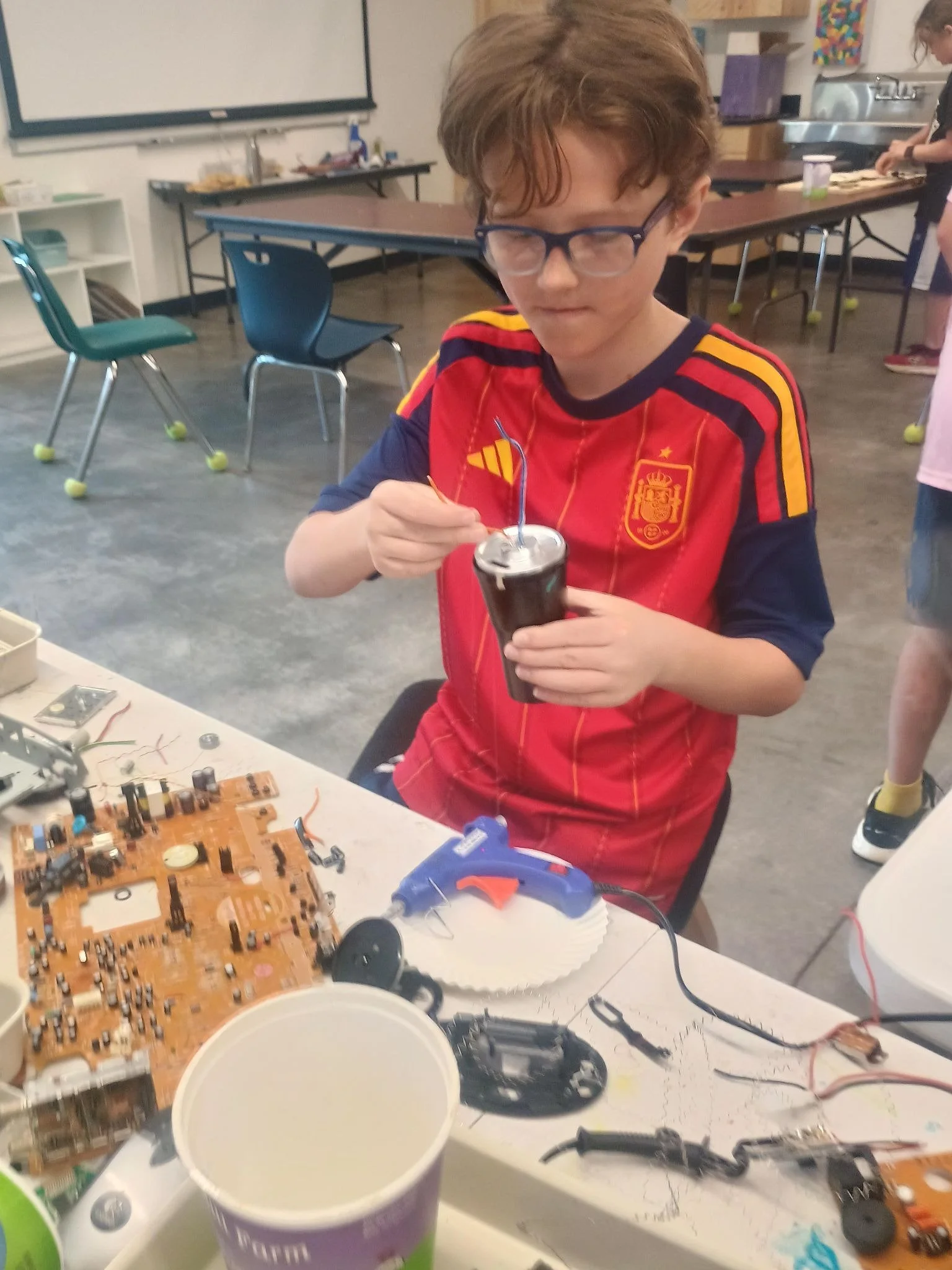
Anders uses components to build a rat
This project is a combination of engineering and creative design. By beginning with the disassembly of real objects - an old VCR, a sewing machine, a hair dryer - students move past the surface level of everyday technology and into its hidden structure. What once functioned as a working device gets broken down into its essential parts: motors, wires, screws, plastics, gears, and circuit boards. This first step is not destruction, it is deconstruction. It is not a rip apart, tear apart or smash apart project. It is a careful process of discovery where students begin to understand how complex systems are assembled from simpler components. This is the phase that could go on for hours!
The second phase of this project shifts the focus from Take Apart to Put Together Anew, disassembly to reimagining. Once the object has been taken apart, students are challenged to reassemble those parts into something entirely new: a sculpture representing a person, place, object, or abstract idea.
The class studied the work of Todd McLellan through his multi-media exhibit,Things Come Apart. McLellan’s videos and photographs are a visual exploration of modern technology that reveals what is normally hidden: the internal complexity of everyday objects. By seeing how professional artists and designers can transform broken-down technology into intentional compositions, students were encouraged to treat their own materials not as scrap, but as components with which to build new forms. Things Come Apart helped the class establish the idea that breaking something apart is not the end of its story, but the beginning of another tale.
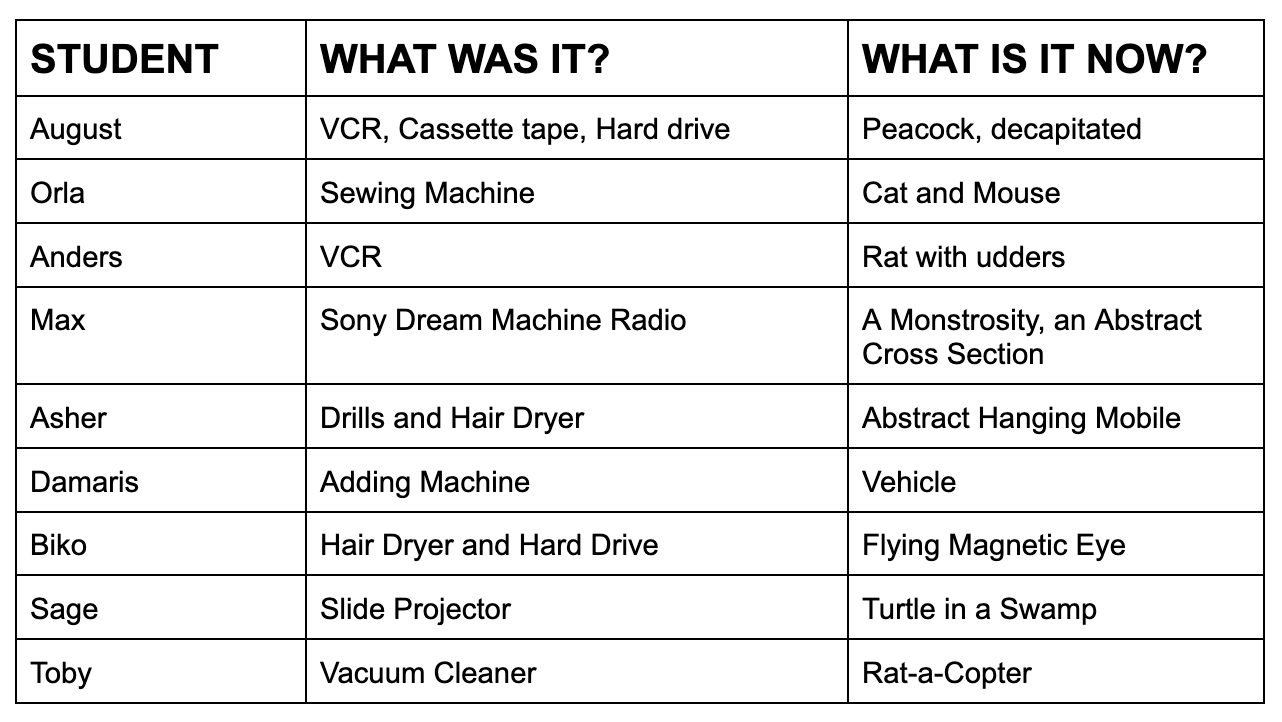
In this phase, a motor becomes an eye, a circuit board becomes a landscape, wires become hair, transistors become feathers. A hard drive and VCR transform into a Peacock. A sewing machine is now a scene from the classic tale of Cat and Mouse. This transformation encourages students to think like both engineers and artists, seeing materials not only for what they do but also for what they could become.
Mounting the final sculpture on a flat surface or balancing it so it stands upright adds an important design constraint that mirrors real world presentation and engineering requirements. It forces students to consider balance, composition, and stability, ensuring that their work can exist on a wall or table, without falling apart or losing meaning. This requirement also pushes students to think about structure: how objects support themselves, how weight is distributed, and how individual parts contribute to a cohesive whole. For some, this was the most challenging phase.
Overall, the Take Apart Project develops a rare combination of skills: curiosity about how things work, confidence in dismantling and understanding everyday objects, and creativity in recombining those components into new forms. It transforms discarded or hidden technology into a material language for storytelling. In the process, students begin to see that objects are never just objects, they are collections of design decisions, materials, and functions that can be reinterpreted in endless ways.
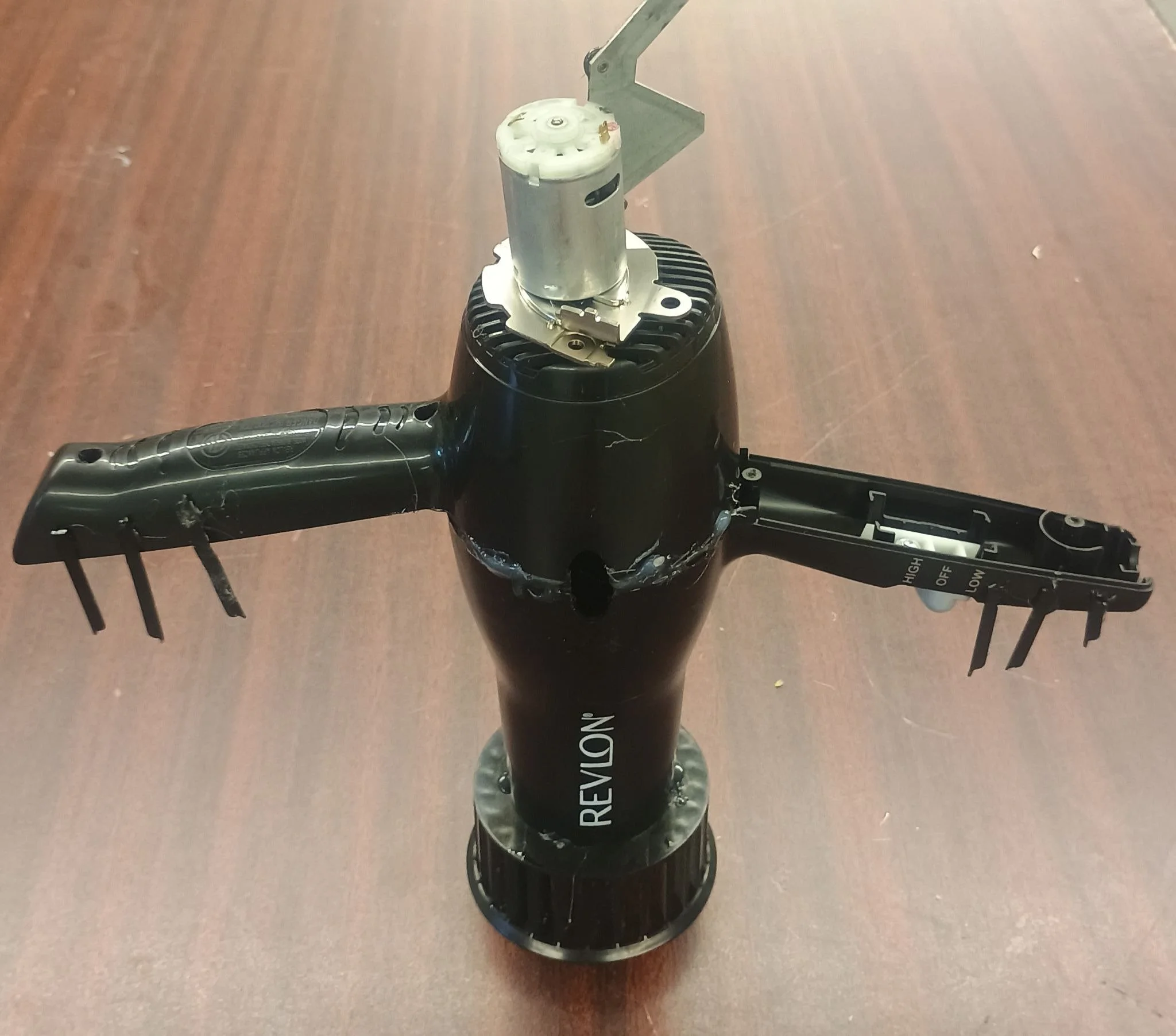
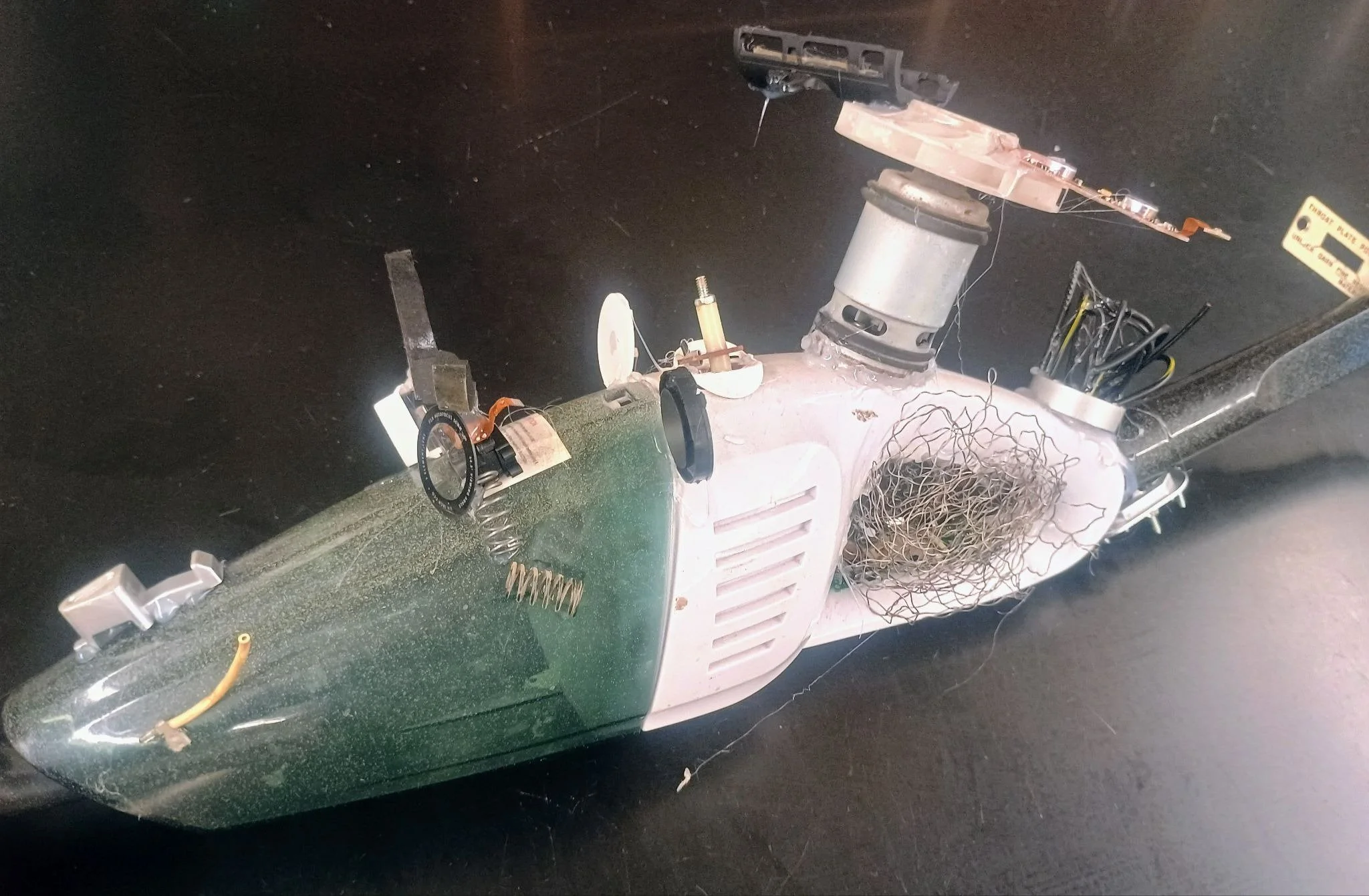
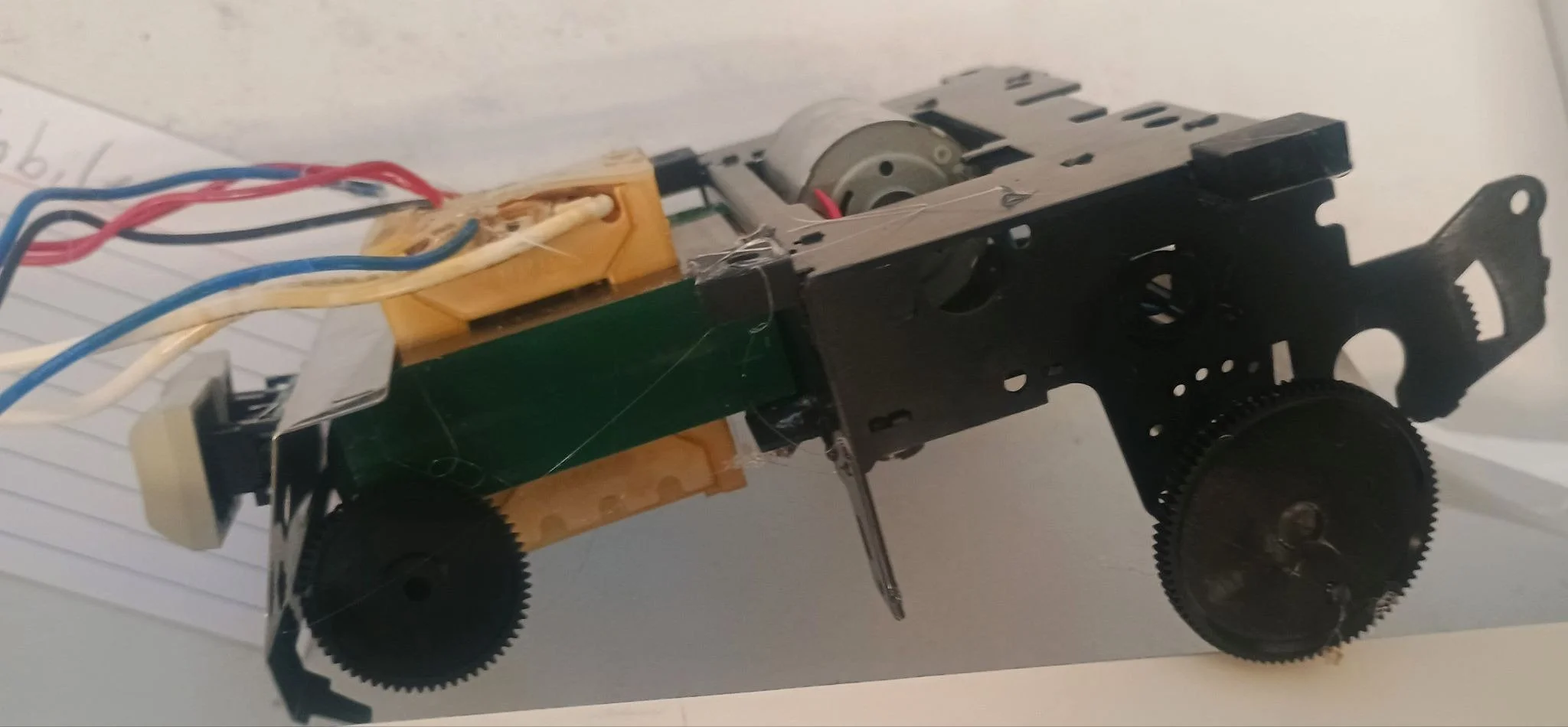
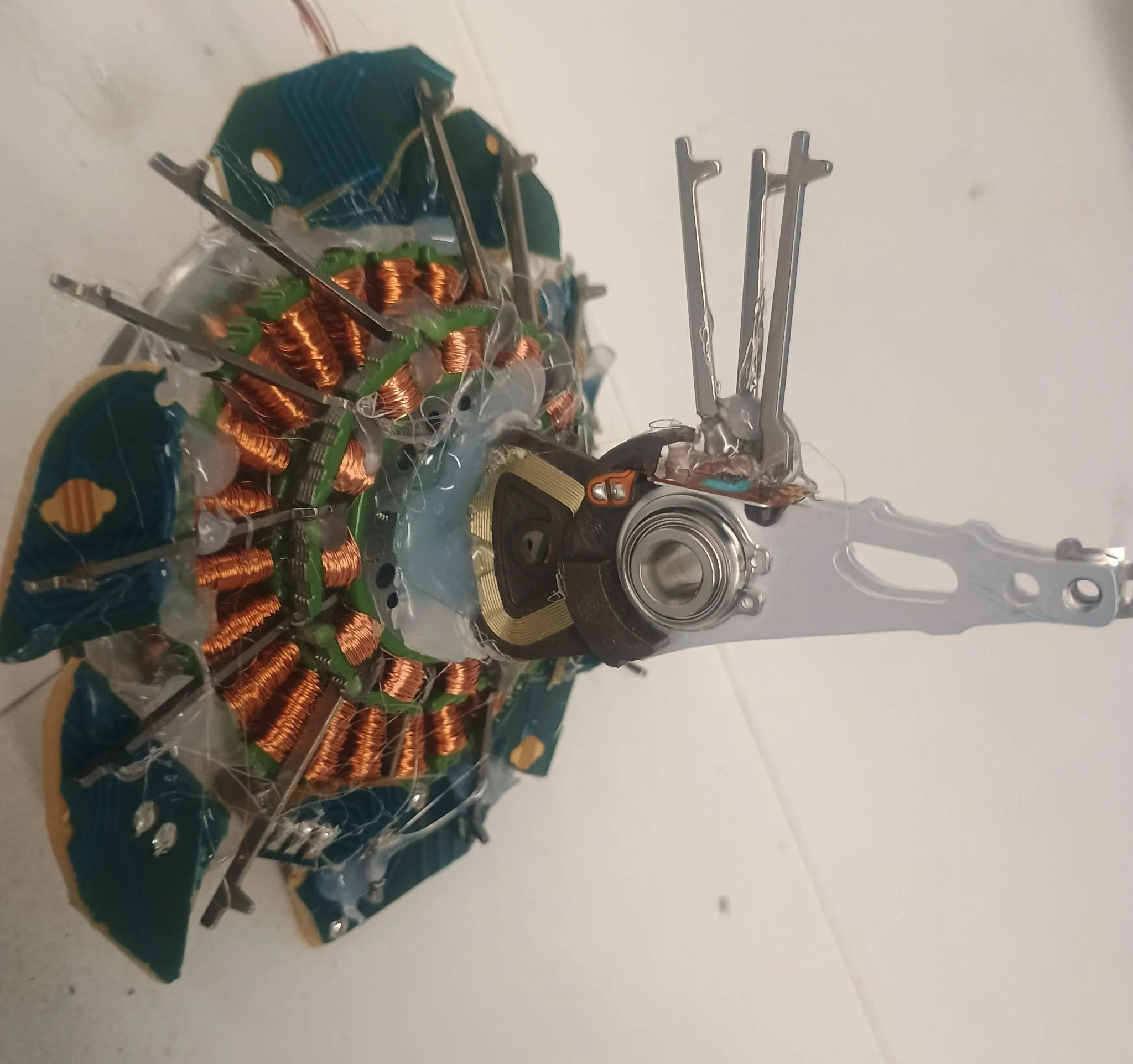
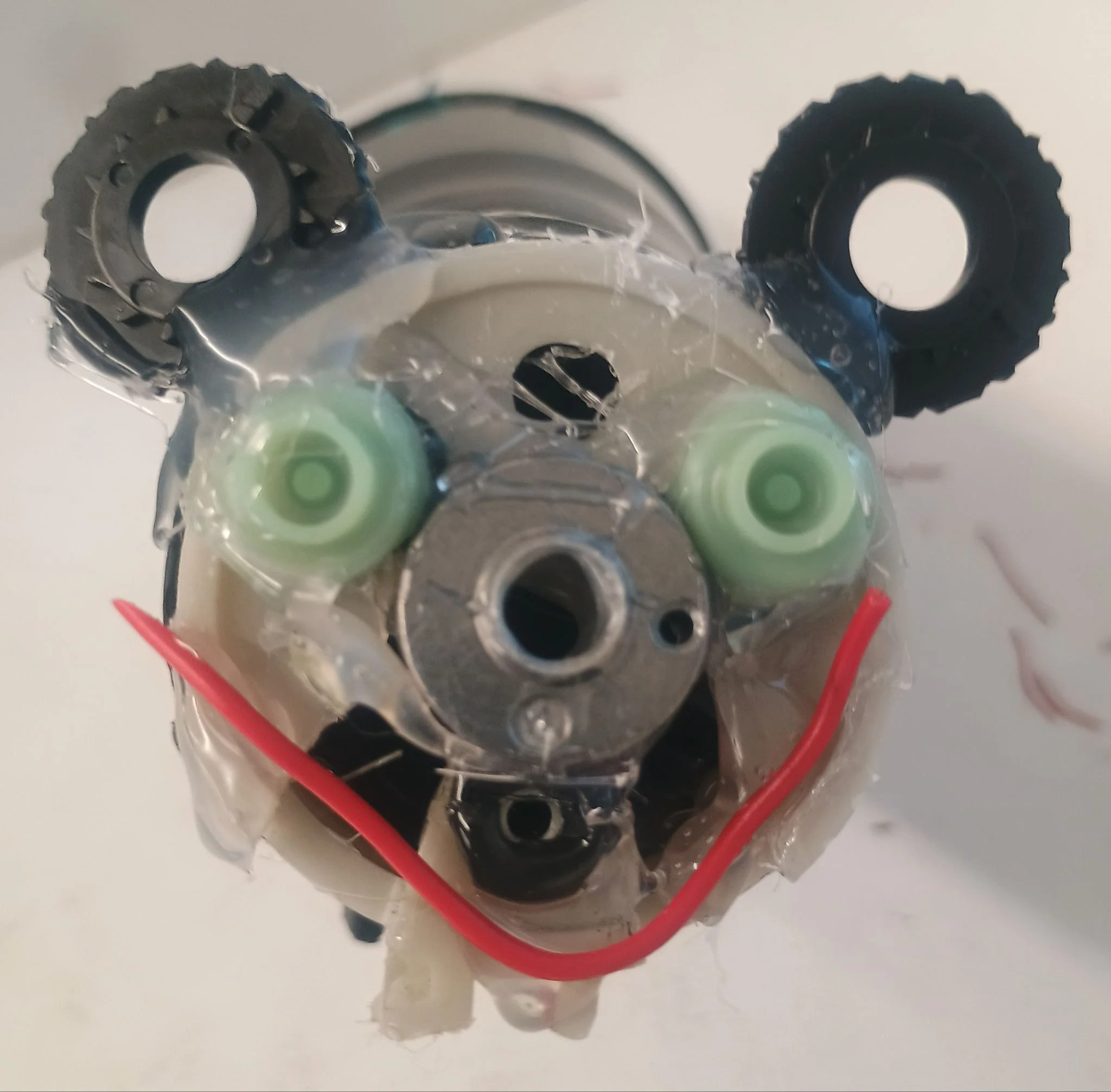
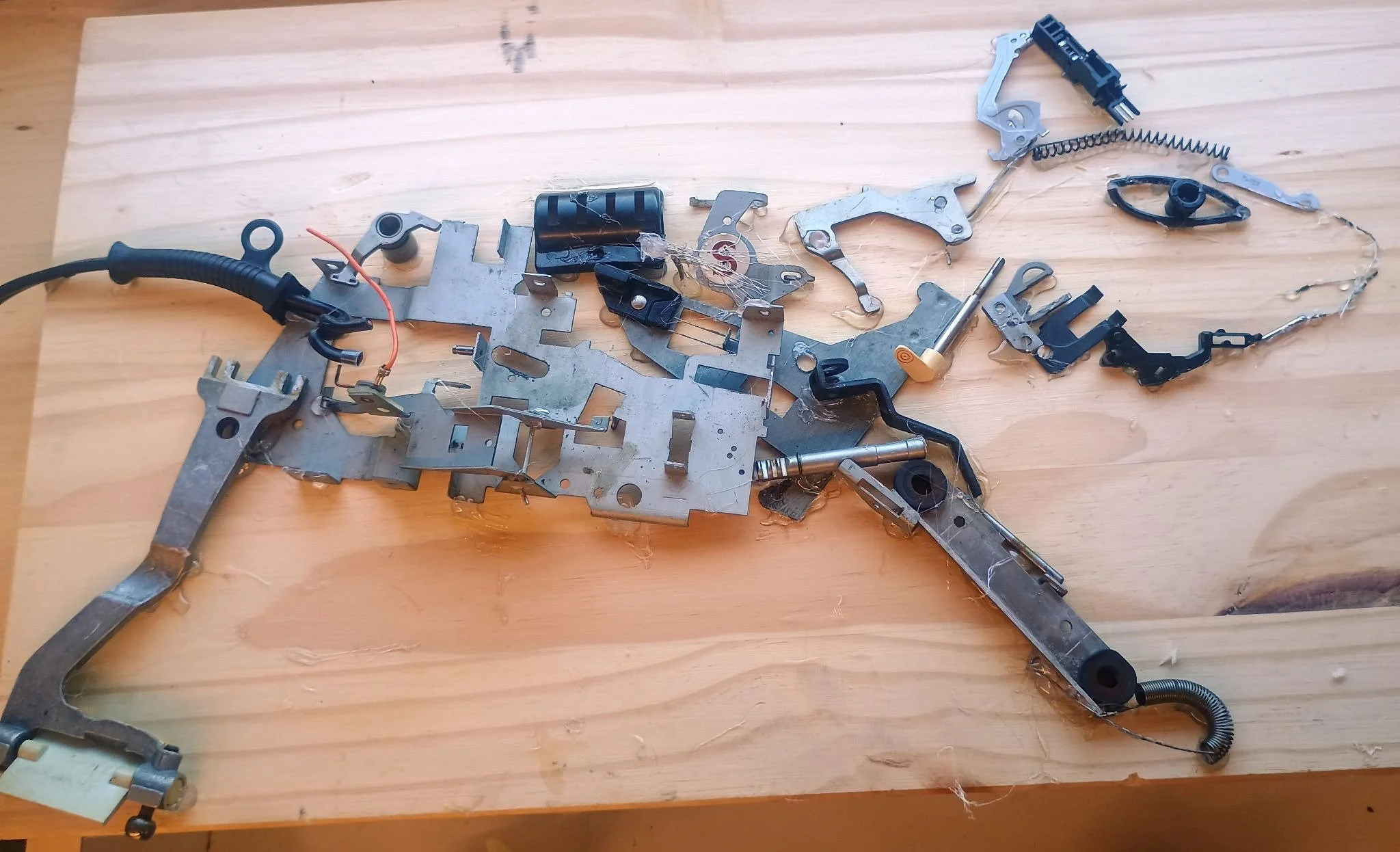
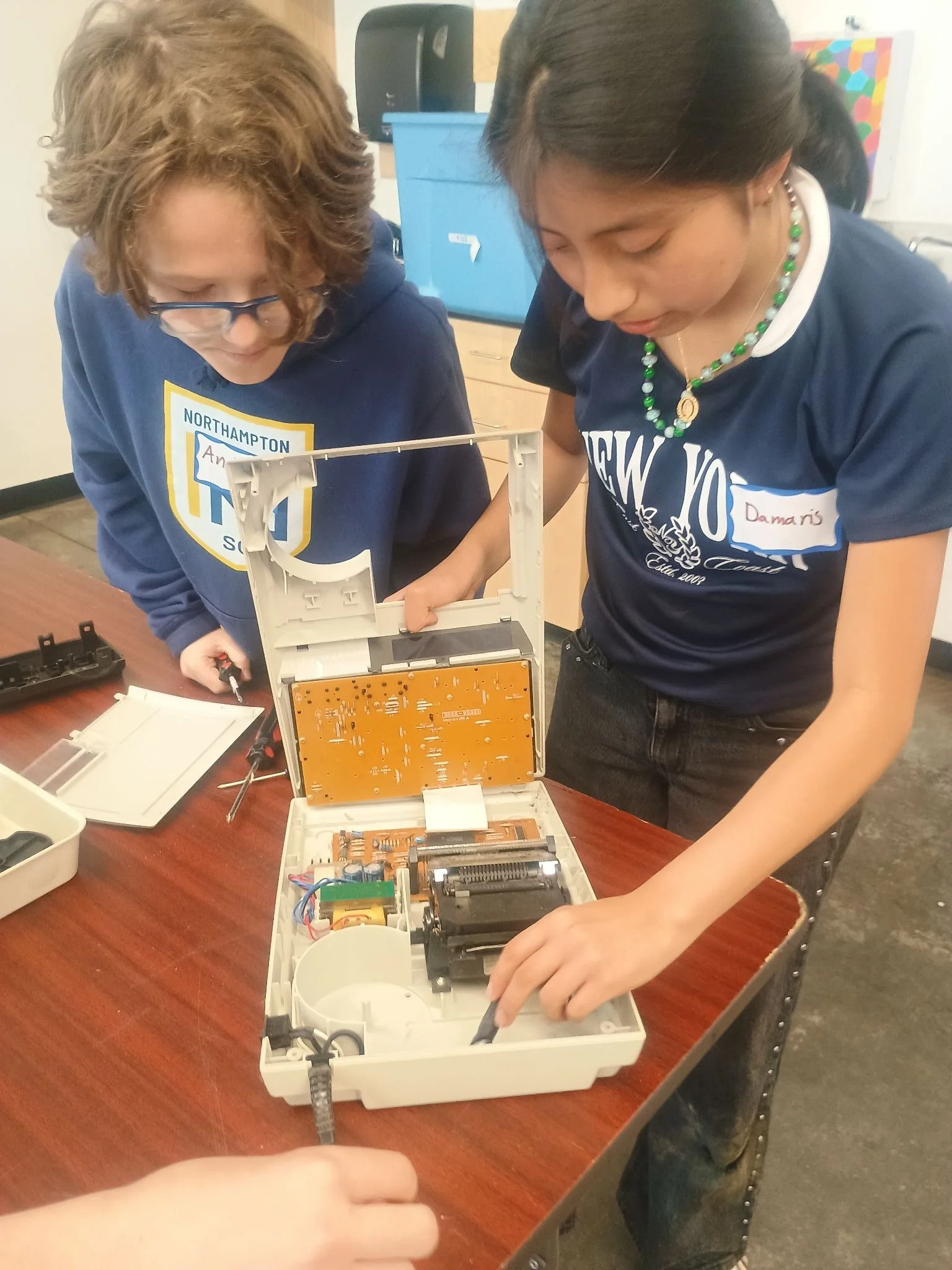
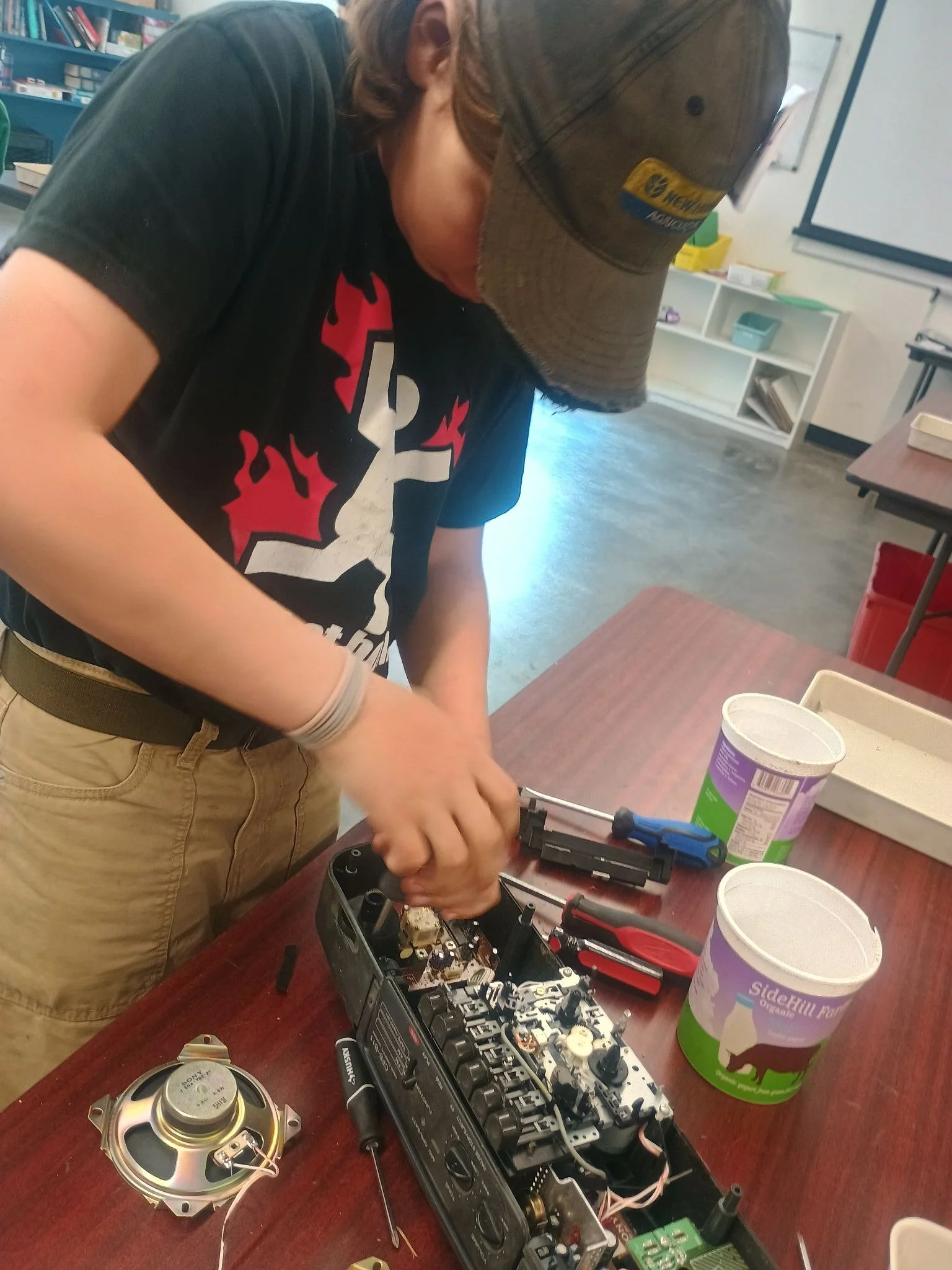
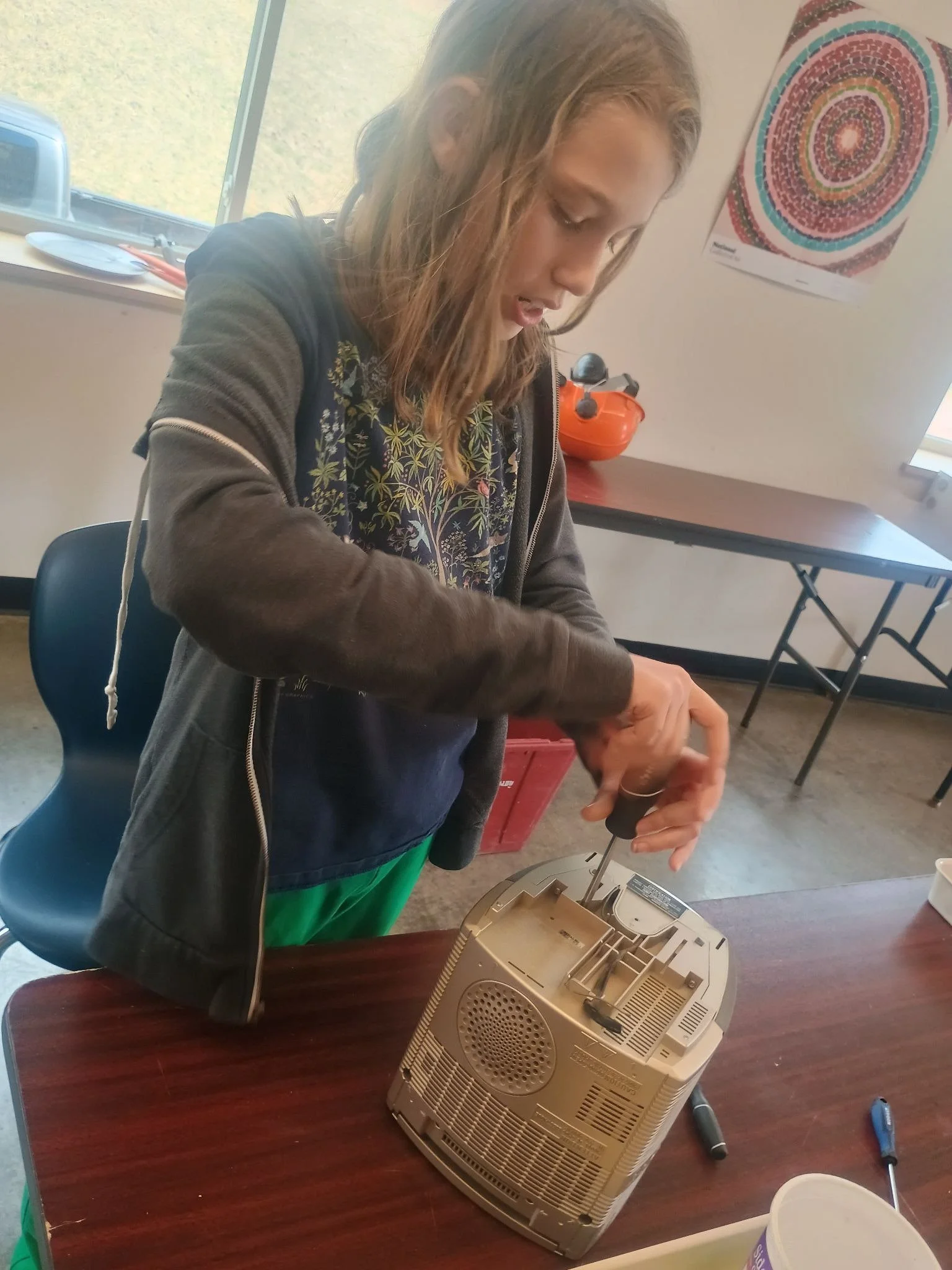
The chart below details each student’s project. Photos show parts of the process. Look for the final projects on display in the Main Lobby.
Chris Sanborn
Projects Teacher, Director of Facilities