Writers Workshop in the Mups: Writing for Real Readers
This year in the Mups, our Writers Workshop has been grounded in a simple but powerful idea: writing is meant to be read. Drawing inspiration from the philosophy of Collaborative Classroom’s Being a Writer approach, we’ve been exploring how young writers grow when they see themselves as authors with something to say and an audience who is listening.
Rather than focusing first on grammatical correctness, we’ve been prioritizing purpose, clarity, and connection. Who am I writing for? What do I want them to understand, feel, or imagine? These questions have become central to our work.
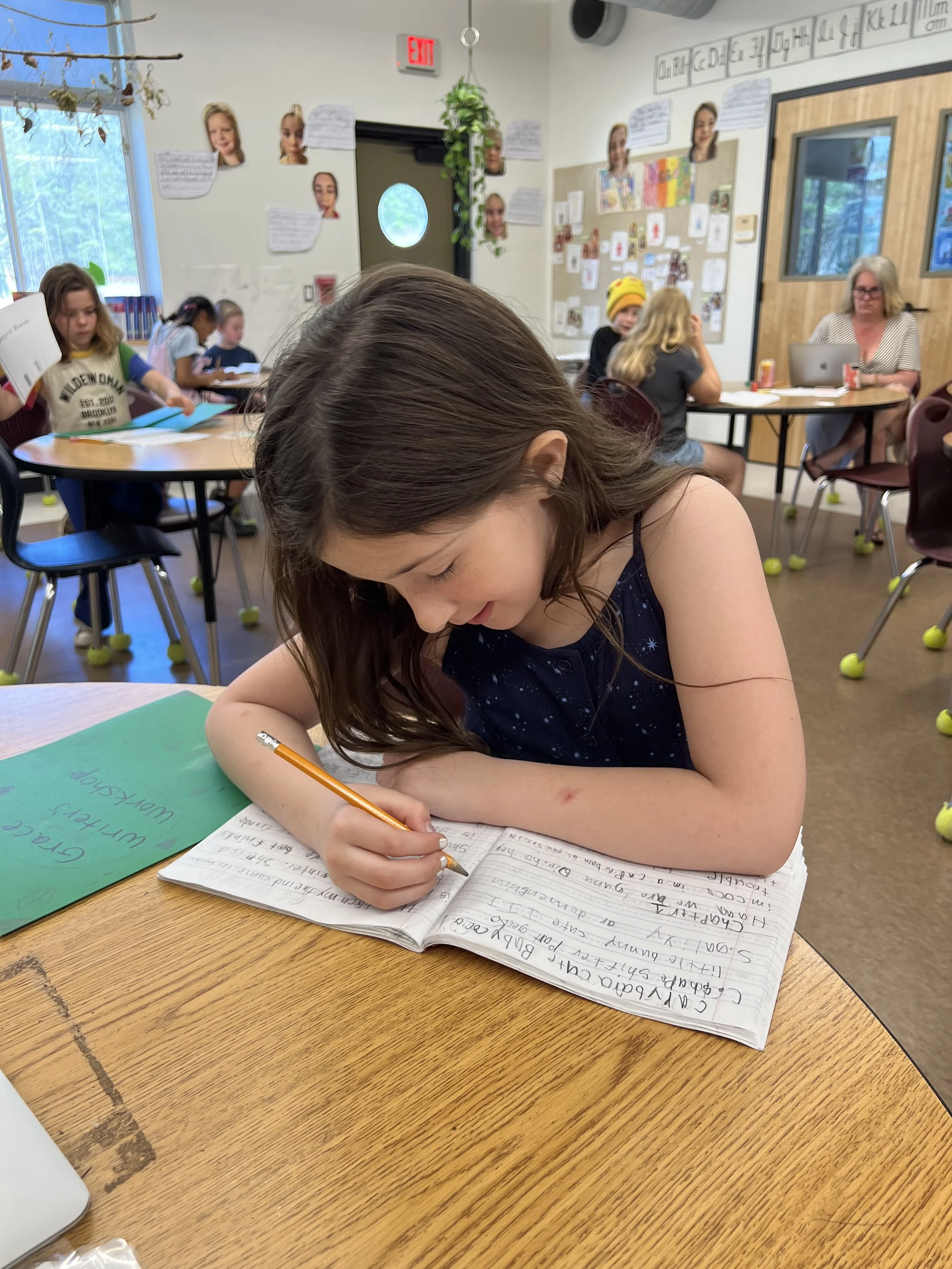
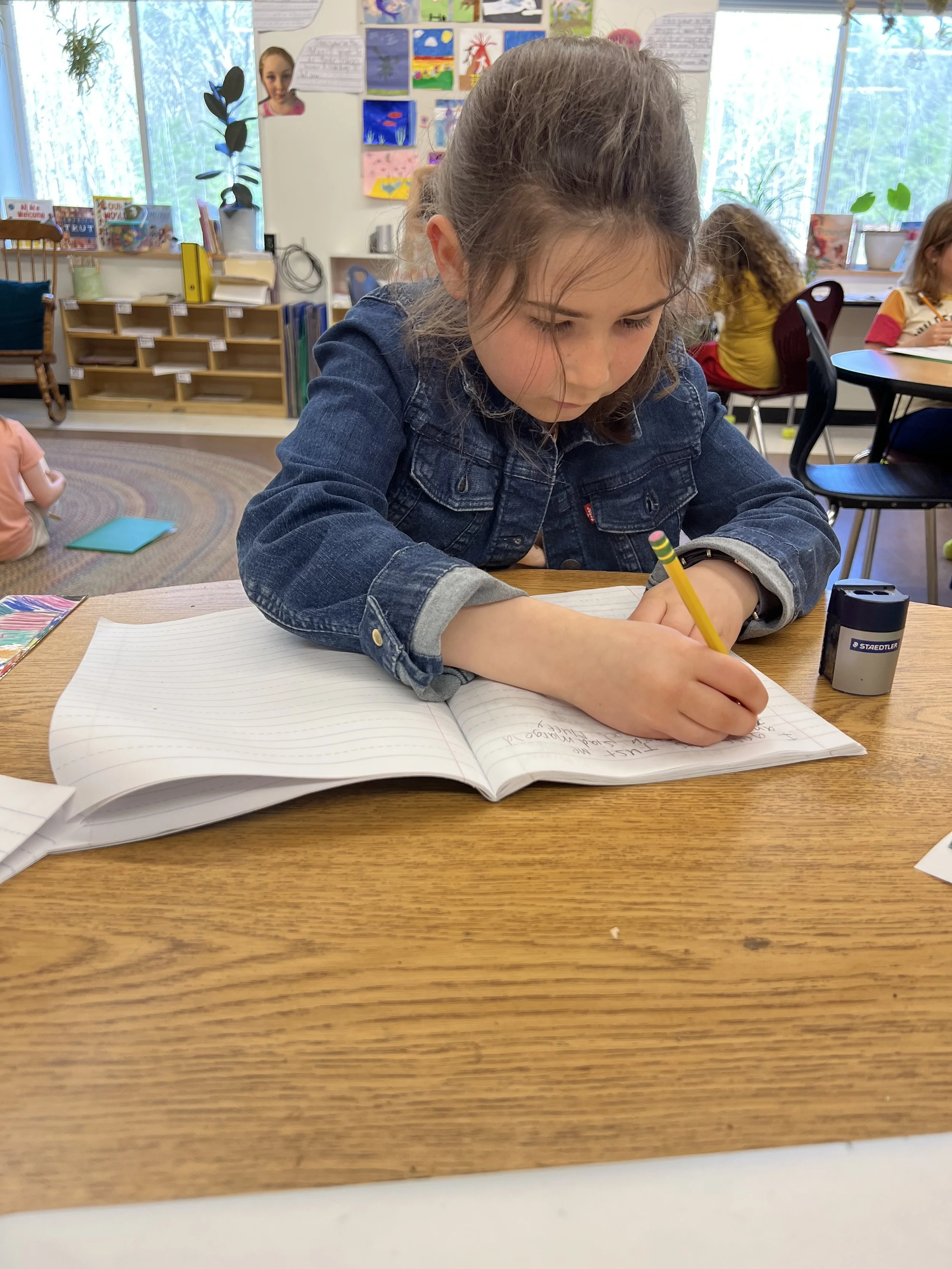
One of the most transformative shifts has been our emphasis on peer-to-peer feedback. Writing in the Mups is not a solitary act. Students regularly read their work aloud to a partner as they draft, especially during our fiction unit. As they developed stories with clear beginnings, middles, and ends—complete with detailed characters and settings—they paused along the way to ask: Does this make sense? Can you picture it? What are you wondering?
To support this, students used feedback cards with sentence starters like:
I could picture __________________ when you said ________
What did __________________ look/sound/feel like?
Why did __________________ happen?
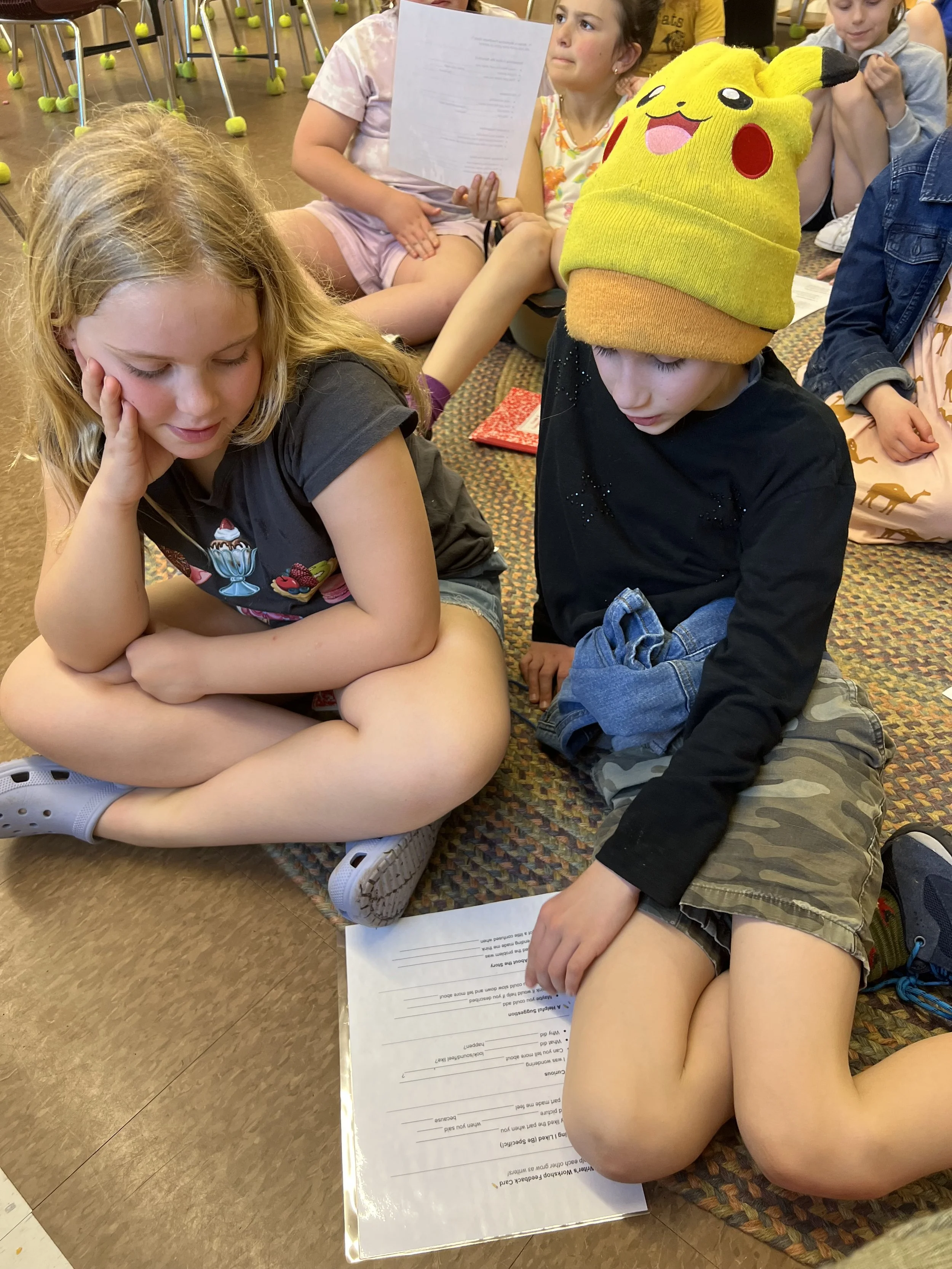
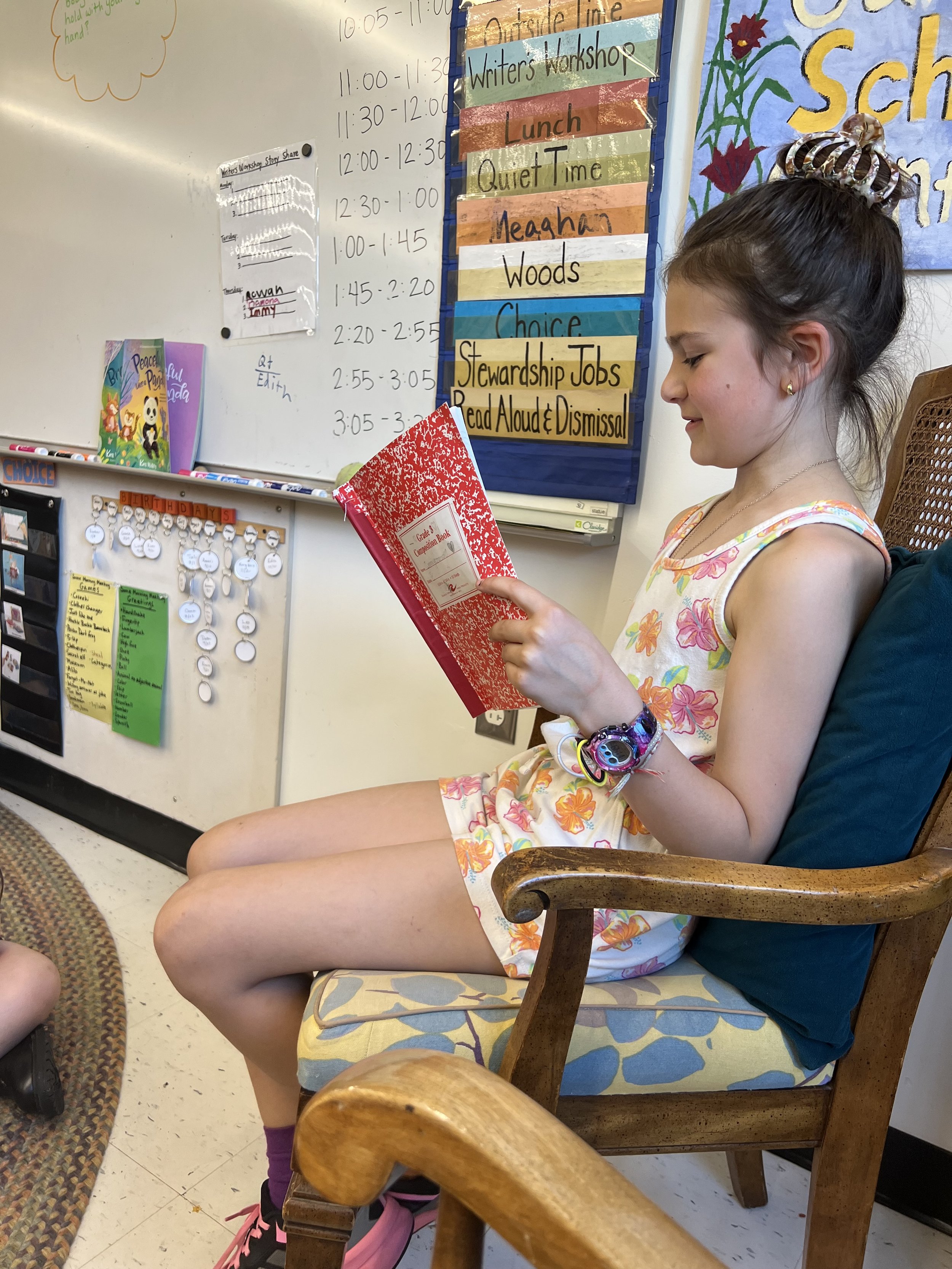
What began as structured practice quickly grew into something more organic. Students are now remarkably thoughtful and specific in their feedback, often pushing one another to clarify ideas, add detail, or reconsider how a reader might experience their story. They are learning that good feedback isn’t about fixing, it’s about helping a writer say what they truly mean.
This attention to audience has also reshaped how we think about revision and editing—an area that can often feel elusive, even for experienced writers. In the Mups, editing is not framed as “fixing every mistake” or striving for perfection. Instead, we ask: How can I make my writing clearer and more powerful for my reader?
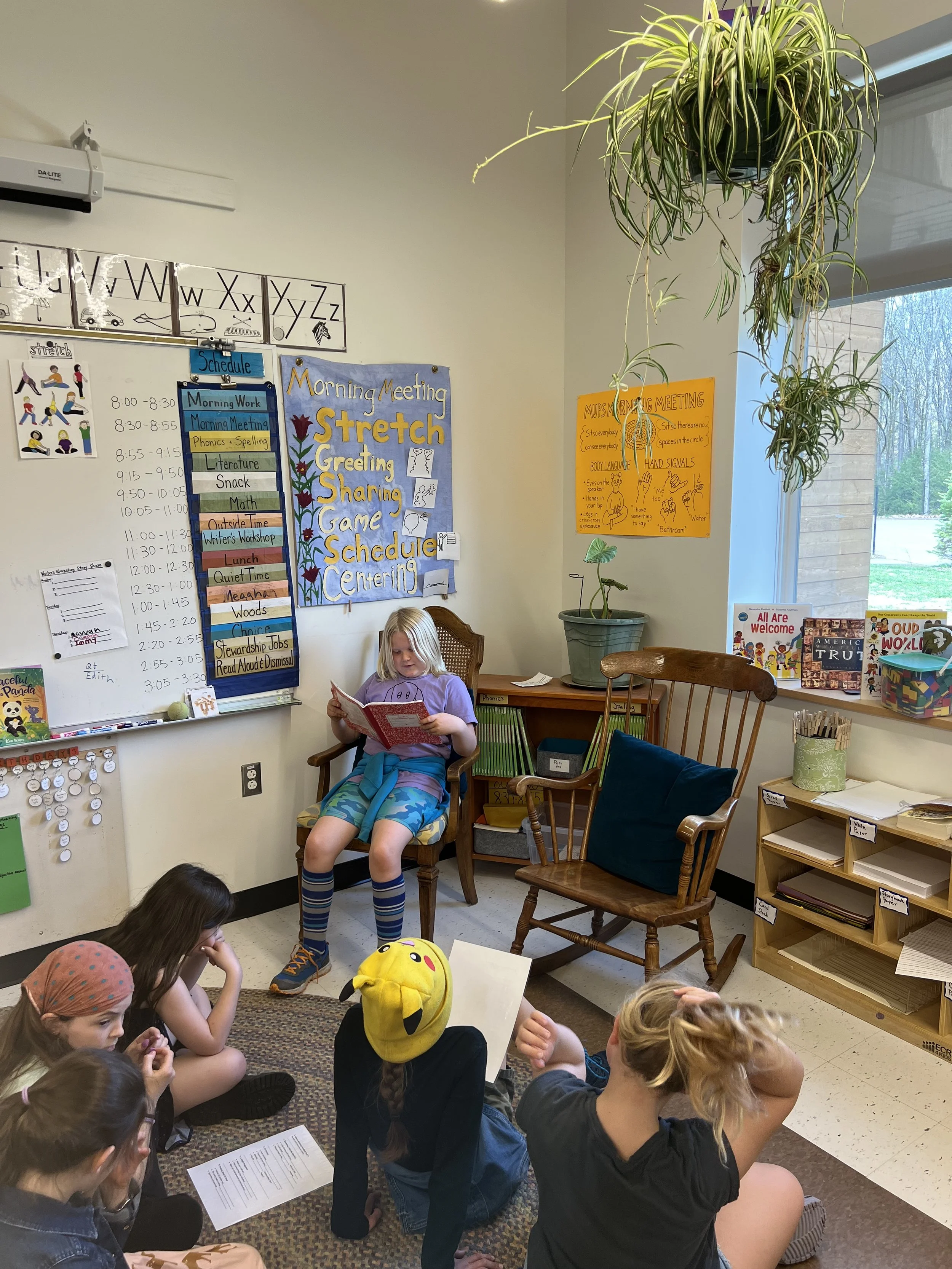
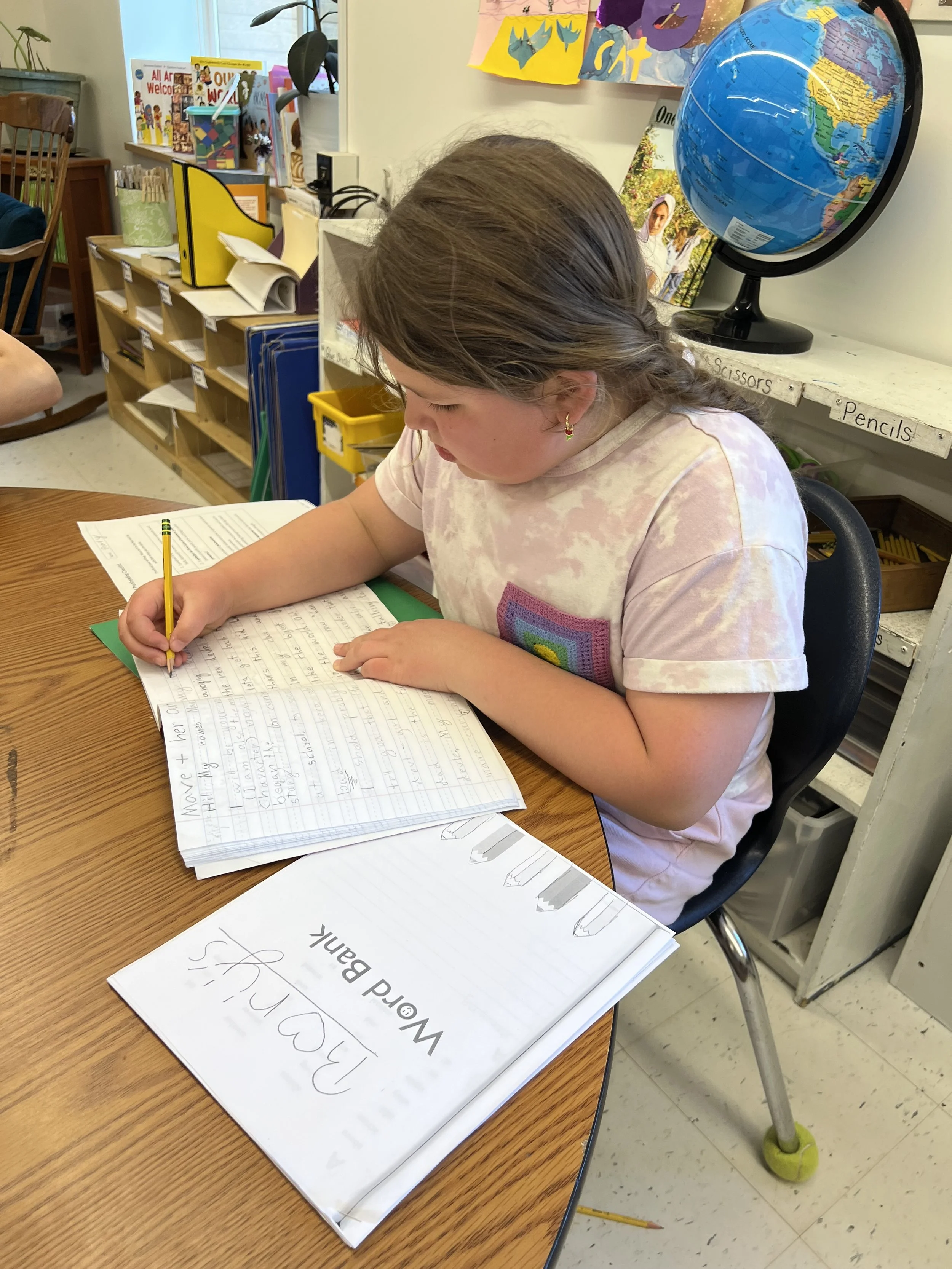
Students engaged in both self-editing and content editing throughout the writing process. They built and used personal word banks, adding words they wanted to spell correctly and use intentionally. They revised their work by listening to it, reading aloud to catch places where their writing didn’t yet sound right or fully express their ideas.
Our “Author’s Chair” has been another cornerstone of this work. Sitting before the group, students share their writing with a full audience and receive feedback from their peers. This practice reinforces that writing is a communicative act and gives students a meaningful reason to revise. When you know others are truly listening, editing becomes less about compliance and more about care.
Across the year, we’ve seen students grow not only as writers, but as collaborators, listeners, and critical thinkers. They are learning to hold their ideas flexibly enough to revise them, and strongly enough to share them.