
Food and Fairness: Delving into Food Justice with the Adventure Primes (3-5 year olds)
This past November the Center School hosted a food drive for the Franklin County Community Meals Program. The Adventure Primes heard about the food drive during All School, and noticed the growing collection of food on the stage across from the All School Room. From the beginning, it was important to Center School staff that the food drive was framed as a social justice issue, not as a simple act of charity. As you may have seen on the banner over the food collection area or read on the flyers posted around the school, we believe that "food is a human right."
When planning to approach social justice topics with very young children, it can be difficult to know how or where to start. Adult outrage about disruptions to the SNAP program is not the place to start when approaching the topic of food justice with the three, four, and five year old's in Adventure Primes. We have to peel away our own layers of knowledge and experiences, confront our own discomfort or fears or biases, and let the children guide our process.
One resource that I find helpful in these situations is the list of Characteristics of White Supremacy Culture (and their antidotes). There are many resources available based on and adapted from Okun's essay on the ways that white supremacy shows up in our values, behavior and practices. One characteristic that I constantly have to check in myself is a sense of urgency. It is so challenging to resist the urge to rush and "get to the point!" --to arrive at perfection, and make sure that the children have the "right answer" as soon as possible.
In this context, Sense of Urgency can be defined as a "Continued sense of little time that undermines inclusivity, and/or democratic and thoughtful decision-making. This sacrifices potential allies in favor of quick or highly visible results." I would add that urgency robs children of the opportunity for deep learning. Being able to parrot back what an adult has told you is not the same as true understanding.
The antidote to this urge is to set realistic goals, to understand that "things take longer than anyone expects," and to allow time for processing and reflection.
Although it would have felt very neat and tidy to "finish" addressing food justice by the time the food drive ended, the Adventure Primes deserve thoughtful guidance, time to process, and repeated experiences with new information and complex ideas.
The following is an overview of how this inquiry unfolded over a two week time period.
We began by assessing the Adventure Primes' understanding of why food is important and where people usually obtain food.
Why is food important?
S Because when you're hungry, you need some food to eat.
Z Because sometimes you don't want to [eat]. Sometimes yes and sometimes no.
N Because food gives you energy!
L Because eating makes you carve pumpkins easier because you get stronger. You can run and jump.
Ph Because it helps you grow. If you didn't eat, you would die.
A If you are hungry and you don't have food to eat and you can't get any you will die.
O Because if you die, maybe you could come back. If you eat, you won't die.
E If you poop and pee, then when you are five, you will grow!
Another morning, we asked the Adventure Primes:
Where does food come from? Where does your family get food?
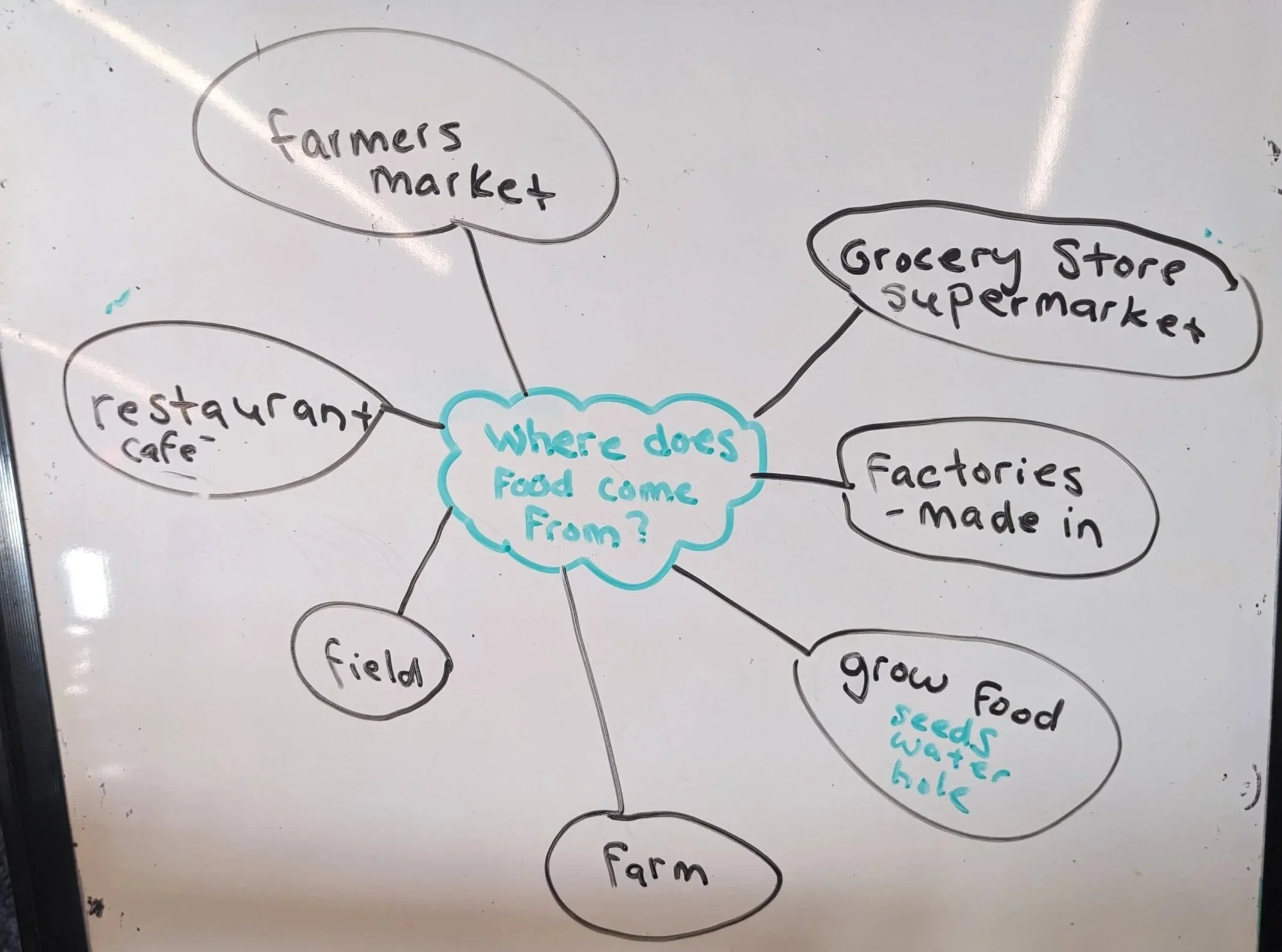
For this conversation, we created a simple "idea map" instead of recording children's individual answers.
The Adventure Primes spoke about getting food at grocery stores or farmers markets, growing food at home or on a farm, eating at restaurants. One child also pointed out that some food is made in factories.
After these two conversations, our next goal was to introduce the topic of inequality by comparing and contrasting the concepts of "not enough" and "more than enough."
To launch this conversation with the Adventure Primes, we stated:
We have been talking about food. We know food is important. People need food to grow and stay healthy and have energy.
Something true about food is that some people have more than enough food and some people don't have enough food.
Then we asked the children,
What does 'more than enough' mean? What does it mean to have more than enough food?
N Too much food.
O It means that you actually do have food. A lot of food.
S Like, if you buy some food at the store and you have food growing in your garden that would be a lot of food.
P If you have food at your house and you buy more food from the store.
Z Maybe you get to a restaurant and then you get a lot of food and you eat it at home.
E I know a book about a very hungry caterpillar and he ate so much he got a stomach ache.
[Many children chimed in that they also know the story of the Very Hungry Caterpillar]
Sandy In that story, did the caterpillar have enough food or more than enough food.
[The children all responded "more than enough."]
Ph It means that you get all the food no one else can eat it. If someone asked for it and you wouldn't let them.
Sandy Adventure Primes, what do you think about that idea? What if someone had all of the food and wouldn't share any?
[The children called out responses like: mean, sad, bad, not nice]
We heard lots of ideas about what it means to have more than enough food. What does it mean that some people don't have enough food?
W It means you don't have that much.
S Because if you took it all from the store, there wouldn't be any left. But what would be nice is if people gave them more food. Like, some people have too much.
N People need enough food for every day.
What happened next in the conversation was surprising. When I asked, "Do you think it's fair that some people don't have enough food, but other people have more than enough food?" the majority of the Adventure Primes said "yes". When I repeated the question, some switched their answers, watching my face in the way children do when they are trying to judge what answer an adult wants them to say.
It was so hard not to rush into an explanation at that moment, but we let the conversation end there.
This was an opportunity to reflect and be curious and thoughtfully plan next steps.
In reviewing my notes from our conversations, it was clear that the children do not lack empathy. Many of them mentioned giving food to people who don't have enough.
Vocabulary, especially nuanced and loaded terms like "fairness" or "justice" is a common place where adult and child understanding diverge.
What about the word "fair?" How do the Adventure Primes understand the meaning of that word?
For many children this age, the idea of "fair" is closely tied to getting what you want, rather than fair meaning equal.
Perhaps in their minds, the fair part is that they, themselves, have enough food. Maybe they don't really have a definition of fair in their minds. Maybe the exact phrasing I used: "It's true that some people have more than enough food and some people don't have enough" influenced their responses. If it's true and real and just how things are, it must be fair.
To dig into this idea some more, we wanted to provide a concrete, relevant, experience for the children that might challenge their existing definition of fairness or provide an example to help them begin to grasp the meaning of the word.
The Unfair Tea Time
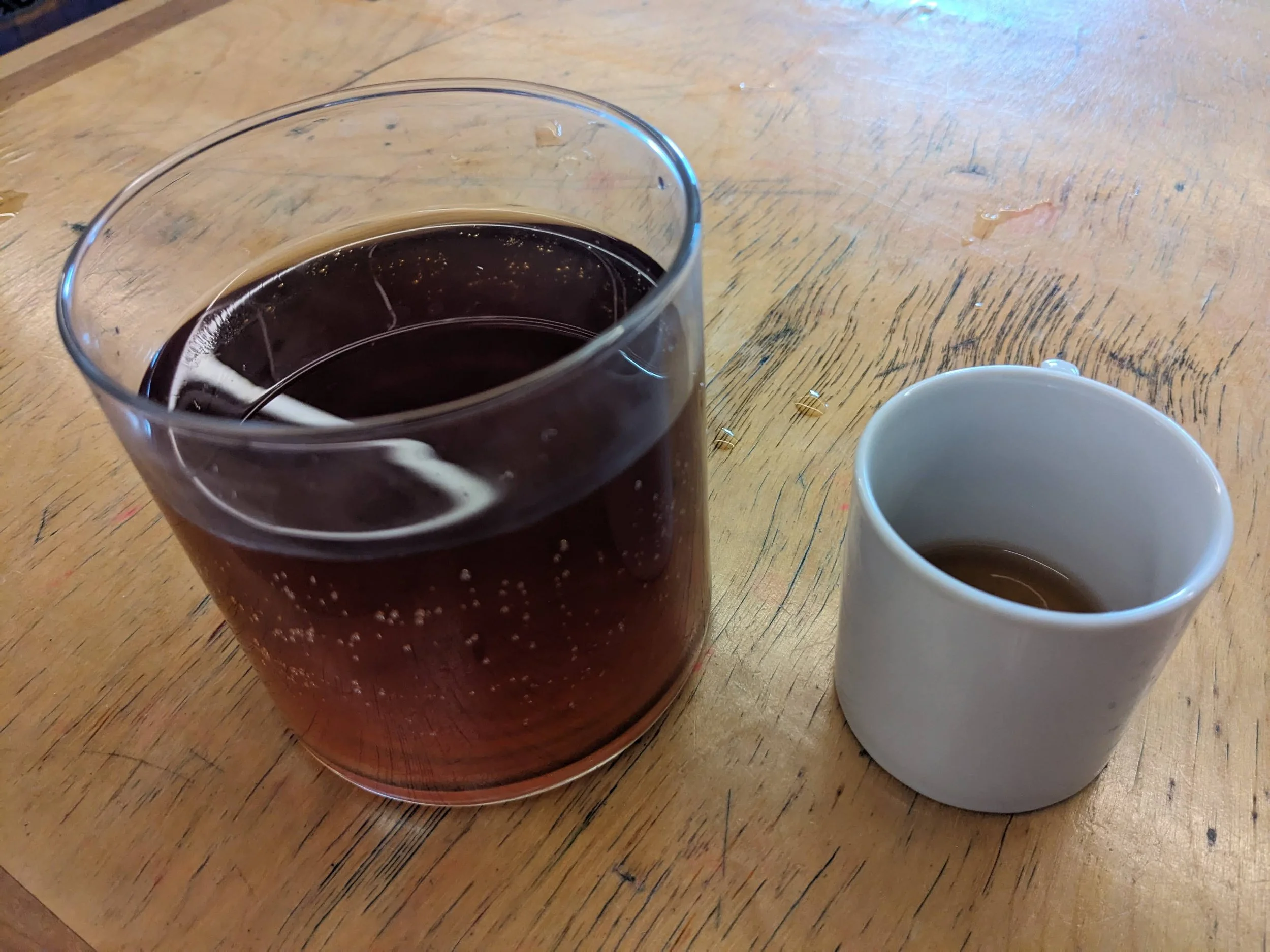
During this provocation, we set up a phone to record during our afternoon tea time. We deliberately set up an unfair situation, which launched a great discussion.
When we announced teatime one afternoon, the children were very excited. The class enjoys this ritual and everyone was excited to try the Bengal Spice tea.
Usually the children receive a full espresso cup of tea during tea time. If they like the tea, they can have a second cup.
This time, each child was given a cup with the barest splash of tea at the bottom.
As the tea was passed out, there was some confusion:
"I only got a little!"
"Me, too!"
"I just have a little bit of tea."
Heartwarmingly, several trusting students assured their disgruntled classmates that teachers were just letting everyone try the tea to see if they like it.
"Teachers are just giving you a little bit so you can see if you like it."
"Yeah, that's why there's only a little bit."
When children began declaring, "I like it," expecting more tea would be added to their cup, I said:
"Well, that's all the tea that kids get."
I then placed a large clear glass on the table and filled it to the brim with tea, explaining, "This is my glass."
Children complained about wanting more tea and were told, "that's all the tea kids get today."
"But we like it. We want more," the kids replied.
I asked, "Do you feel like you didn't get enough tea?" and the children all responded yes.
"We need some a lot like that," said one student, referring to my large cup of tea.
"Hers is really bigger and ours is really smaller."
"Does it feel fair?" I asked.
Initially, children still said "yes."
After a pause, a few kids said "No, it doesn't"
Then my co-teacher pointed out that they had not received any tea at all!
There was a collective gasp around the table.
I asked, "Do you think I got enough tea, or more than enough tea?"
The children agreed that I had more than enough.
Most agreed that they did not get enough tea.
I asked, "How does it feel that you did not get enough tea?"
The children responded,
"Not feel good"
"It feels weird"
"It feels sad"
Once again I compared my amount of tea (more than enough), the children's tea (not enough) and CK not getting any tea at all.
"How can we make it fair?" I wondered.
The children said that it would be fair if they got more tea. Then they began calling out numbers (referring to the amount of pumps from the tea carafe).
I proposed filling all of their tea cups up, but still leaving CK without any tea.
Again the children said this was fair.
I asked how CK would feel if everyone was drinking tea but them.
Then the children said that CK would feel bad, and they should get a big cup of tea as well. I said that if I poured CK a big cup the size of mine, there wouldn't be enough tea left for kids to have more. The children then said I could share my big glass of tea with CK.
Next, I asked, "If you all get a full cup, and we give a cup to CK, and I pour some of my back and get a regular cup-- if we all had the same amount of tea, would that feel fair?"
The children chorused "yes."
We gave the Adventure Primes more tea and asked again about how it felt when I had more tea than everybody else:
E It felt unfair.
P It made me feel sad.
N It made me feel uncomfortable.
O It felt unfair.
S It felt angry.
I assured the children that I wasn't trying to be mean-- that I was always going to give them more tea, but I wanted our brains to think about "not enough" and "more than enough."
We ended with, "Does it feel better when everyone gets what they need, when everyone has enough?"
"Yes!"
"Enough feels fair."
This was such an interesting experience, and a great springboard for future conversations with the children.
Stories about Food Justice
In addition to thinking about fairness and "more than enough" vs. "not enough" we wanted to introduce the Adventure Primes to some ways that people get food that were not on the list that they brainstormed the previous week.
Amanda joined during lunch time one afternoon to read a story called Saturday at the Food Pantry
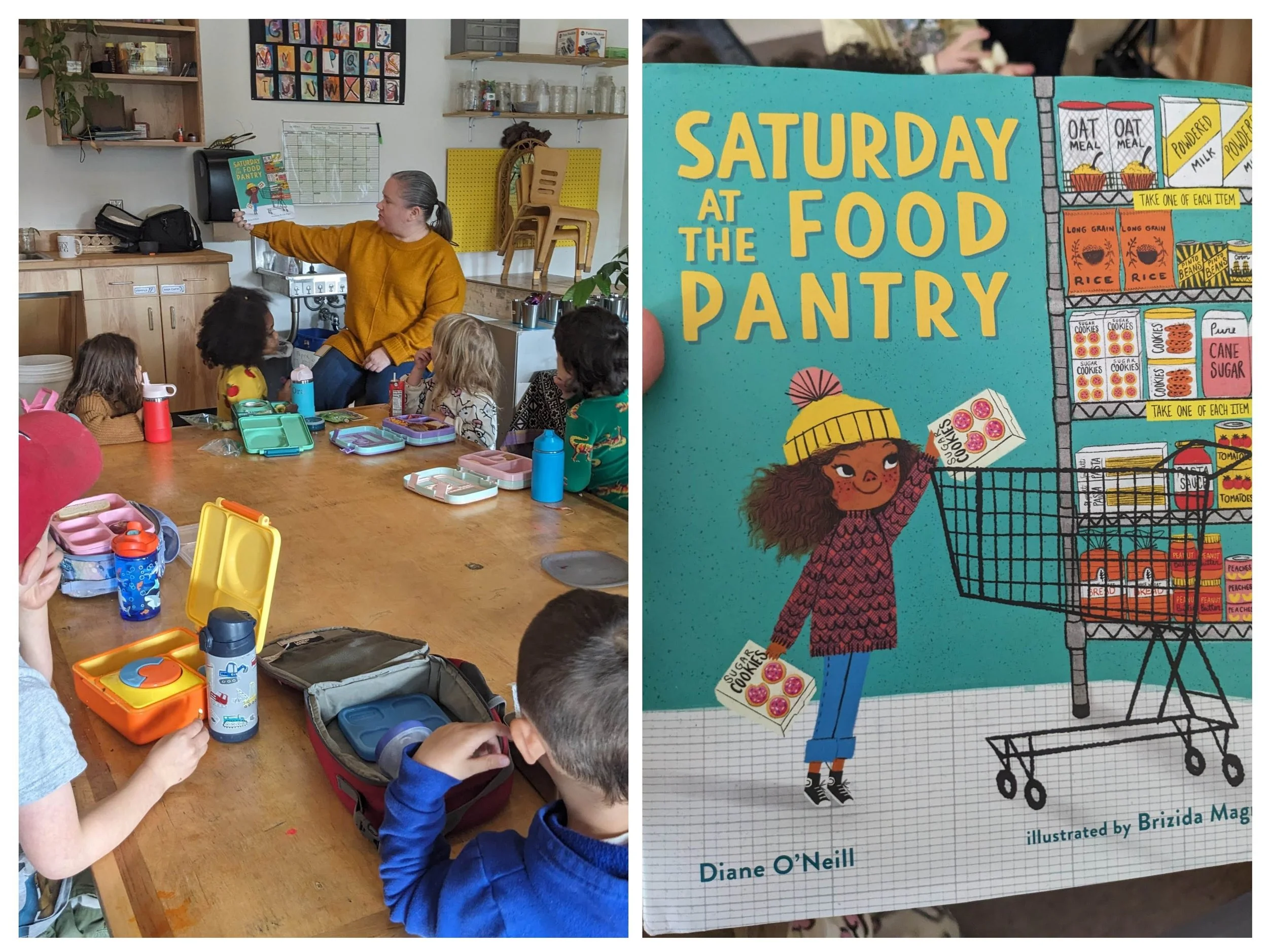
This story recounts Molly's first time visiting a food pantry with her mother. While waiting their turn to enter, she sees her friend Caitlin. The two draw pictures for everyone waiting in line. In the store, Molly's mother explains that there are rules about only taking a certain amount of each food so that there is enough for everyone who needs more food. On the way home, they run into Caitlin and her gram again, and decide to have an impromptu picnic.
We added "food pantry" to our class list of places where people get food, and then discussed how a food pantry is different than everywhere else on the list.
"When you go to a store or a farmers market or a restaurant, what do you have to do in order to get the food you want?"
S You need money.
E If you lose your money you can't pay for food.
Amanda talked to the class about how a food pantry is different than a grocery store because you don't need money. The food is free and anyone can have it. She went on to explain that places like food pantries get a lot of their food by donation and our school is collecting food so that places like the pantry in the story will have plenty of food on their shelves. She then added, "Everybody needs help sometimes. Sometimes we have a lot of something, and we can share with other people. Sometimes when we only have a little of something, people will share with us."
O agreed, saying, "We have to take care of people if they don't have more food."
Later in the week, we read the book Our Little Kitchen, a graphic novel-style story about people preparing a meal at a soup kitchen, inspired by the author's own experiences as a child.
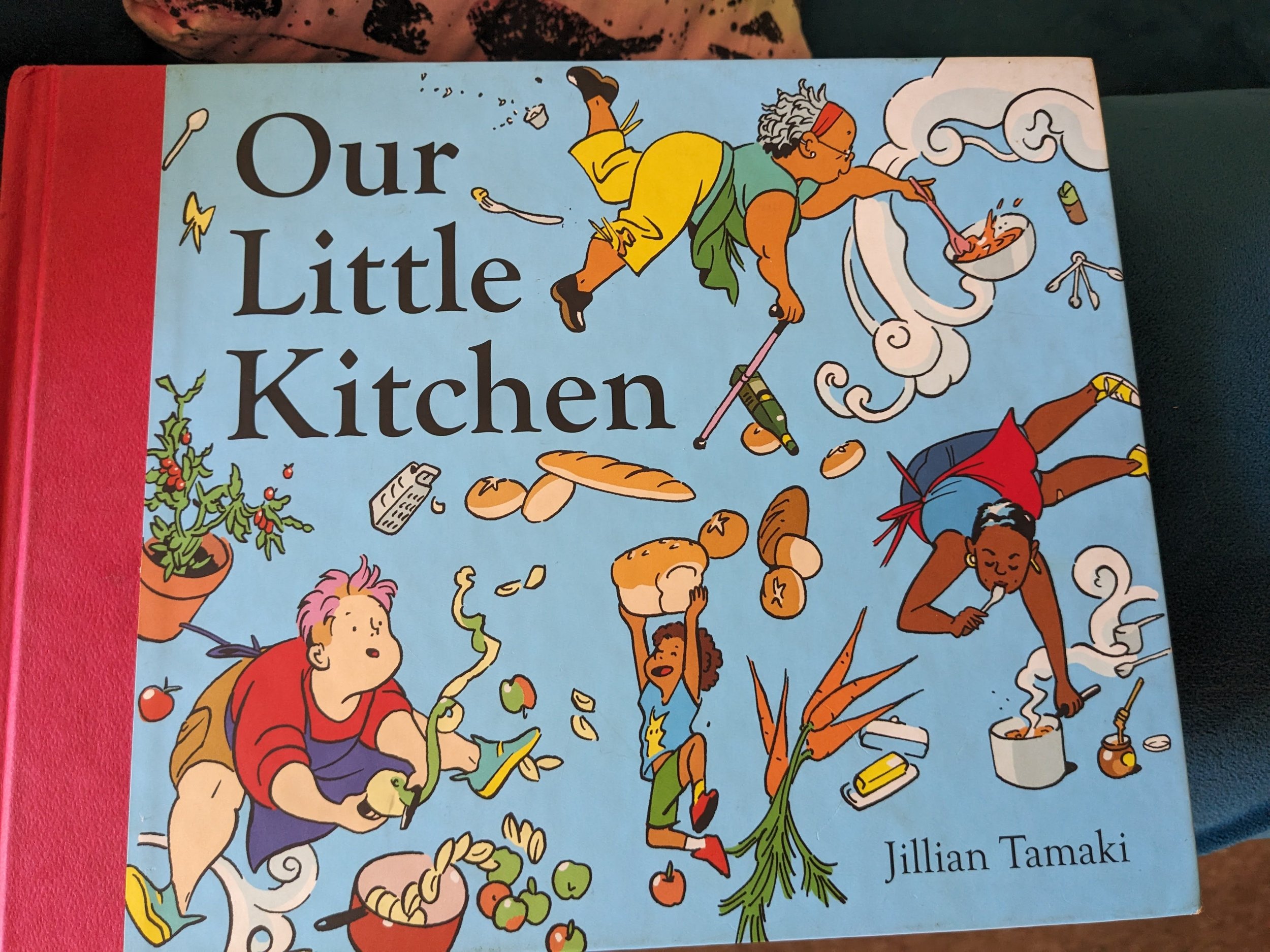
We compared this story to the one that Amanda read, explaining that while a food pantry is like a grocery store where you don't have to pay money, this book was about a place that is kind of like a restaurant except that you don't have to pay money. Lots of people think it's unfair that some people don't have enough food while other people have more than enough, so they create places where anyone can come and get enough food, even if they don't have money.
When deciding what stories to share and what examples to provide we carefully assessed the available children's literature. Older classes read the book Maddi's Fridge, but we felt that the main character's feelings of shame about food insecurity was not the correct introduction to the subject for the Adventure Primes. The story also revolves heavily around secret-keeping, which may have muddled our intended message as well. Another book, Lulu and the Hunger Monster, was deemed a bit too abstract for our class. In the story, the main character's hunger is personified as a monster, which is confusing for children this age who are concrete thinkers.
It is also important for us to make sure that we are avoiding shame, judgement, victimization, or "othering," when we broach the topic of inequality.
Our perspective is not "there are poor people without enough food and we should feel bad for them." Rather, our hope is to relay the message, "Everyone needs food. It's not fair that some people don't have enough and some people have more than enough. What can we do about that?"
In Our Little Kitchen, the people preparing the meal use humanizing language like, "Our neighbors are waiting," when talking about the people who have arrived. They are cooking for their neighbors, not "serving clients" or "helping poor people who are hungry."
In Saturdays at the Food Pantry, the author states clearly, "Everybody needs help sometimes," emphasizing the balanced give and take of community care and mutual aid. Sometimes we are in a position to help; other times we depend on other people for help.
Guiding and learning alongside children when approaching difficult topics is one of the most rewarding aspects of being an early childhood educator. We are excited to continue exploring the ideas of fairness and justice with the Adventure Primes this year. For now, we are thinking of more ways to add to children's understanding of fairness. It is likely that many of our initial examples will associate "fair" with "equal" or "the same." Then, we can shift to a more nuanced definition of "fairness" as "equity," meaning that everyone should get what they need.