Ownership - a topic for pedagogical documentation
Primes teachers (toddler-first grade) have been engaging in professional development work with Dr. Peggy Martalock from Greenfield Community College. As a part of this work, Peggy has challenged us to choose a “big idea” to think about throughout the school year. This idea will be the focus of our pedagogical documentation, an important planning and teaching tool in Reggio Emilia inspired classrooms across the globe.
The topic that we have chosen is ownership, an expansive idea that can feed so many inquiries, and investigations in an early childhood setting. Ownership comes into play literally and figuratively in every moment of our days, whether we are conscious of it or not. The following dialogue was captured with curiosity about how children use language to negotiate ownership within their pretend play. Special attention was paid to the way that children understood the use of the words yours, mine, and ours.
Mae - (no child is near her) “I don’t want anyone to take my baby anymore. It’s my baby, my baby, my baby. It is my baby. (a peer approached her) Don’t take my baby!”
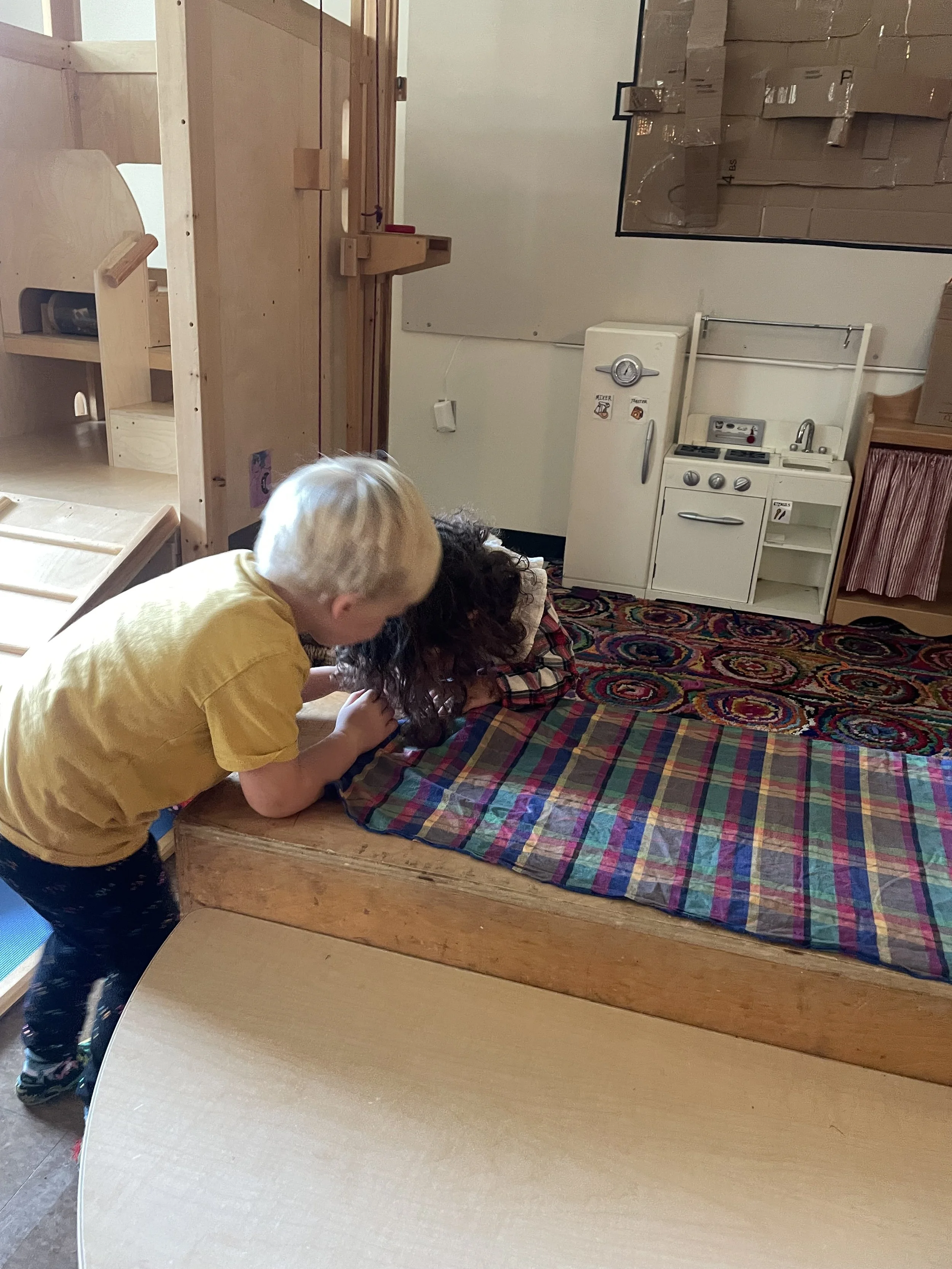
Marlow - (from across the room) “That is yours. You are having a turn with it.” (joined her in covering the baby with a blanket)
Mae - “Not like that, not on her face. She doesn’t want her eyes to be no eyes.”
Marlow - “Okay” (adjusting the blanket)
Mae - “Let’s say goodnight. Marlow, want to give her a kiss? Let’s close the door.”
Marlow - (blows kisses from the door)
Mae - “She waked up!”
Marlow - (picking the baby up) “let’s take her out of bed”
Mae - “Oh baby, I missed you!”
Marlow - (dropping the baby) “She broke!”
Mae - “Let’s get a new one. This is our baby, she has to go to the doctor. Me and Marlow’s baby have pain, so we have to go. This is my baby.” (to Owen who is newly joining the game)
Marlow - “No! My baby!”
Owen - “I brought a baby to share with you.”
Mae - “No, I want that one!”
Marlow - “Want a different one?” (to Mae)
Mae - “No, the other one!”
Marlow - “I am holding it.”
Mae - Looked at the teacher for help. “I want it.”
Kiah - “You want it. I think you were all playing together with the baby.”
Marlow - “We are sharing it. I am holding it to sleep and then you will hold it.”
Owen - “We are sharing the babies.”
Mae - “I brought a blanket for your baby. Want this blanket?
Owen - “We are in the car.”
Mae - “Can I hold you baby? Do you want a blanket for your baby?”
Owen - “We are here, at the house.”
Mae - “I have your blanket”
Owen - “I want to hold my baby.”
Mae - “We are at our house.This is the kitchen of our house. I got your blanket.”
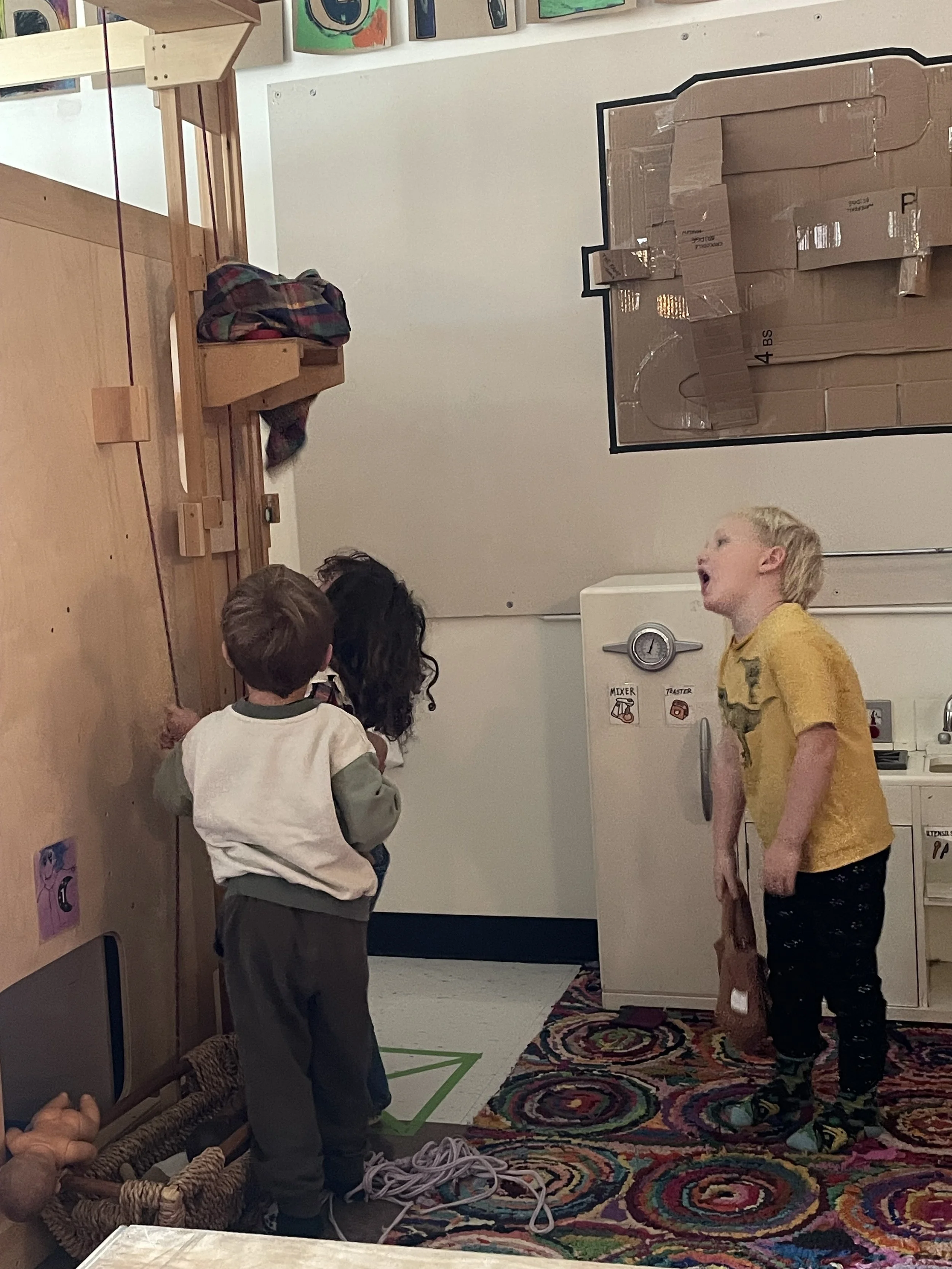
Owen - (placing the baby on the elevator toy on the climber and raising it up out of their reach) “Oh no, our baby is stuck!”
Marlow - “We have to go to the doctor.”
Mae - “I am driving in my car.”
Marlow - “This is our car, you are the driver, Owen.”
Owen - ‘No, Mae is the driver. We are here, at our house.!”
Marlow - “We are a family. Want a bag for your baby?”
Mae - “Yeah, get a bag.”
Owen - “A big one!”
Mae - “The babies have to go in the bath.”
Owen - “Mine is not dirty.” (taking the babies that Bode was playing with)
Bode - “Hey! Those babies are mine! I am taking care of them!” (Owen gave them back)
(rocking and hugging the babies) “My babies, my babies.”
Sam - “What are you guys playing?
In reflecting on this dialogue, the following rules seem to be true.
If a person is holding something it is theirs unless otherwise specified.
If a person is “having a turn” it is theirs.
If people are playing together it can be ours, or it can still be mine or yours.
When someone new joins the game, all original ownership of items is reinstated.
If something is not mine it is yours by default.
If we are doing my idea, I am the assumed owner of all things unless otherwise agreed upon.
The rules of ownership can change, minute to minute, throughout the game.
As teachers we often jump in and attempt to scaffold these interactions. An interesting part of the challenge here was to not intervene with adult approved parameters of ownership and sharing. Instead, teachers have agreed to allow these conversations to unfold naturally for the children on their terms. Recording and transcribing provides an opportunity for reflection and co-constructing understanding of the language of ownership in the classroom and beyond.