Supporting Student Wellness: Why Our Counseling & SEL Classes Matter
Hello, Meaghan here - reporting from the Wellness Corner of The Center School!
In my role as School Counselor, I support students in a variety of ways. This year, that includes 1:1 sessions, small-group work, time spent playing and connecting outside, and weekly wellness classes for our MUPS–Uppers. For this bulletin, I thought it might be helpful to share why whole-class wellness and mental-health instruction is such an essential part of our school program.
Why School-Based Wellness Support Matters
According to the National Alliance on Mental Illness (NAMI), one in six U.S. youth ages 6–17 experiences a mental health disorder each year, and half of all mental health conditions begin by age 14. Many commonly diagnosed conditions (including ADHD, anxiety, and depression) often emerge during the primary/middle school years and only about half of students who need support receive any form of treatment during these years. Source: NAMI — Mental Health in Schools
School-based services help eliminate common barriers to care which include transportation, scheduling, cost, stigma, and lack of access. This is why social-emotional learning (SEL) and wellness instruction during the school day is so important. These programs make support accessible to all students.
What the Research Shows
A 2025 meta-analysis of 22 studies including 24,510 elementary and middle schoolers found SEL participation to be associated with stronger academic outcomes across multiple subjects. Source: PubMed
SEL benefits extend well beyond academics. Research from Yale School of Medicine shows SEL participation reduces anxiety and stress, strengthens peer and teacher relationships, and increases self-esteem, optimism, and sense of belonging. Source: Yale School of Medicine
A review of 79 studies (19,000+ children in preschool and early elementary) found universal SEL improves social competence, emotional regulation, behavioral self-control, and early learning outcomes. Source: JAMA Network Open
For older students, SEL interventions have shown long-lasting effects on resilience and emotional well-being. Source: PubMed
What This Means at Our School
At The Center School, we structure our wellness programming to meet students’ developmental needs across Woods Primes through Uppers. Through small groups, 1:1 sessions, and weekly wellness/SEL classes, we aim to:
Build emotional awareness, self-regulation, and coping skills.
Provide a safe, supportive environment where early signs of stress, anxiety, or behavioral challenges can be identified and addressed.
Foster positive peer interactions and healthy relationships with adults.
Support academic success by strengthening emotional wellness and healthy behavior.
Normalize seeking help by showing and modeling that everyone needs support sometimes.
What This Looks Like in Practice
Here are just some of the ways this learning appears in our K–8 classrooms:
Playing group games that support conflict resolution and teamwork
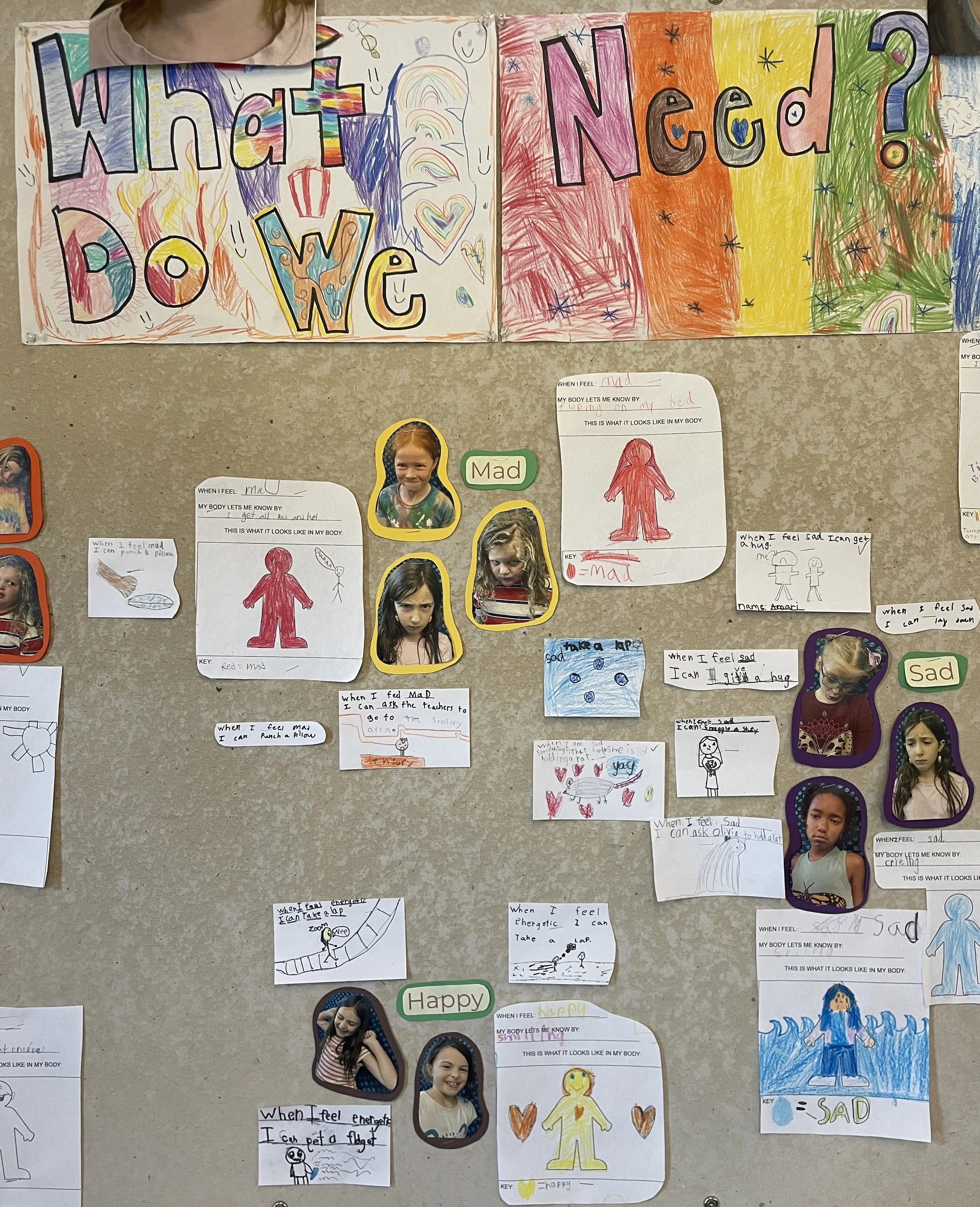
Teaching what emotions feel like inside the body and how to talk about them
Reading social stories or watching videos that model real-life challenges
Practicing coping strategies for stress and anxiety
Normalizing breaks—breaks are for EVERYONE!
Encouraging students to ask for help when they need it
Supporting mutual aid and collaboration between classrooms
Identity exploration and conversations about personal strengths
Learning about boundaries and “space bubbles” (which can change based on the environment and our moods we learned this year in the MUPS!)
Grounding activities and exploring peaceful places
Playing and connecting with Woods Primes to support inclusion and conflict resolution
Creating space to talk openly about feelings and hard days
…and so much more.
I look forward to continuing to support The Center School community.
Please reach out anytime via email, phone or schedule an in person visit. I would love to connect! And keep an eye out for our upcoming Parent Coffee Conversations.