
Is it Middle School? Defining the Upper Middles.
In a year of many changes for the Center School, this update will focus on this year's reconfiguration of the upper elementary and middle school grades. Previously, our middle school program contained grades 6-8 and was called the Uppers. Our final grades of elementary school were 4th and 5th grade, called the Middles. This year, for reasons beyond the scope of this bulletin piece, we took our youngest middle school grade and our oldest elementary school grade and combined them. We created a 5th and 6th grade class called the Upper Middles. The name is an homage to the combined grades and the recycling of a previous iteration of class names at the Center School.
During our student conferences in August, a question that came up repeatedly was, “Is the Upper Middles going to be middle school?” The answer changed depending on who was giving it.
As a former 4th and 5th grade teacher, I believed that the Upper Middles program would intentionally be more like elementary school. I wanted this year to focus on developing students’ independence, while extending the beauty and freedom of childhood, play, and imagination as long as possible. One former Uppers teacher wanted the program to be middle school, and the other was somewhere in the middle. Their reasoning focused on the 5th and 6th graders being ready for more responsibilities and freedom. They also felt like this group had learned the skills and maturity needed to handle more challenging assignments.
So what do we do when there’s a disagreement among teachers? We use one of my favorite teaching strategies: we ask the students for help. We asked the 5th and 6th grade, “Should the Upper Middles be considered middle school?”
And what do 10 to 12-year-old students at the Center School do when they have a question to answer? Exactly what you might expect. They thought about it, they brainstormed ideas, they discussed different perspectives, they looked at evidence, they wrote about and shared their opinions, and we all reflected.
We began by listing the characteristics of elementary school and middle school. We discussed things like having one teacher versus many teachers, how much outside time happens in a day, and lockers versus cubbies. Some students brought up the fact that Greenfield Middle School starts in 5th grade, and others used math to argue that 6 is the middle point of 12, so it is clearly middle school.
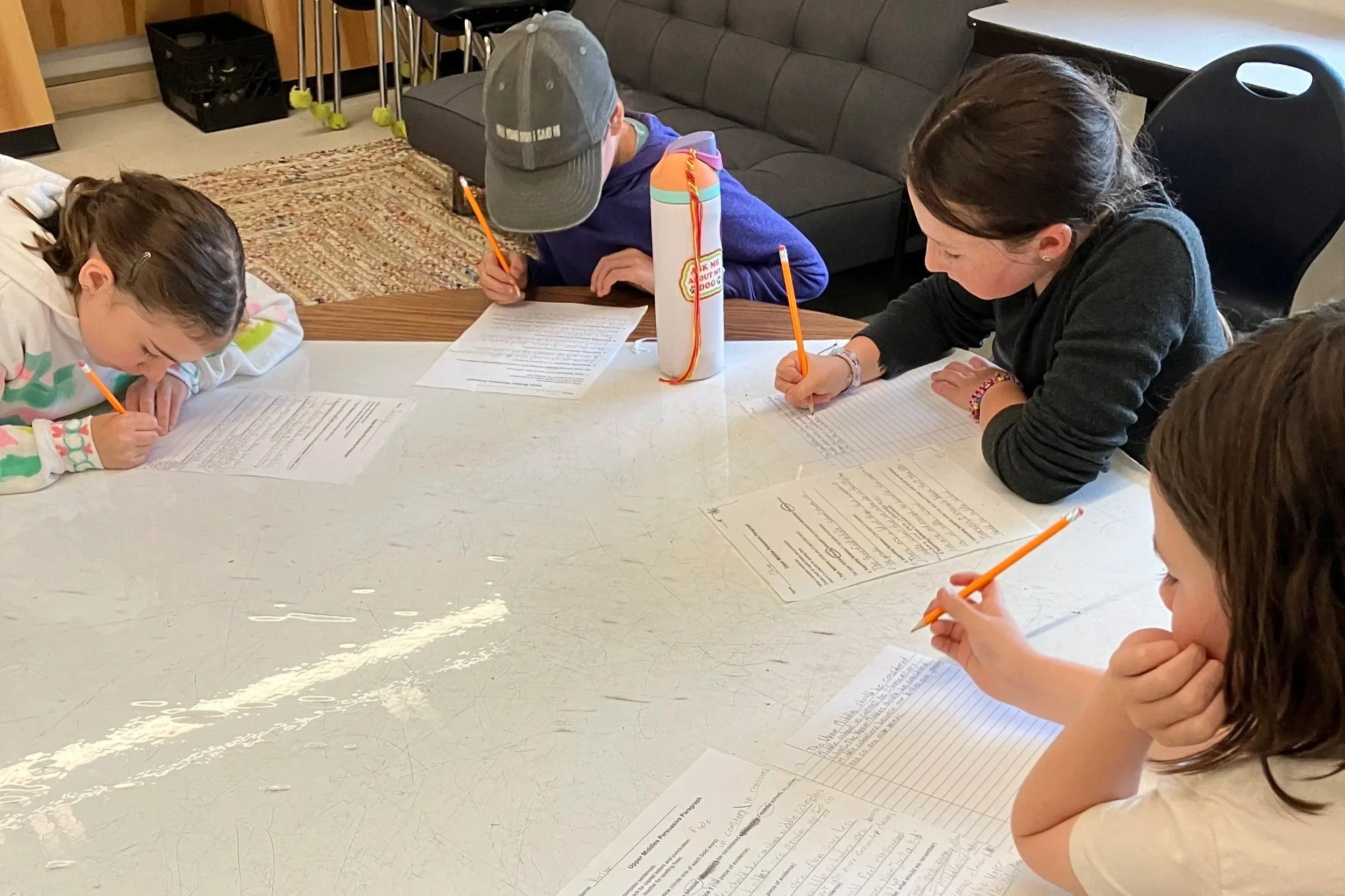
After much discussion, the Upper Middles were asked to write a five-sentence paragraph that argues for or against the Upper Middles being middle or elementary school. Many students chose to argue that the program should be middle school; some chose to argue that it shouldn’t be elementary school. Others argued that it should be elementary school. Students were also offered the option to argue a point of view they didn’t agree with, just to see if they could build an effective argument.
As with many big questions, there really is no right answer. This exercise helped us assess individual writing skills, as well as hearing what students want and need from the upcoming school year. As is common with these ages, the desire for autonomy and responsibility is strong in this class. As teachers, we are looking forward to blending the lines between elementary and middle school. We will hold the Upper Middles to the high expectations they are wanting and are ready for, while also giving them lots of time for unstructured play and socializing.