
Hands On, Brains On!
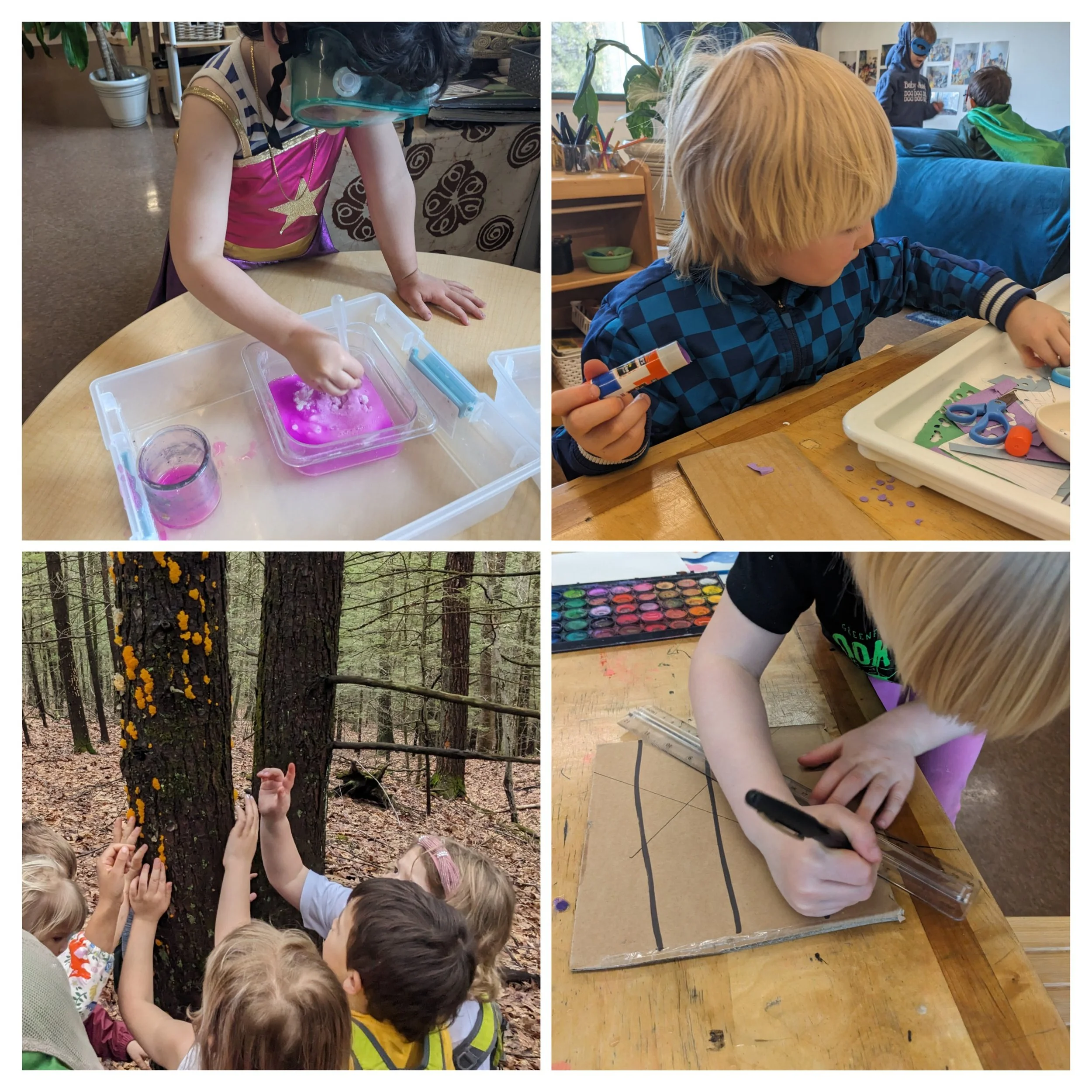
If you ever have the opportunity to visit the Adventure Primes, take a moment to pause and notice how busy children's hands are.
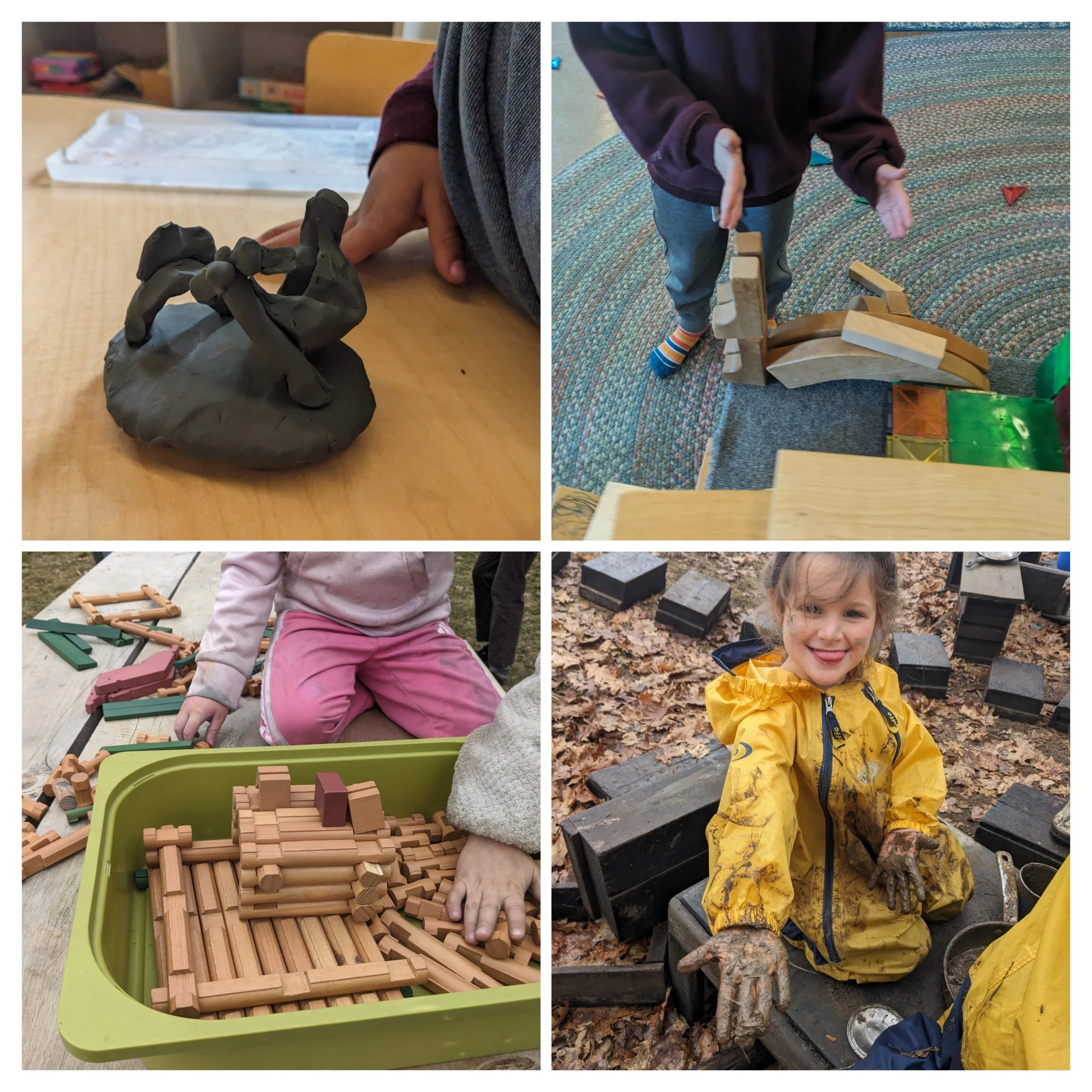
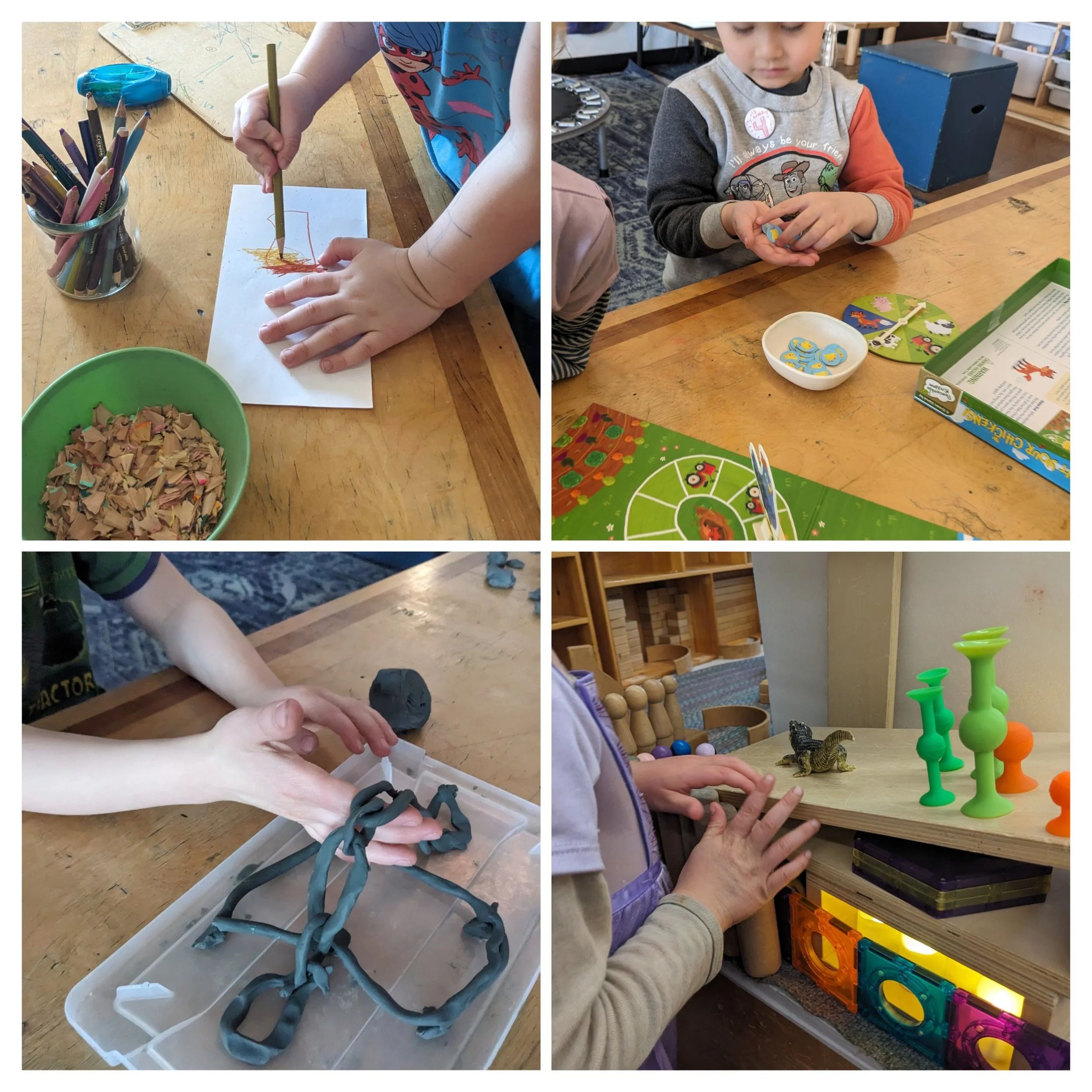
In the classroom you might see hands manipulating playdough, molding kinetic sand, or moving a paintbrush across paper. You will see hands stacking blocks, cutting with scissors, and setting up the pieces of a board game. You will see hands helping to fold laundry, rolling up a yoga mat after rest time, or working to twist the cap off of a yogurt pouch during snack time. Outside, hands are mixing up the perfect combination of dirt and water in the mud kitchen, carefully grasping the branches of a climbing tree, tentatively poking at a jelly fungus, or scraping decomposing wood from the hollow of a rotting log.
Did you know that more than one third of the brain's motor map is dedicated to the fingers and hands? When children use their hands, their brains come alive.
Touch and movement build the neural pathways that shape attention, memory, and emotional regulation.
The term fine motor skills refers to precise, coordinated movement of small muscles in the hands, wrists, and fingers. It is easy to see how the development of fine motor skills connects with traditional academic tasks such as writing. To become a proficient writer, you must be able to grasp a pencil and physically form the lines and curves that make up each letter of the alphabet.
However, in the past decade, new research has emerged indicating that fine motor skills are related to cognitive and academic development in surprising ways.
One study found that fine motor skills in 3 and 4 year olds predicted receptive language ability in Kindergarten.
Another group of researchers found that the fine motor skills of 5 year olds predicted academic performance in first grade, third grade, and fifth grade.
Yet another study links fine motor skills in Kindergarten with higher reading and math scores in second grade, and again in fifth grade.
How can this be?
The shared pathways theory suggests that the brain regions responsible for motor control and cognitive functions overlap.
To put it simply, many areas in the brain are active and working together when children use their fingers and hands. Those very same areas of the brain are functioning in tandem during academic and cognitive tasks.
The skills like planning, impulse control, and cognitive flexibility required to create a block tower or sculpt a figure out of clay exercise the very same kind of executive function and self regulation needed to learn how to read or build an understanding of mathematics.
We often get questions from parents about how we are preparing children for Kindergarten. When you consider the science, "school readiness" does not look like worksheets or screen-based tasks. Flat, repetitive motions limit brain feedback and actually dulls the neural circuits responsible for planning, persistence, and deep attention. Experiencing texture, resistance, and pressure allows children's brains to integrate various sensory systems and wires the brain for deep focus and learning. By prioritizing hands-on play in Adventure Primes, we ensure that children have plenty of opportunities to engage in the kind of authentic movement that actually organizes the brain for thinking.
The next time you pass a child digging in the sandbox, building with magna-tiles, or drawing with crayons, remember:
Play is never just play.
Citations:
Karimi A, Poznanski B, Hart KC, Nelson EL. Fine Motor Skills, Executive Function, and School Readiness in Preschoolers with Externalizing Behavior Problems. Behav Sci (Basel). 2025 May 21;15(5):708. doi: 10.3390/bs15050708. PMID: 40426485; PMCID: PMC12108649.
Robers, C., Röthlisberger, M., Neuenschwander, R., Cimeli, P., Michel, E., & Jäger, K. The relation between cognitive and motor performance and their relevance for children’s transition to school: A latent variable approach,
Human Movement Science, Volume 33, 2014, Pages 284-297, ISSN 0167-9457, https://doi.org/10.1016/j.humov.2013.08.011.
Shi P, Feng X. (2022) Motor skills and cognitive benefits in children and adolescents: Relationship, mechanism and perspectives. Front Psychol 21;13:1017825. doi: 10.3389/fpsyg.2022.1017825.
Suggate, S., Karle, V., Kipfelsberger, T., &, Stoeger, H. (2025). Keep the hands in mind: A meta-analysis of correlations between fine motor skills and reading, writing, mathematics, and cognitive development in children and adolescents,
Educational Research Review, Volume 49, 100748, ISSN 1747-938X, https://doi.org/10.1016/j.edurev.2025.100748.
Suggate, S., & Stoeger, H. (2017). Fine Motor Skills Enhance Lexical Processing of Embodied Vocabulary: A Test of the Nimble-Hands, Nimble-Minds Hypothesis. Quarterly Journal of Experimental Psychology, 70(10), 2169-2187.