
Observational Drawing with the Adventure Primes
"There's nothing like drawing a thing to make you really see it."
-Margaret Atwood
Observation and drawing are powerful entry points into language and thinking. They invite children to slow down, notice details, and represent their ideas in visible ways.
Nature provides the perfect inspiration for this type of thinking and learning, offering authentic and ever-changing provocations and grounding children in real, tangible experiences.
This fall the Adventure Primes have had several opportunities to notice and wonder together while practicing the skill of observational drawing. First with a dead squirrel, then a cedar waxwing, and then with branches full of ripe autumn olives. During this process we talk about how our goal is not to create a picture that looks exactly like what we are seeing. Instead, drawing is a tool that helps our brains slow down and notice details.
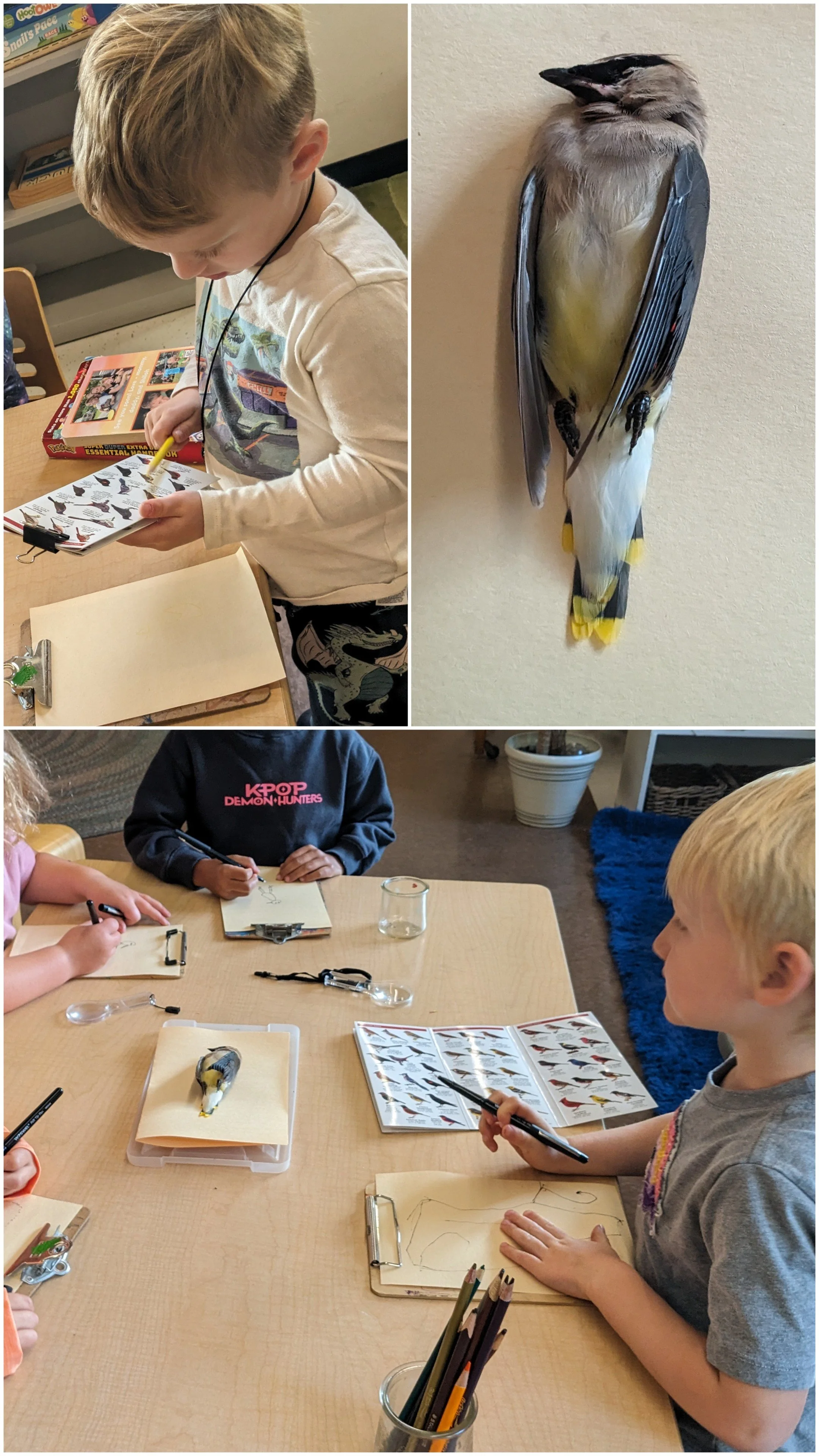
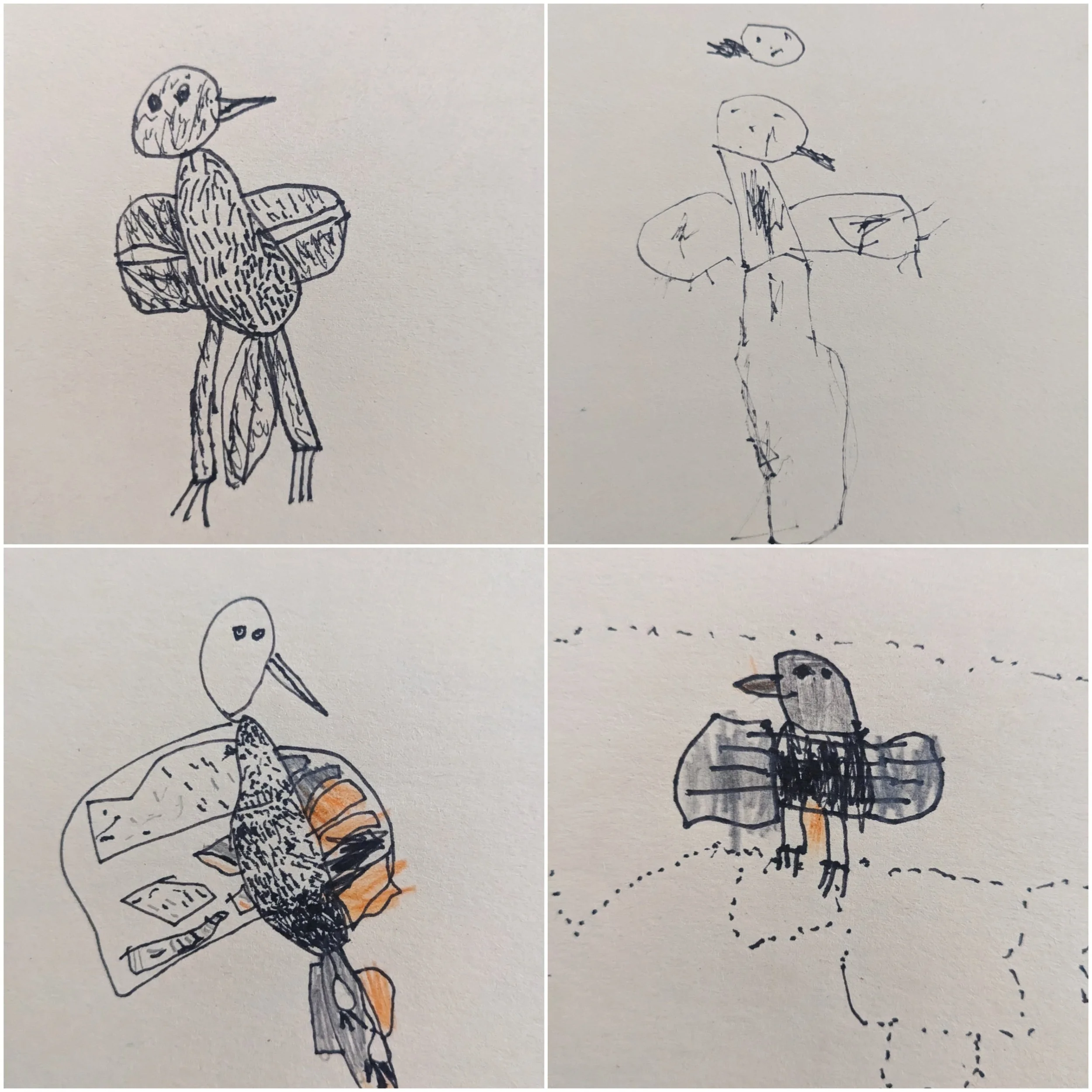
Why is observational drawing so powerful?
Observational drawing challenges children to draw what they actually see.
Often, children's drawings reveal their mental schema of an object. They rely on symbols they have memorized based on what they know about something (think trees that look like lollipops, a stick figure person, a circle sun with lines surrounding it).
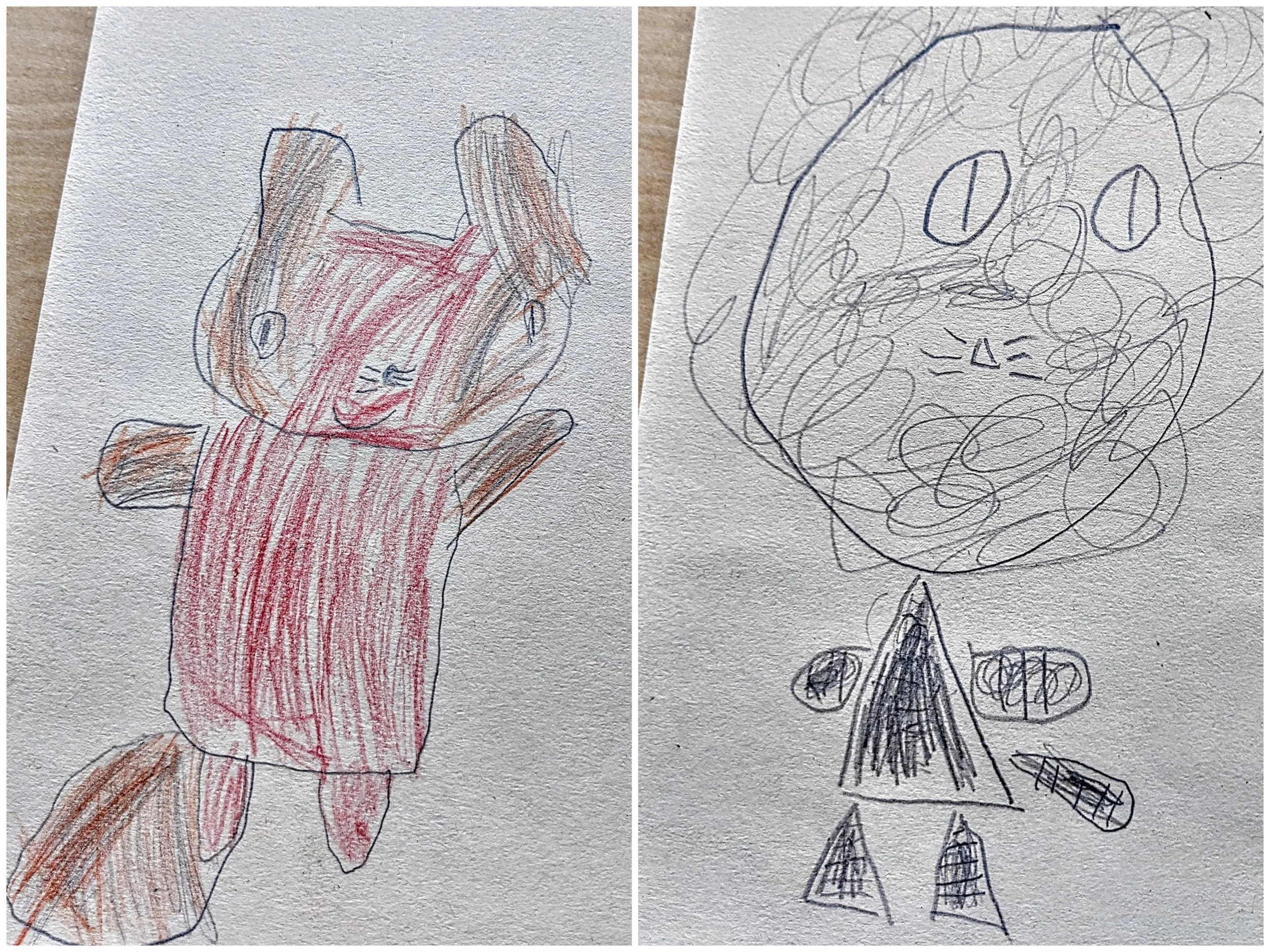
Looking at a concrete object gives children the opportunity to notice details and real world variation.
Here you can see some schematic drawings of the squirrel, compared to observational drawings:
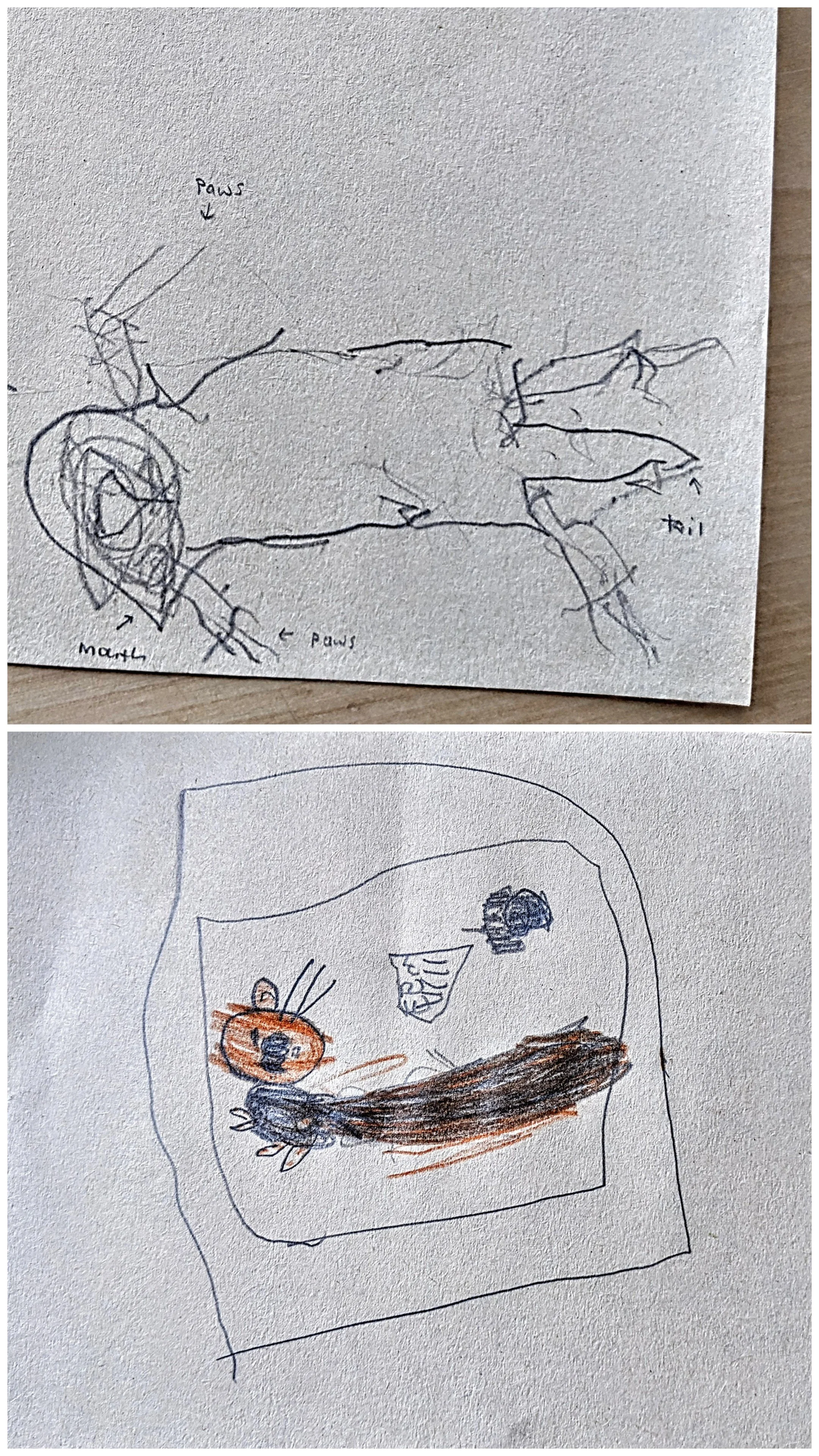
Observational drawing supports mathematical thinking.
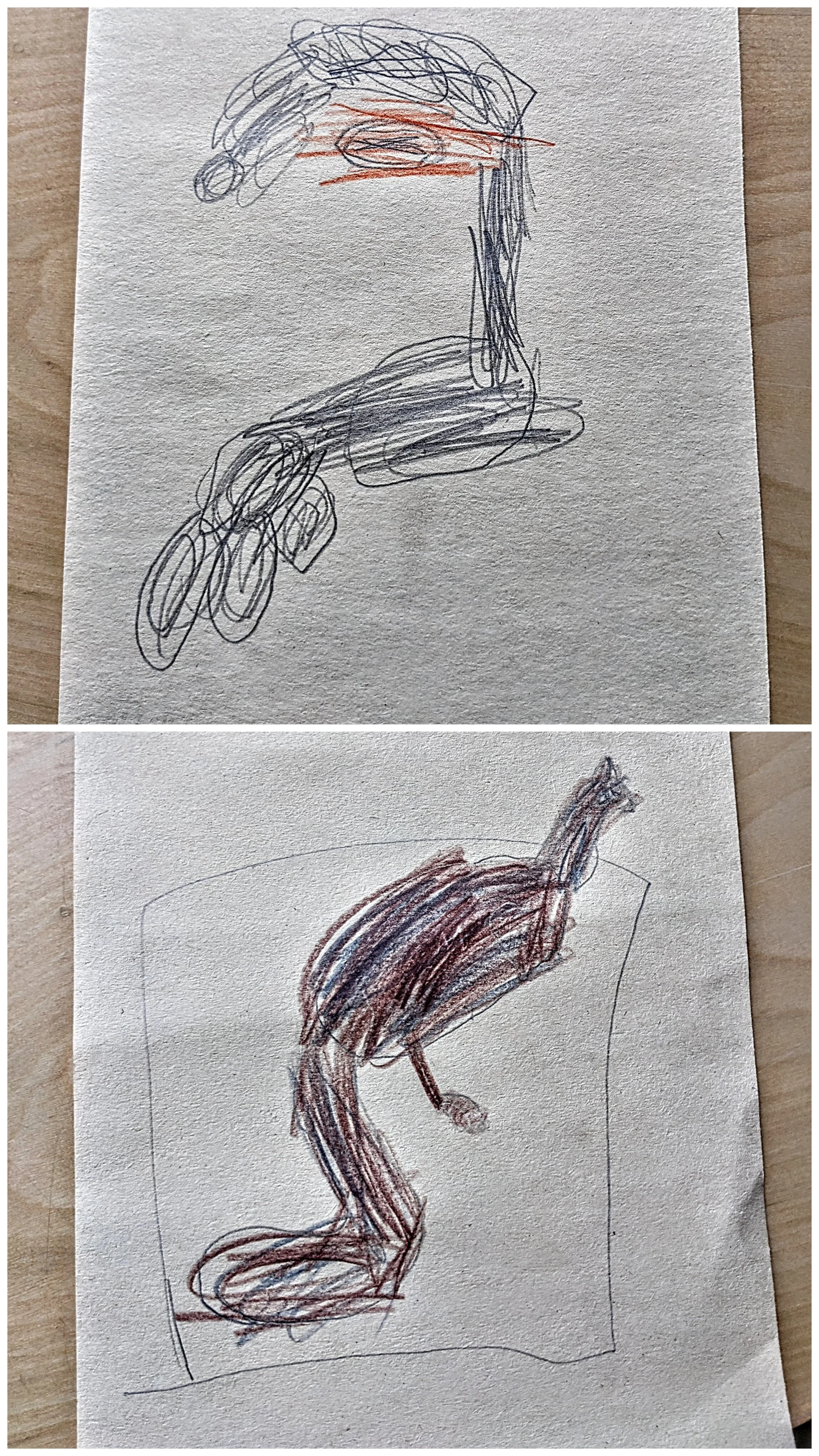
Drawing something real requires children to visually dismantle an object, breaking it down into foundational shapes and geometric elements like dots, circles, straight lines, and curved lines. It strengthens spatial awareness as children analyze proportion and the relationship between parts.
Inara I was seeing the tail was a squiggle and the body was a oval and the neck was a line and the head was a triangle.
Seraphine I was noticing the curved tail.
Observational drawing facilitates scientific inquiry.
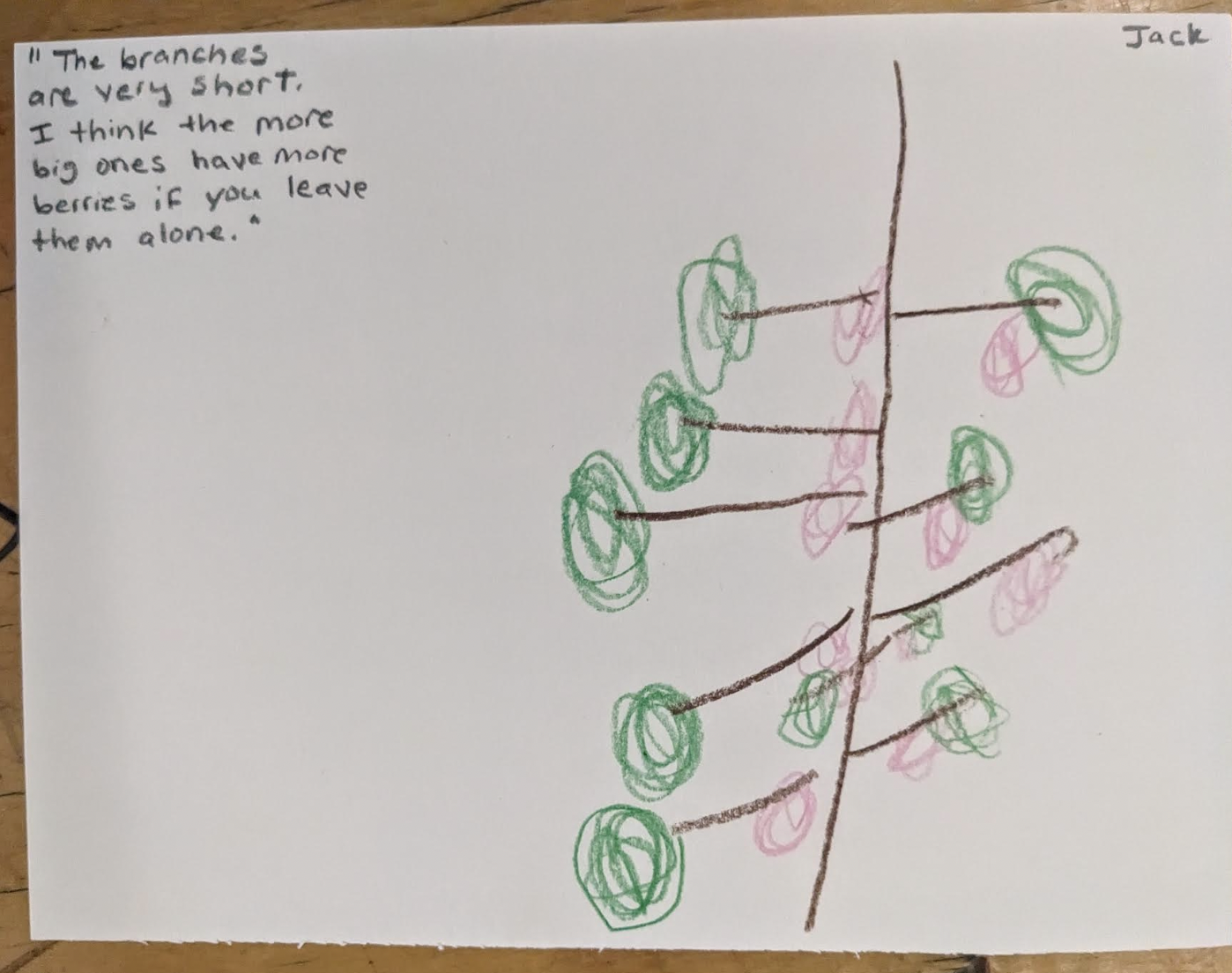
Looking closely while drawing naturally inspires children to ask questions and form hypotheses about what they are seeing.
Jack The branches are very short. I think the more big ones have more berries if you leave them alone and the less big ones have less berries. I got a hypothesis! Maybe the smaller they are the more sour they are and the bigger they are the more sweet they are!
Charlie Why do they have spots on them?
Ellie Maybe like a very, very small animal crawled on them. Like an ant, for example, and then their feet are sticky and that stickiness gets on the berry.
As they draw, the children share ideas and reflections with each other. Through discussion, they refine their thinking, using evidence and observations to back up their ideas.
Oscar How did the squirrel die?
Olivia Maybe he got run over by a car.
Jordan But he's not squished.
August Maybe something wanted to eat it.
Marlow Maybe it was a bobcat.
Pearl I was thinking a fox, but it's not bleeding.
Zsa'Vaeya I think it was eating and took something in its belly and it died.
Cedar Maybe he ate too many nuts. I know! Maybe he ate a poisonous mushroom.
Ellie I think he just died
Observational drawing supports literacy development.
Drawing is a way for children to communicate their ideas more clearly.
Before drawing, children respond to the question: "What do you notice?" After drawing, we ask again, "What did you notice when you were drawing?"
The insights that children share after drawing are often much more sophisticated than their initial observations. Their explanations of their drawings often include more descriptive vocabulary or reveal critical thinking.
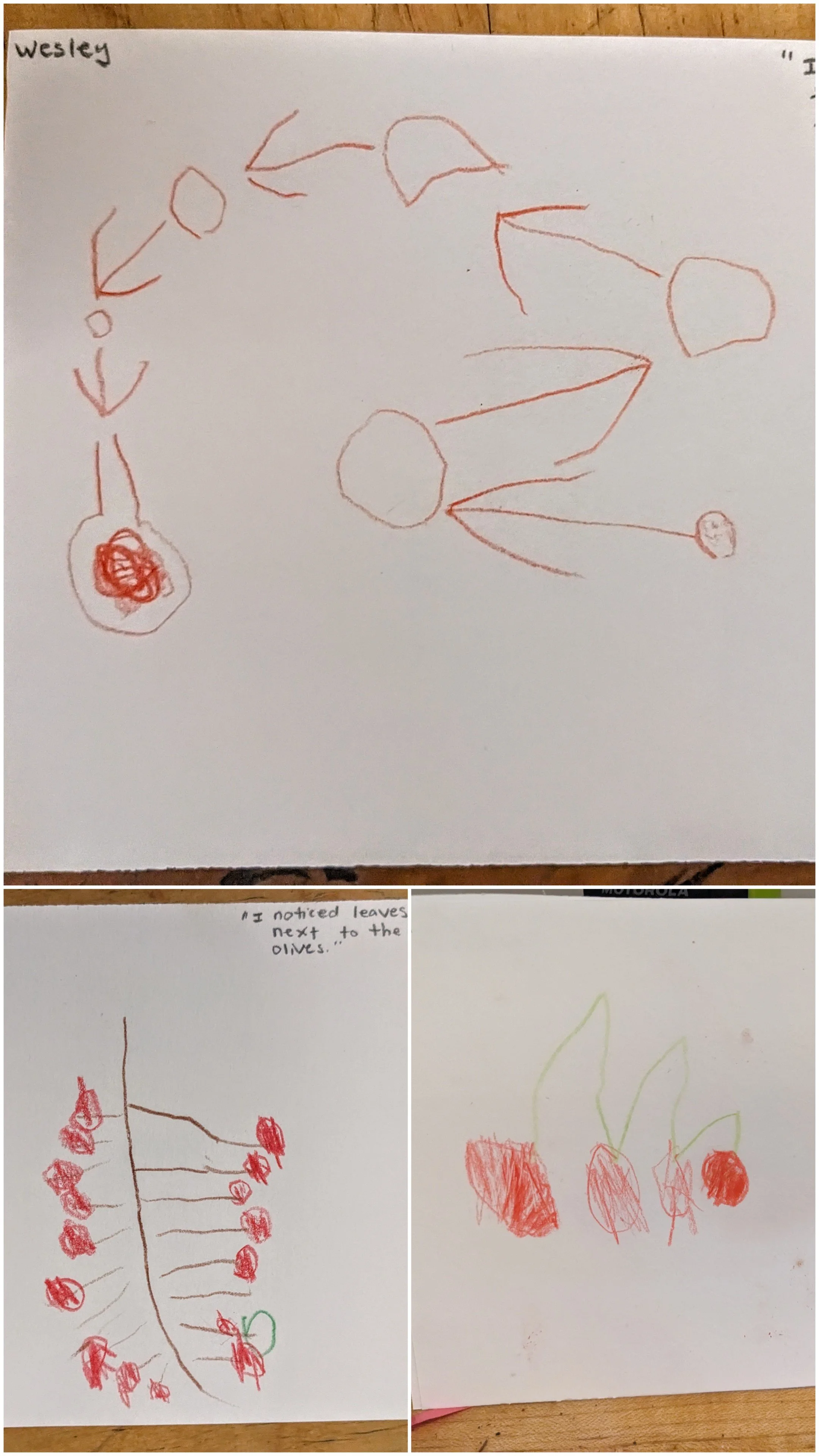
Jordan I noticed the leaves next to the autumn olives.
Eliza I was noticing that some of the stems looked like they were connected.
Wesley It starts as a tiny berry and then it gets bigger and bigger and then it starts rotting and then there's a seed.
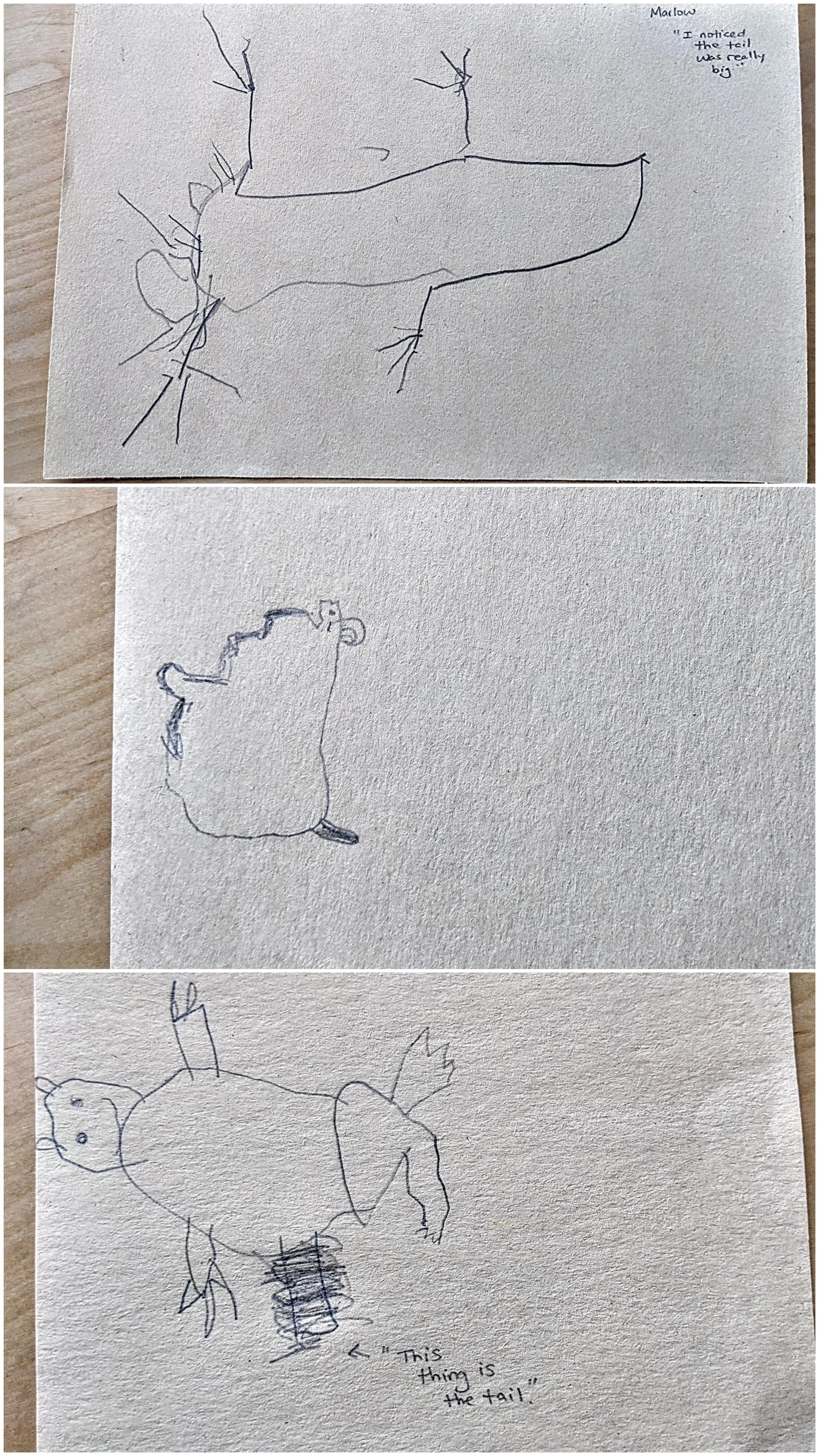
Marlow The tail was really big.
Olivia I noticed that the tail was fuzzier than I expected.
Charlie I drawed the squirrel that died. It had one eye open and one eye closed.
Phoebe I noticed the toe pads looked like pillows and the face was brown and grey.
Observational drawing encourages empathy, wonder, and a sense of connection with nature.
Zsa'Vaeya When I was drawing I noticed the head. We're sad this little guy is dead. I wish he would stay alive and we could keep him for a class pet.
Phoebe Squirrel, I hope you soak into the ground. It's very sad you died.
Jack I wish every animal would not die.
Cedar I love you and I'm sorry you died.