Using Storytelling to Study the Water Cycle
In the first few weeks of school, the Upper Middles and Uppers were asked to go help clean out our local watershed as part of the Green River Clean up that happens every year. Students in 7th and 8th grade had previously been to the same location last year and pulled out 3 shopping carts, a baby stroller, half a scooter, a discarded play kitchen, and a mini tricycle covered in mud along with multiple bags full of smaller bits of trash. This year we found a metal bed frame, a street sign, another bicycle, both halves of a Barbie dreamhouse and many bags of trash. The area we clean is clearly a dumping ground for many discarded items and we were not lacking in work to do. Students jumped at the opportunity to help out and showed so much ambition to get as much cleaned as we could in the short time we were there.
This clean up is a big part of our discussion for the first science unit. We started this year with a water study, beginning with a review of the water cycle then moving into water pollution, making filters, and looking into water scarcity both locally and globally. Understanding our impact on our local watershed is a good way for us to start thinking about the larger global impact of declining water reserves around the world.
Reading and talking about water scarcity and water pollution in the world can often provoke a feeling of unease. Knowing that, students will be talking about systems in place and what people are doing to work towards cleaner rivers and how our actions can help support local water resources. We talked about the current issue facing the Quabbin Reservoir and how many local residents of the area (stewards of the Quabbin) are working hard to make sure we know where any extra water is going. Here is the video we watched to help us think about what is happening. In case you missed it, the Quabbin is only at 77% capacity and there are people asking for 20 million gallons of extra water without sharing details on what it will be going towards. The stewards of this local water are adamant in their willingness to share as long as enough information has been provided as to how this water will be used. We talked about how the ask might not be for local people needing clean water, but for other things such as data centers and how that is not the best use of our already low resource.
Another way we have brought levity to this tough topic is through the use of storytelling. Students played in teams to physically travel through the watershed, occasionally getting polluted and needing to go to a water treatment plant, with the ultimate goal of getting to the ocean. Although that was our goal, based on our knowledge of the water cycle, students continued to evaporate and condense back into the watershed. Unfortunately that meant they might potentially land back in the wastewater treatment plant.
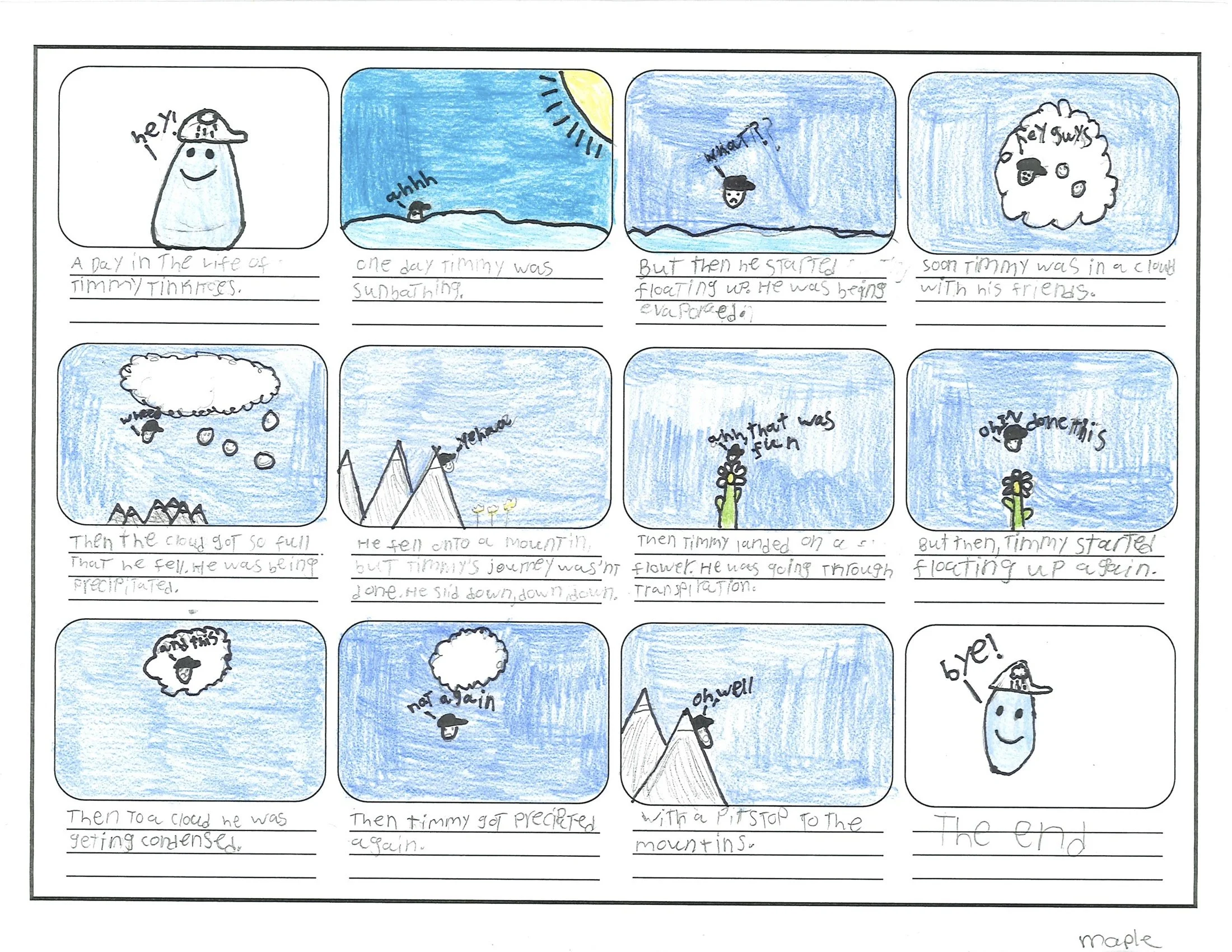
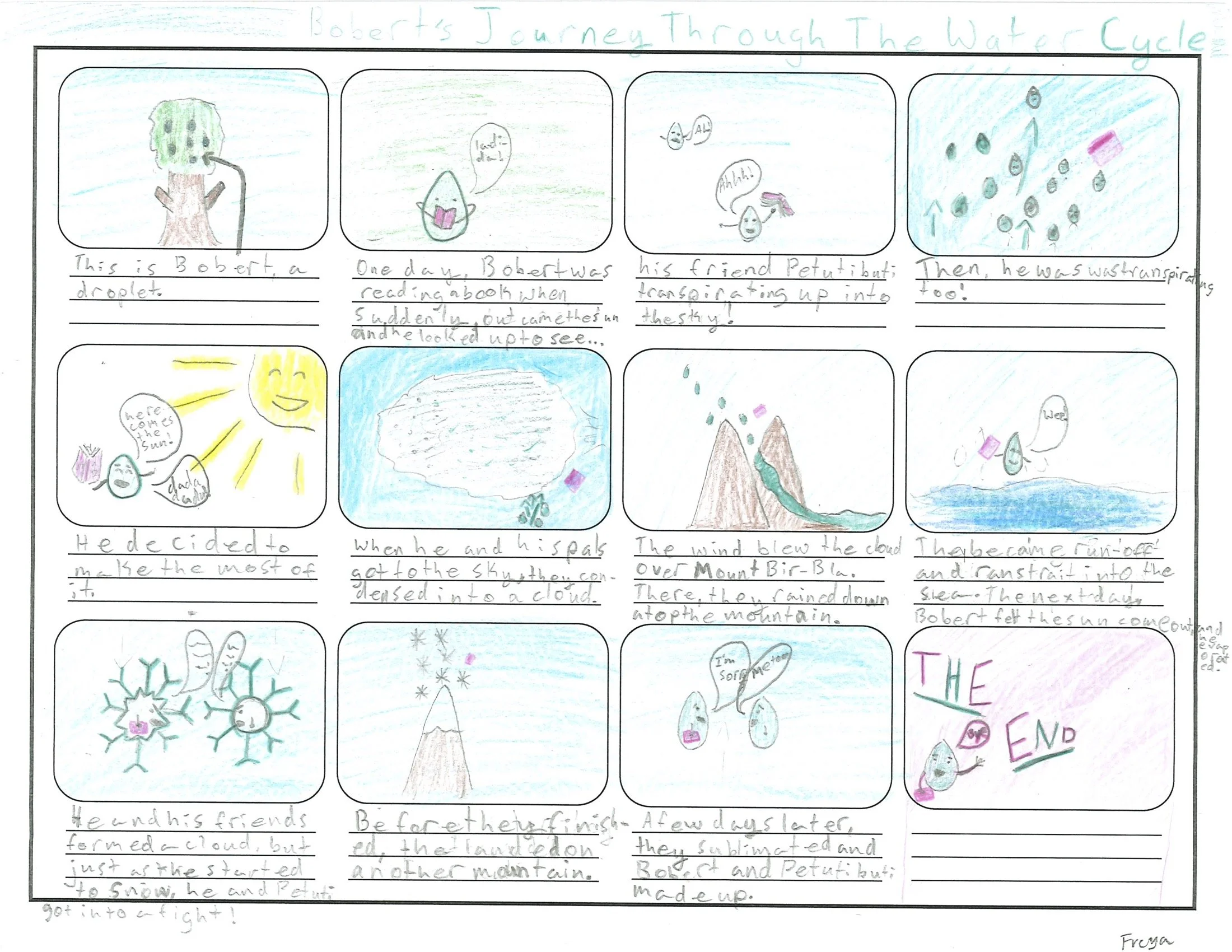
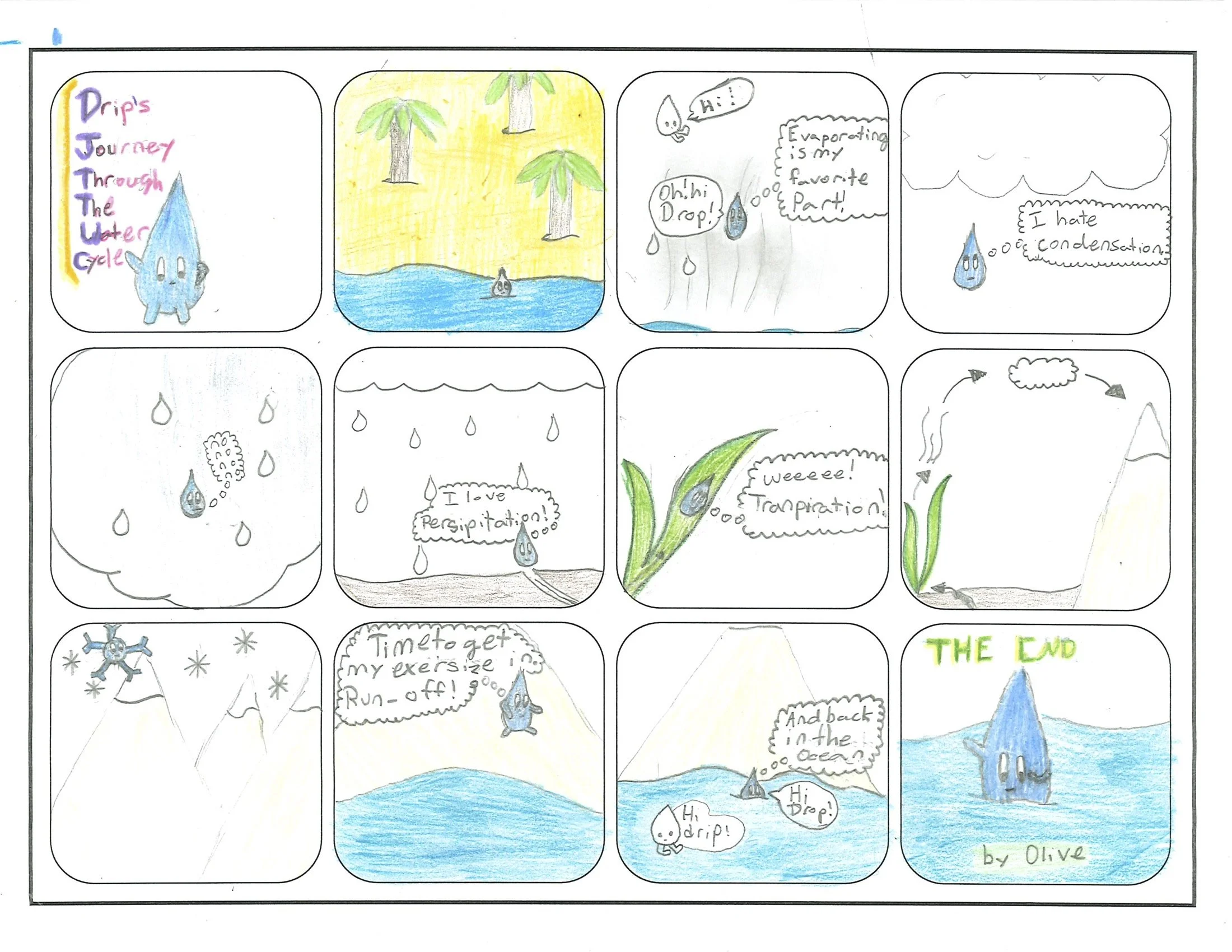
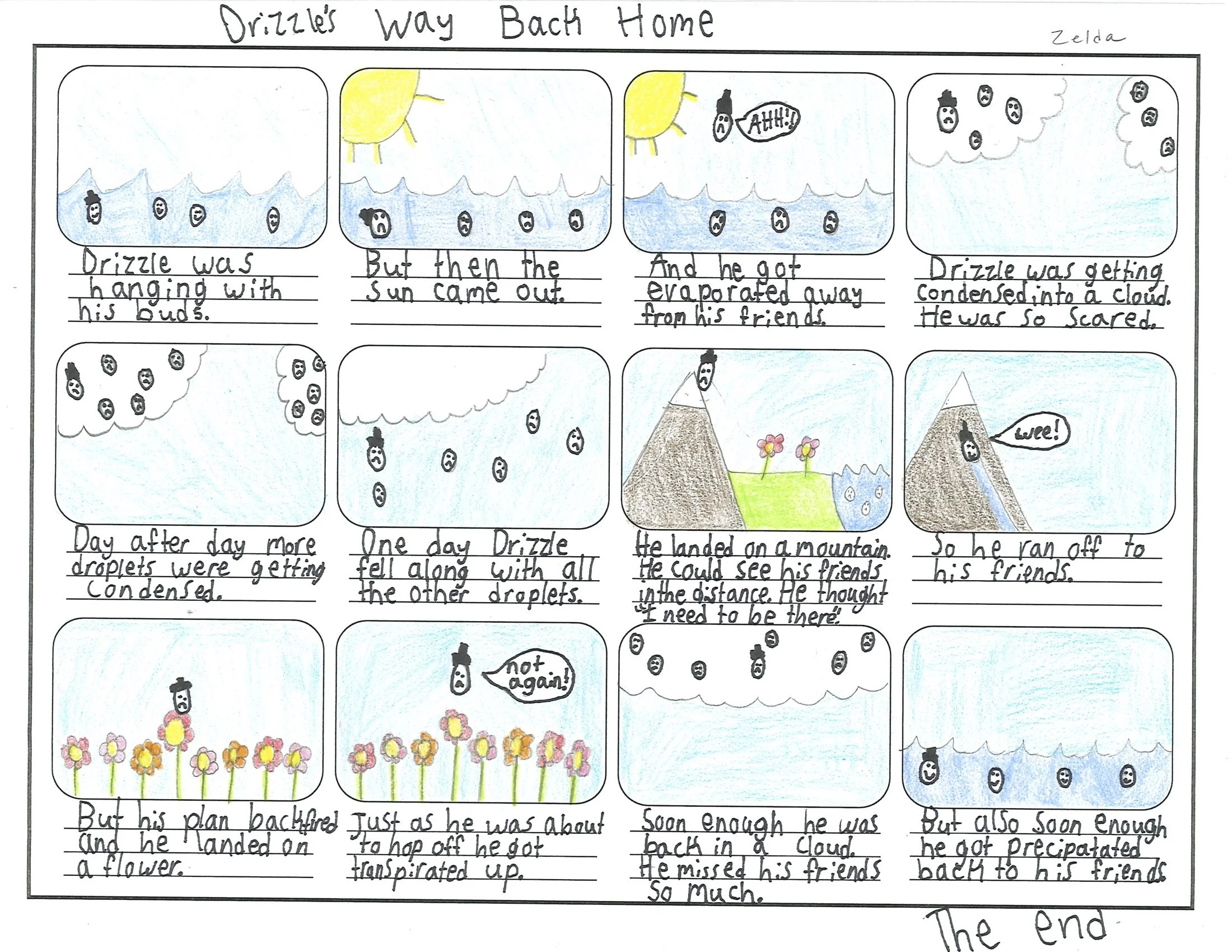
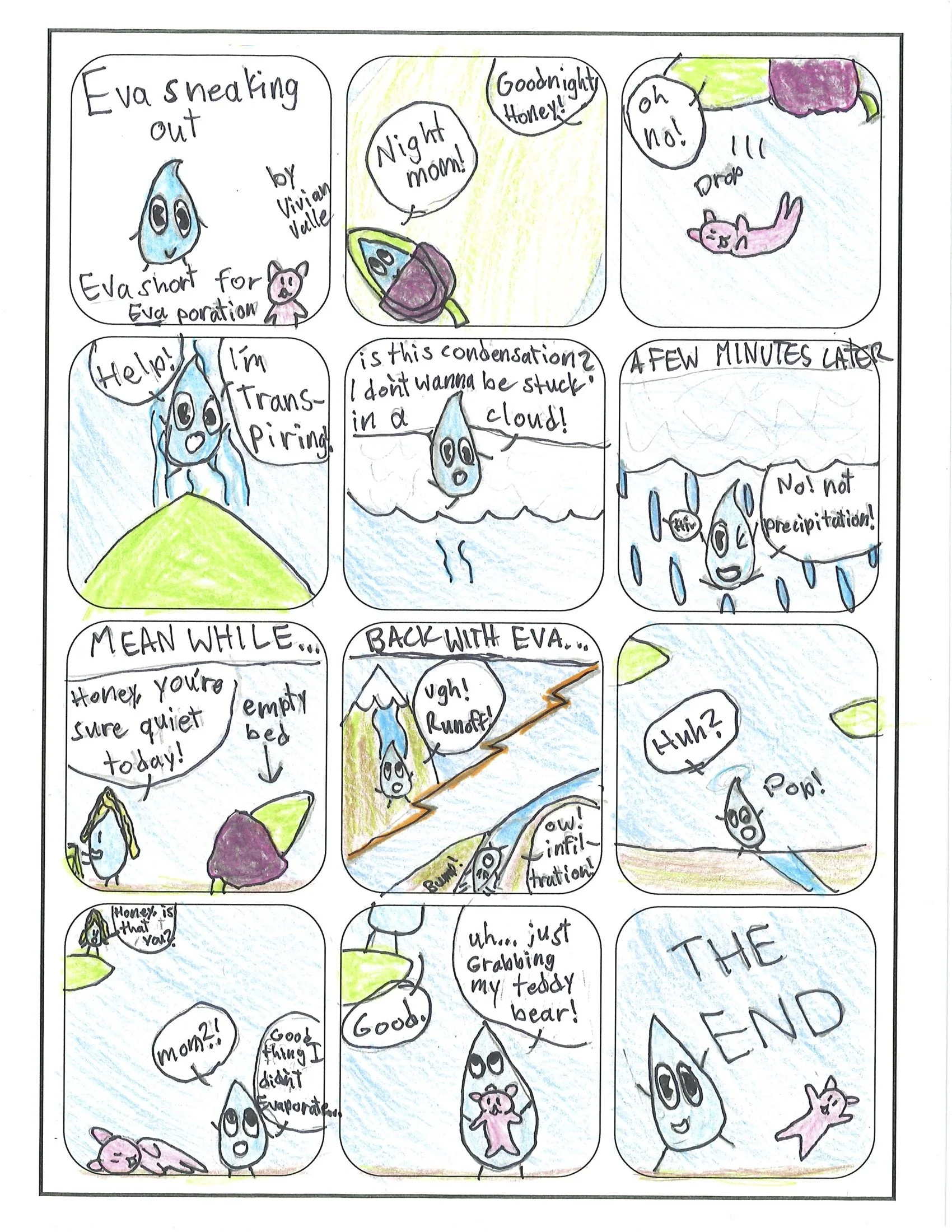
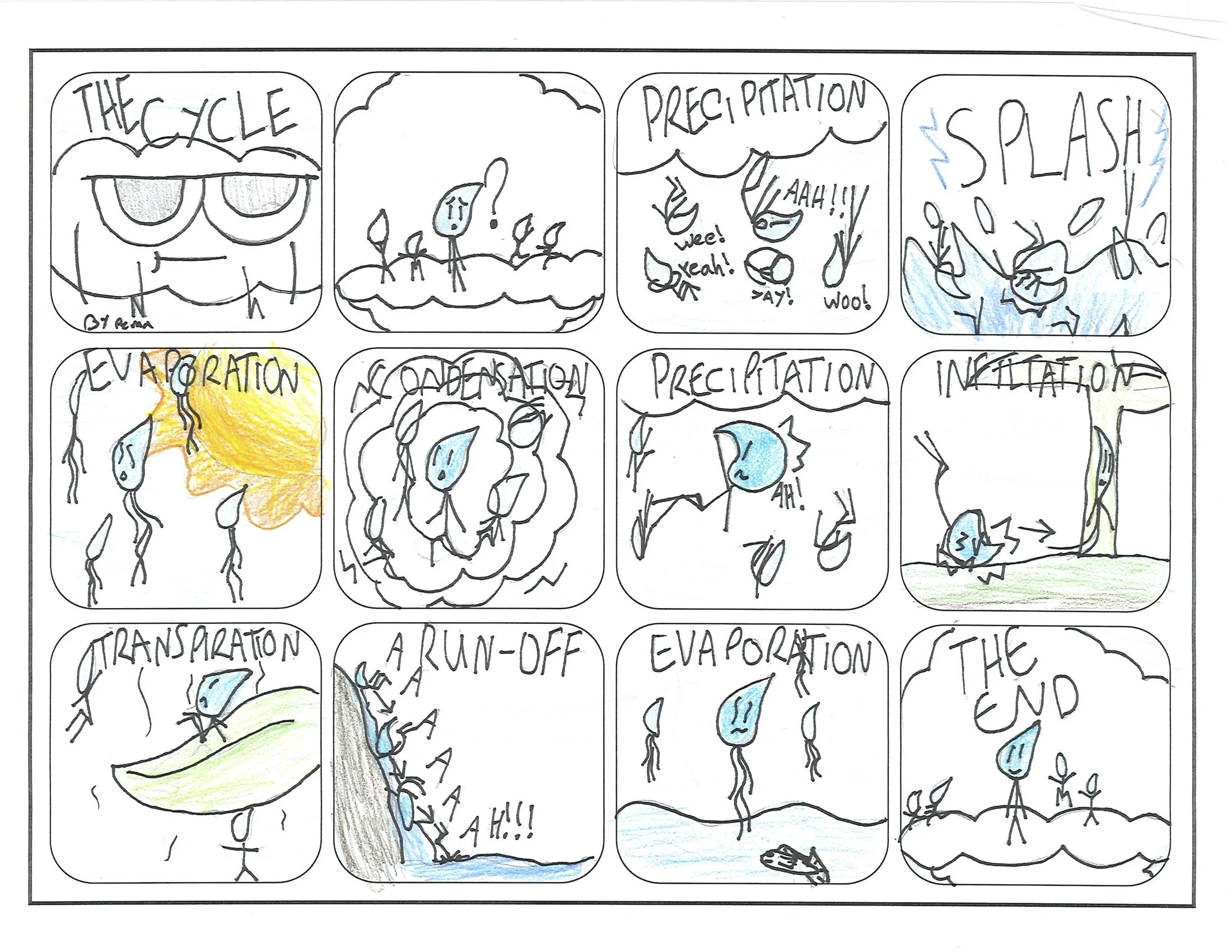
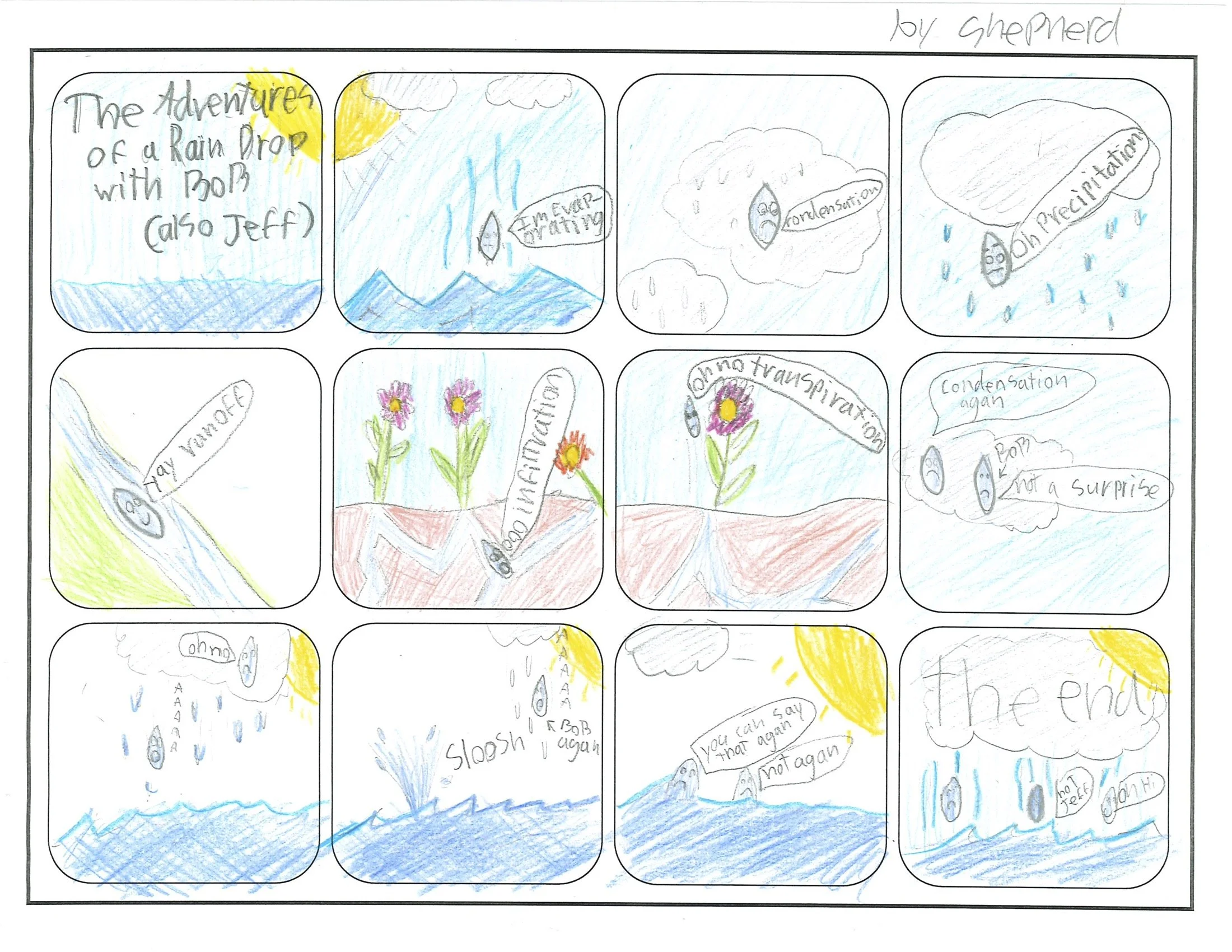
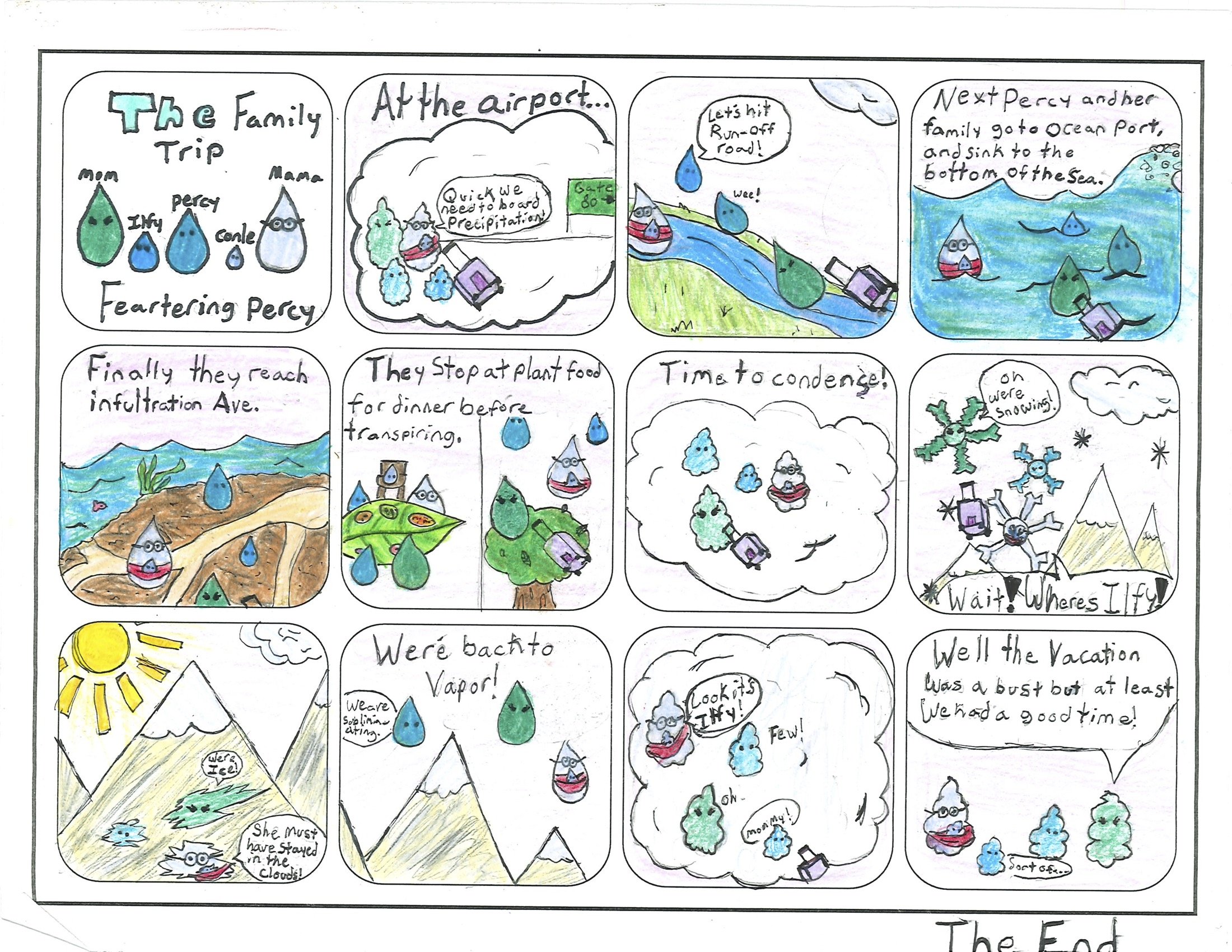
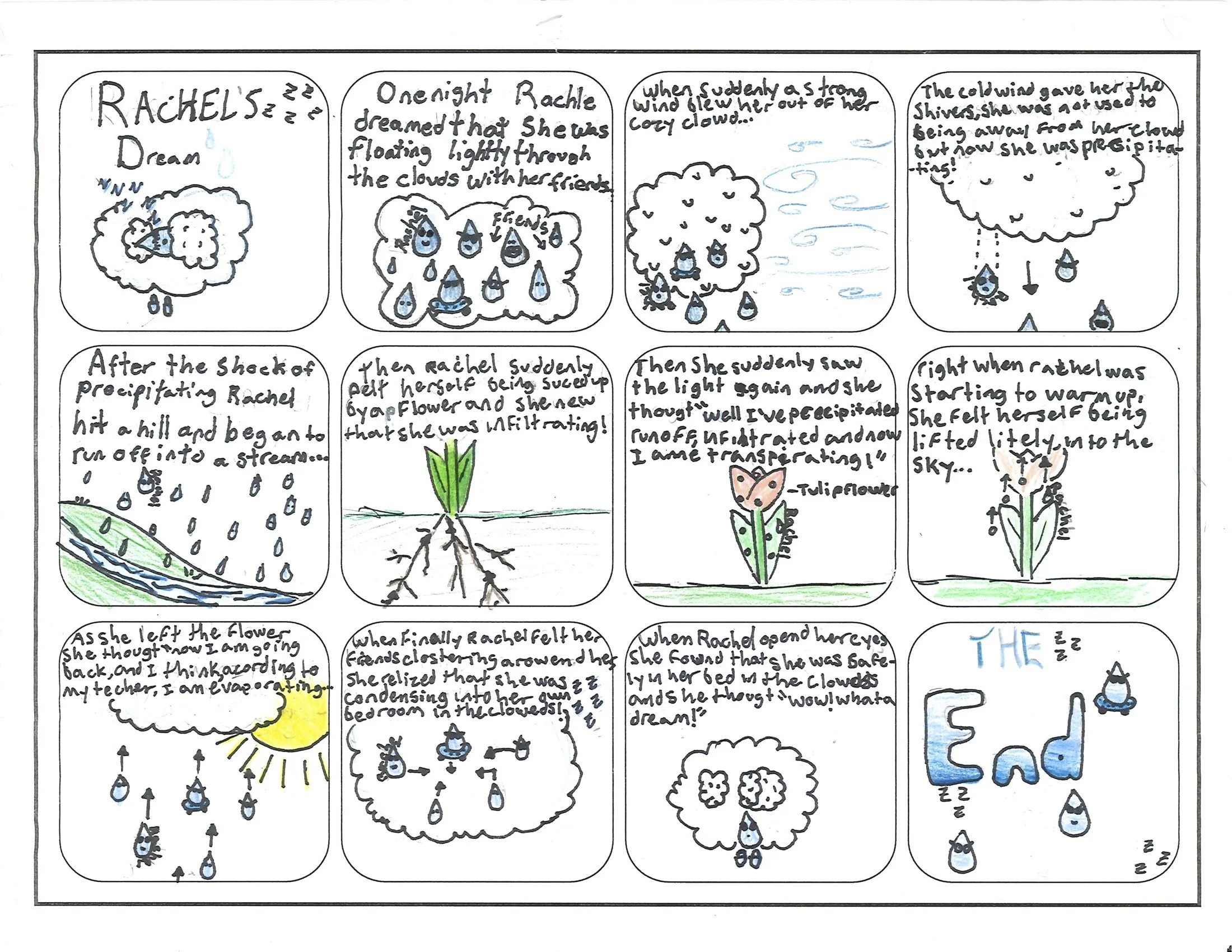
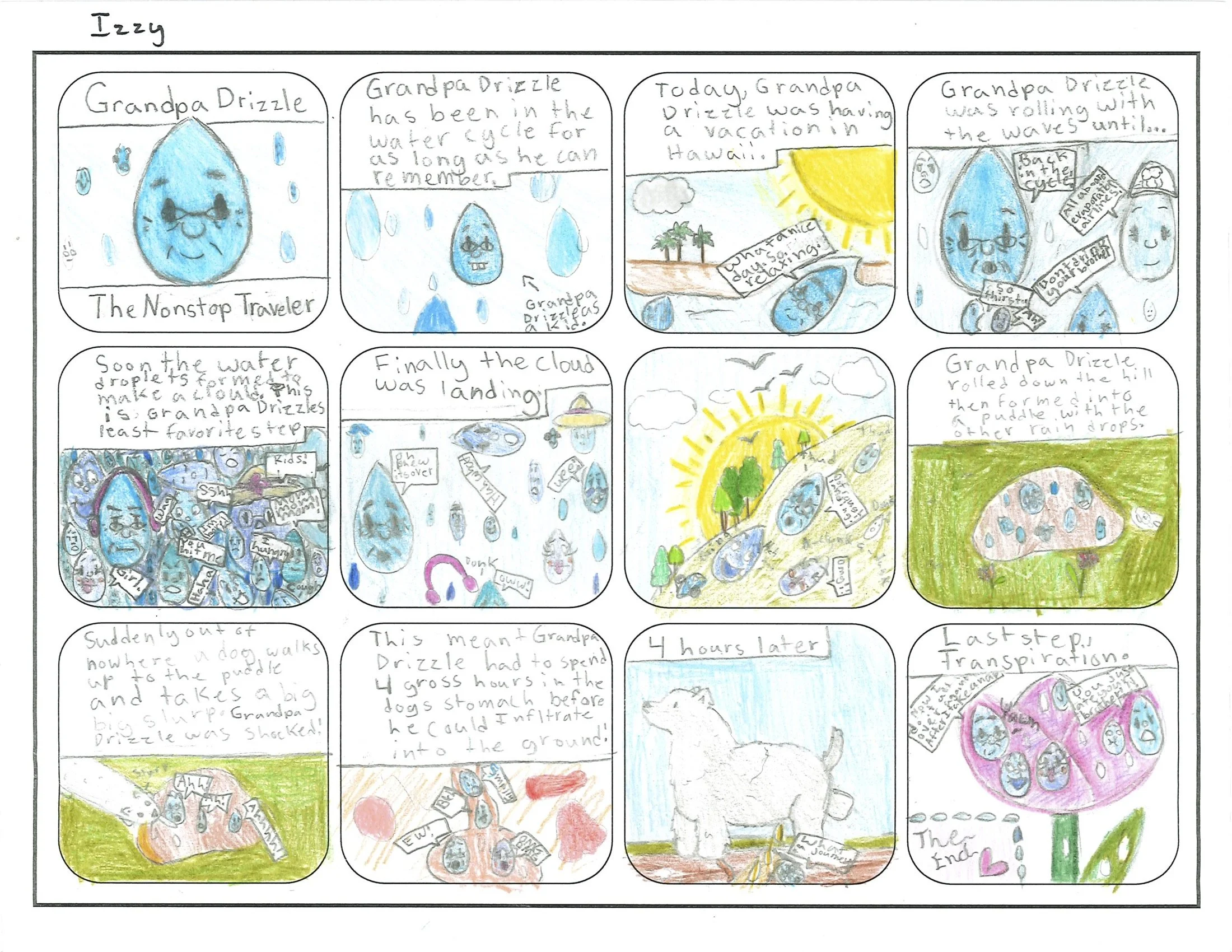
To finalize our understanding of the vocabulary describing the water cycle, students told the story of a water droplet moving through all the different stages of the cycle. They did this in the form of a comic and let me tell you, these stories did not disappoint! Every student grasped onto this idea and really ran with it, adding their own personalized touch. Creating these personal relationships with the terms will help us as we move forward in our conversations about water. Some students had droplets that were excited to go through the water cycle, some had droplets that were afraid of what was happening and had to ask their mom drops about the different stages they were traveling through. Some drops went to a water park with themed rides that went along with our vocab and some went on a very long vacation. One of the best ways to help solidify your understanding of a new topic is to try to find a way to play with it (we do this a lot in math!). A student is way more likely to look back and talk fondly about how Timmy Tinkletoes the droplet traveled between evaporating and condensing than they are to look back and think about how much fun it was to write down the definition of precipitation.
Please enjoy the comics attached to this article, I know I did!